Originally published by Celebrate! Magazine, Summer 2011
– PDF version –
 A friend traveled to Saint Joseph’s Oratory in Montreal in Quebec, Canada last autumn. My religious community, the Congregation of Holy Cross, commissioned him to journey to the site of the many healings attributed to Saint Andre Bessette, CSC. His task was to photograph the celebrations of Brother Andre’s canonization both in Montreal and in Rome. During his visit to Montreal he photographed pilgrims walking on their knees on the steep steps of the Oratory. He shot people praying in the chapels and gardens and the room where Brother Andre lived. My friend even photographed Brother Andre’s heart that is still enshrined at the Oratory.
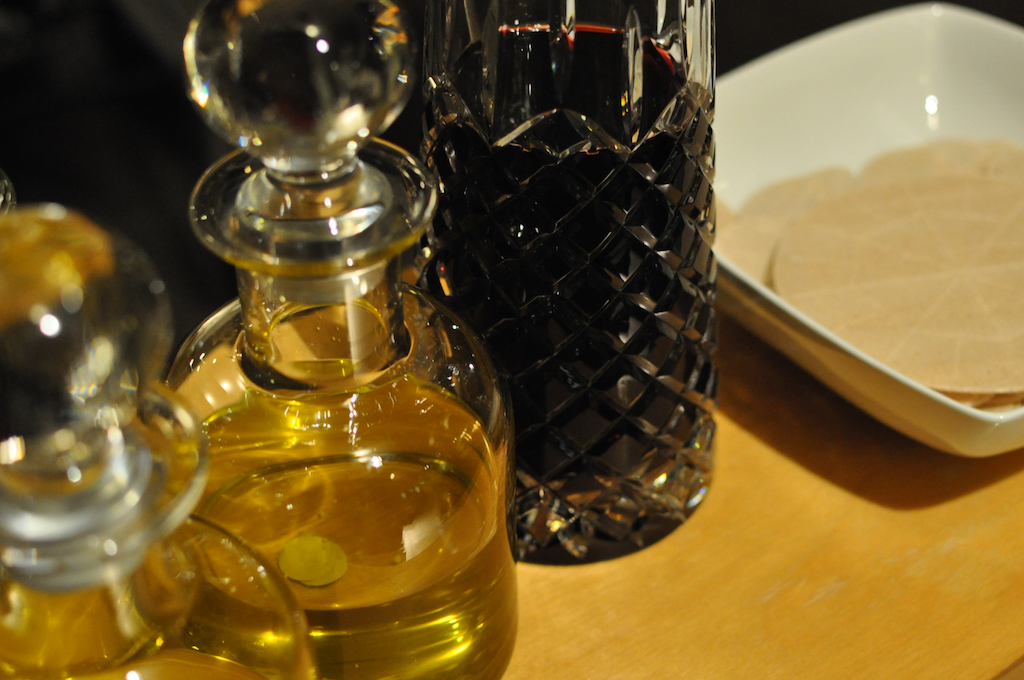
When the photojournalist arrived back in Portland, we shared coffee, stories and the photos from his journey. As we sipped coffee at a local coffeehouse, he handed me a white paper sack and told me it was a special gift. I opened the wrinkled bag and took out a bottle of Saint Joseph’s oil from the Oratory’s gift shop. An artist’s sketch in blue, red and white of Saint Joseph carrying a white lily adorns the plastic bottle.
These words appear in several languages on the side of the 500ml container: “Brother Andre often advised those who came to him to rub themselves with some vegetable oil which had been burning in front of the statue of Saint Joseph. Even today, oil used in this manner remains a link with our tradition. It is an expression of faith. It is not the oil itself which cures, but the Lord who hears the prayers of the faithful.”
The unopened bottle of oil still sits on a bookshelf next to my bible in my bedroom. I admit I really do not know how to use it. I am not sure where this oil of devotion fits into the healing ministry of the Church today. In fact, I am deeply confused about many aspects of healing and how we carry on the tradition of Jesus reaching out to the leper, the blind man and the Canaanite woman’s daughter. I firmly believe there is a message contained in the bottle of oil. I just do not know how to get it out of the sealed bottle and into people’s lives.
Many believers question the use of such oil today within worshipping assemblies. Some people associate healing with snake oil salesman and sleight-of-hand trickery of fundamentalist preachers trying to make a living. Many liturgists frown upon such personal devotion because a bishop in the context of the Chrism Mass has not blessed this oil during Holy Week. This oil does not fit into the traditional sacramental life of the Church. This oil goes well beyond the clerical role of anointing the sick and forgiving sins within the seven sacraments of the Church. This bottle of oil used in the tradition of Brother Andre seems far removed from the sacramental, clerical and liturgical norms.
I know I am also not alone in my skepticism about physical, emotional and spiritual healing within the Church today. People are suspicious about healing because first of all we are all powerless over suffering. I have known and observed priests who refuse to pray with people individually because they are afraid to enter into the depths and uncertainty of people’s real suffering. Others are squeamish about body pain, surgeries, bloody accidents, physical abnormalities, paralysis and the fact that suffering itself is uncontrollable. Sacramental rubrics, liturgical rites and decrees from the institutional church cannot control suffering. For many clergy, if suffering cannot be controlled, the best form of healing is to avoid it all together.
I am also suspicious of healing based upon my graduate studies in our liturgical tradition and my training in pastoral and professional skills. The professional minister today is trained to avoid such attempts to heal because it does not fit into any field education requirements or competencies. In many ways the professional model of the church today has drained much of the Spirit’s presence out of any notion that healing happens with vegetable oil, scapulars, personal devotions, holy cards or prepackaged devotions of any kind.
During the lifetime of Brother Andre, the ministry of healing was a prime mission of many religious communities. Religious communities of men and women in the past set out on horseback in the United States to found and build hospitals, orphanages, and care facilities for anyone who was lost, forgotten, ill or dying. Today the presence of priests, brothers and sisters in institutions of healing has given way to the latest technology and concerns over insurance coverage. Our church has lost much of its personal mission of healing.
I am desperate to find healing today. I simply do not know where to turn to discover answers. I stand daily amid the brutal chaos of people living with severe mental illness. Many people hear voices that tell them to kill themselves, to ignore their medications and to punish themselves. People sit in the rain around our building and cry out in the night. They lash out at passersby and refuse to speak with their counselors who are assigned to our streets.
I pray for healing for people who blame homeless people for being homeless. I want healing for every family so that our gay and lesbian children will not be abused or bullied. Hundreds of children have fled into the woods or the streets in Oregon because of domestic abuse. I lash out in the night to God that young girls are being trafficked in our suburban shopping malls or in upscale grade schools. I am not sure how much more I can take of the young mother diagnosed with breast cancer or the addict that refuses treatment or the honor student who cuts herself.
I realize I cannot control countries at war or how the institutional church treats people. If I can find my way into this bottle of oil, I may be able to focus my belief that God alone heals. I desire healing amidst the shambles of people’s stories and their regrets from the past. I am now realizing the message in the bottle is also for the cynic and the critic.
Hundreds of people came to Brother Andre every day during his ministry. I now sense his frustration about people’s lives. Andre first guided people to stay close the healing sacraments of the Church. However, so often people were not healed. They needed so much more than what he could give them. He reached for the oil that was there at the Saint Joseph statue because that is what was available to him. Brother Andre told some mothers to wash their children in dishwater and or to go to confession. He said all those things because he did not have answers to the depths of people’s suffering and anguish.
There is something in this bottle of oil that frightens me. I must come to terms with God’s healing love in the world that is more potent than my fear and more consoling than the oil from the Saint Joseph statue. God’s healing happens without our permission, rules or guidelines. God does not commit healing power only to the well educated, the immaculately dressed or the clean cut. God’s healing happens amidst the mess, chaos and confusion of everyone trying to figure out how to ease suffering, whether of others or their own.
God healed many people through Brother Andre’s intercession even though Andre was not a priest, not within the confines of the sacramental church. The oil for so many was simply a reminder of what they already knew but had forgotten in the midst of their pain, that God alone eases suffering, forgives sin and offers new life for the body and the soul.
Someday I will have the courage to open the bottle of oil. I will take the risk of unsealing the bottle and opening my heart. I will risk that my relationship with suffering people allows God to enter and heal everyone beyond my imagining. I will take the step to pray with people upon their request. I will pour out the holy oil and believe in the miracle that Jesus’ passion leads to new life for me and for every person. Someday I will receive the message hidden in the plastic bottle on my bookcase.
 Broken But Not Divided