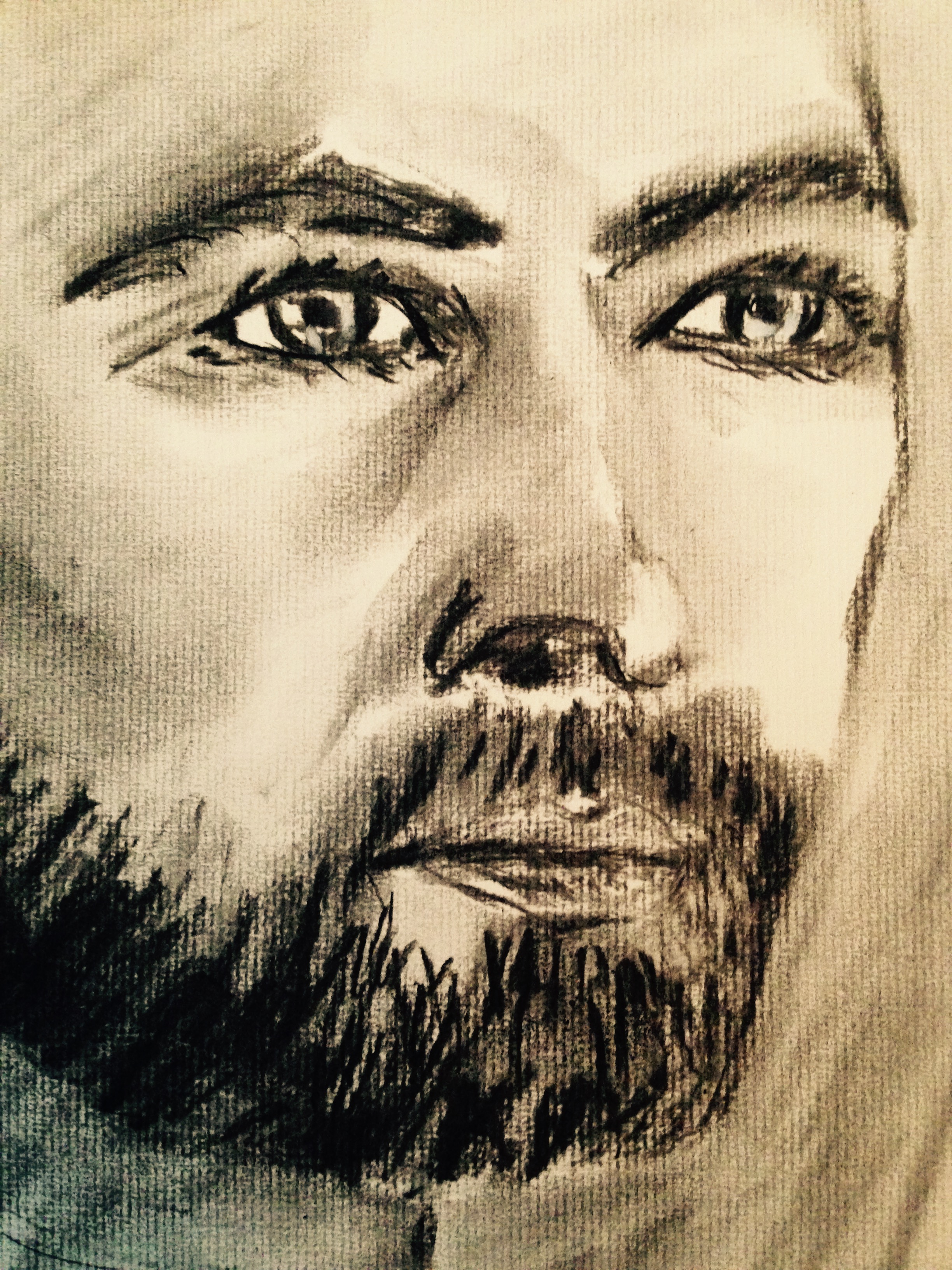
Jesus said to him in reply, “What do you want me to do for you?” The blind man replied to him, “Master, I want to see.” (Mark 10)
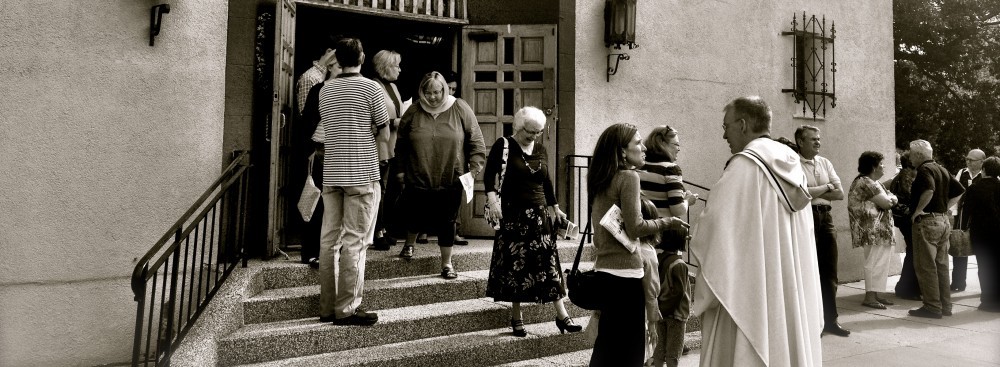

Jesus said to him in reply, “What do you want me to do for you?” The blind man replied to him, “Master, I want to see.” (Mark 10)

To you I call; for you will surely heed me, O God; turn your ear to me; hear my words. Guard me as the apple of your eye; in the shadow of your wings protect me. (Psalm 17)
(Bread and Concrete: Where Liturgy and Ministry Meet, Part 9)
Unlikely voices
“The Lord God has given me a well-trained tongue,
that I may know how to speak to the weary a word that will rouse them.” Isaiah 50
Our lectors proclaim the Word of God with intention and beauty. The physical voices of our parishioners vary as much as their personalities. A voice of a young woman who recently was baptized is soft and rather insecure as she finds her home in our parish. The voice of a seasoned lector is raspy and gravely because of years of smoking and drinking alcohol. A voice of a middle-aged man seems shaky and uncertain stemming from his recent years of sobriety and still questioning faith. Most voices are strong, clear and demand attention from every person in the assembly. A recent college graduate reads from a voice that reflects her professional vocal training. An elderly man reads with the compassion found in years of contemplative prayer working through his divorce from his early adult life.
People in our assembly need to trust the voice they hear proclaiming the scriptures. The voices that bring these texts to life necessitate reassurance and gentleness. The voices need be authentic if the scriptures are going to be a sign of the Kingdom of God. These often-fragile voices that proclaim the scriptures in the ambo are an antidote to the many voices that have stripped people of their dignity in the past. These voices heal the profane voices that demean or offend. These voices can help counter the whistles of degradation many women experience on the streets. These voices must balance the voice that yells and screams at them from an abusive spouse. These voices of integrity mend the memories when a voice of a husband says he is leaving the family. These voices need to offer solace when memories of the voices of loved ones who have died rise up in sorrow.
I also notice that our lectors are challenged to trust their own voice, their place in the ministry of the Church. Our lectors are formed with a sense of ownership and awareness as they enter the sanctuary. I tell them that they need to own their stance, their place on the wooden sanctuary. They are reminded to find their true human voice as they open their mouths and allow the Word of God to flow through them. They are called to trust their life experience and be open to the way God is forming them for the future.
I listen attentively to the readings from scripture when I preside at Mass. However, sometimes I am distracted because of the person reading those sacred words. My mind goes to the life stories I hear from our lectors and from the people who long to hear the healing words. These life stories and patterns of behavior are the place where God speaks to our community. The mending of broken lives or the long-term beauty of a life of recovery comes into focus in the face of the lector. The Word of God is alive in the person who proclaims the sacred Hebrew texts or the letters to ancient communities.
An older parishioner wearing jeans approaches the ambo with profound gentleness. Her oversized shirts and sandals disguise her beauty, the place in her heart where she confronts the Word of God on a daily basis. She proclaims the sacred texts in our parish community because she grapples with the horrific words that were yelled at her as a young girl. She did more than trip over some bad words spoken again and again by her parents. She became spiritually maimed by the abuse. The verbal abuse was like nails within her heart. The fierce pounding of verbal abuse caused her to disassociate from the world around her. She then began to hear voices that saved her and protected her even when her body was covered with feces and urine while she was locked up in a closet. The sound of these inner voices actually protected her in her youth and she has spent the many years of her adult life trying to learn a new language of love and forgiveness.
She now proclaims the Word with great love because she has finally realized in her long recovery from bad words that she does not have to heal herself. This is an insight that has changed my own life profoundly. Since she has been able to be in our worshipping assembly and to take the time she needs to heal, she comes to the holy realization that God is working in and through her. I cannot express how her insight has touched me and how beautiful I see her life now that she can use words to describe her healing as she begins to shatter the tortuous words of abuse in her life.
When she approaches the altar of the Word, she is a miracle in blue jeans, a sacred text in flannel and a hope to us who listen now that ancient texts come alive. I believe in the words of God that the race to holiness is long and the path arduous. Nothing is more important than the power of Christ Jesus working in and through us.
I watch as the words she speaks to our congregation scatter about the chapel. I pray that some of them will land on the heart of a young woman whose two children were just taken from her. She has battled the disease of addiction and at the present she is not winning the war. Her children’s lives are empty and confused. The children feel abandoned and they carry the same anger that she feels in her life. This rage is being birthed in a new generation of her children.
The Liturgy of the Word is alive in the dialogue of lectors proclaiming ancient writings and people listening even with one deaf ear. The Holy Spirit is here now, today in the voices of people who proclaim the scriptures with wounded hearts and scratchy voices. The Word works through these barriers and opens up the possibilities that all the words that weigh people down can be lifted up, released and even transformed. The Word of God is proclaimed in the liturgy not as a task or a rubric. The holy and ancient stories are revealed again because people today need God. They need to heal the scars of the past where words set off terror, frustration and fear in their lives. God’s words have the potential to change lives, reorient priorities and open up relationships.
The Liturgy of the Word can never be diminished or taken for granted. This powerful tool for conversion is really invisible to our comprehension. We can never fully know the amazing and grace-filled ways God is speaking to people. We must stand in awe hearing the miracle of faith-filled voices proclaim the Word and keep our attention on the miracles that we hope will set people free. In the Word, we know that God is in charge of converting hardened hearts among us all in every worshipping community.
I beg God and often scream out in my prayer to change the horrific situations that people face every day. Poverty of Spirit makes a home in every heart. I want the lost to hear the Shepherd’s voice. I want this more than anything in my priesthood. This poverty is not confined to one small community in Portland. The Liturgy of the Word becomes a vital instrument for faith and salvation especially when we become aware of the dire needs of our assembly. No matter how we want to bring the message of Christ alive in our assemblies, God is speaking volumes to people well beyond our illusion of control. I ponder at every Eucharist the miracles of healing for those who hear the Word. At least I want God to know and understand from my own complaining and screaming that the Holy Spirit better get to work. All of our efforts to evangelize in our Church today must be rooted in the Word and understood by every believer that we are not in control of God’s mercy or in control of how people will interpret the love that is given them.
Some years ago at a Saturday morning retreat for Lectors, I asked the members of the group to name their experiences reading the Word of God in our parish community. The first person to speak was Sean. In a soft, shaky voice he told us that he had been a lector since being received into the Church at the Easter Vigil. I noticed beneath his voice that seemed uncertain, a depth and richness was evident. He told us that every night he reads the scriptures by candlelight in his tent in the woods. Sean has been homeless for many years, suffering from anxiety and depression since losing his parents. He has not been able to hold down a job or to keep an apartment.
He told us that he wanted to be a lector because when he reads Psalm 91, God promises to keep harm from his tent. With a pause and a deep breath, he told us that he hoped by reading the scriptures at Mass that God would keep harm from everyone’s tents. We received the love he intended for us. We all sat there in grateful silence, unable to respond to such a gift from a loving and caring man and a faith-filled lector in our parish community.
In that same session, a woman in our community began by telling us how angry she used to be about the diminished acceptance of women among many parish communities. She told us that when she comes here to stand up and read the scriptures that her concerns about herself simply melt away. She is now so aware that people come to Mass needing clean underwear and socks. People are alone and addicted. People are so ill that they run around our neighborhood half naked in the cold rain because they are unable to care for themselves. When she lectors now, she reads from the desire of real communion, the moment when women and men, rich and poor may hear and be one within our Church institution.
The next gentleman spoke about being a gay man in the Church. He continued the woman’s insights about being here among people surviving poverty and worshipping among the marginalized. His life is not burdened by debt. He is housed and employed and people respect his talents and his many advanced degrees. When he stands up to proceed to the ambo, he is filled with gratitude to be able to proclaim the healing Word of God in a setting that so needs a new understanding of life. The Word of God is a place to bear the loneliness of so many people no matter how much money we possess.
Another woman who suffers from mental illness and lectors at our daily Mass told us that when she stands at the ambo to proclaim the Word in our assembly, she remembers the people of the past. She feels the long line of believers who have read the scriptures and told the stories of Christ since the beginning. She feels propped up from the grace that has made people strong in their unbelief. She wants so desperately to be a person worthy enough to keep the lineage going. She wants to be out front only from the whispers of past believers who help her pronounce the names of ancient cities and places. She holds the book knowing that it has been passed down to her, in this place and time, in her heart and soul. The lectionary holds for her the healing she hopes for in her life and the message of freedom that she wants the assembly to understand.
Another lector spoke of how nervous she feels while reading at Mass. Even though she speaks to groups in her workplace, she still finds her breath shallow while holding on to the ambo. She is nervous because she is so aware of how much people need God here. She does not want to filter the grace given or be in the way of God trying to reveal love among us here. She hopes that she will settle into being a lector since she herself was received into the Church recently. She also knows that she speaks from her alcoholism. She reads so that others who cling to God an hour at a time might find in her presence and in her voice a kindred spirit. She reads with profound clarity and intention, grasping the saving stories that will set us free and keep us from harm.
Lectors remind us that the Word of God is here among us, being spoken by unexpected voices and heard among believers who need healing. These voices help us build community from the ministry of the sanctuary and the lives of prayer from people who are searching desperately for a new voice of love.
 Listen to “On the Margins”. This broadcast comes from Mater Dei Radio 88.3. Jesus use the blind man to image a new vision from baptism. He new exactly what he wanted, “Master, I want to see.” We are in need of a new vision of seeing the reality of people’s lives. From his blindness, he knew who Jesus was. Thirtieth Sunday in Ordinary Time, October 25, 2015.
Stream live On The Margins on KBVM 88.3FM on Saturdays at 3:45pm and Sundays at 8am.

Lord, let your mercy be on us, as we place our trust in you. (Psalm 33)
Rather, who ever wishes to be great among you will be your servant; whoever wishes to be first among you will be slave of all. (Mark 10)

Fr. Frank Quinlivan, CSC, a missionary from Bangladesh, preached at the weekend Masses last weekend at Sacred Heart Church. Frank served as master of novices for six years beginning in 1984. I have known Frank since 1974 and he is still a spiritual mentor for me and for dozens of Holy Cross religious throughout the world. I am so glad he came back to Colorado Springs for the first time in 24 years. We collected over $6,400 for our missionary efforts.
Listen to “On the Margins”. This broadcast comes from Mater Dei Radio 88.3. The disciples had given up everything to follow Jesus. They wanted a place of honor. Jesus teaches us all how to serve, how to live for other people. Twenty-Ninth Sunday in Ordinary Time, October 18, 2015.
Stream live On The Margins on KBVM 88.3FM on Saturdays at 3:45pm and Sundays at 8am.

All the ends of the earth have seen the salvation by our God. (Psalm 98)


I prayed, and prudence was given me; I pleaded, and the spirit of wisdom came to me. I preferred her to the scepter and throne, and deemed riches nothing in comparison with her, nor did I liken any priceless gem to her; because all gold, in view of her is a little sand, and before her, silver is to be accounted mire… (Wisdom 7)
Jesus, looking at the young man, loved him and said to him, “You are lacking in one thing. Go, sell what you have, and give to the poor and you will have treasure in heaven; then follow me.” (Mark 10)
Listen to “On the Margins”. This broadcast comes from Mater Dei Radio 88.3. Jesus invites the young man to go beyond the rules. He must give all in order to follow Christ. We live dependent on God and we are called to live that message for other people. God provides for people and we are grateful. Twenty-Eighth Sunday in Ordinary Time, October 11, 2015.
Stream live On The Margins on KBVM 88.3FM on Saturdays at 3:45pm and Sundays at 8am.

