Unknown's avatar

About Ronald Patrick Raab, C.S.C.

Ronald Raab, C.S.C.,serves as religious superior at Holy Cross House, a medical and retirement home for the Congregation of Holy Cross, Notre Dame, Indiana

Bread and Concrete: (Liturgy and Ministry Magazine, May 2015)

(This is the fourth article in a ten-part feature series in Ministry and Liturgy Magazine about my experiences at the Downtown Chapel in Portland, OR. This article is slightly edited in the magazine.)

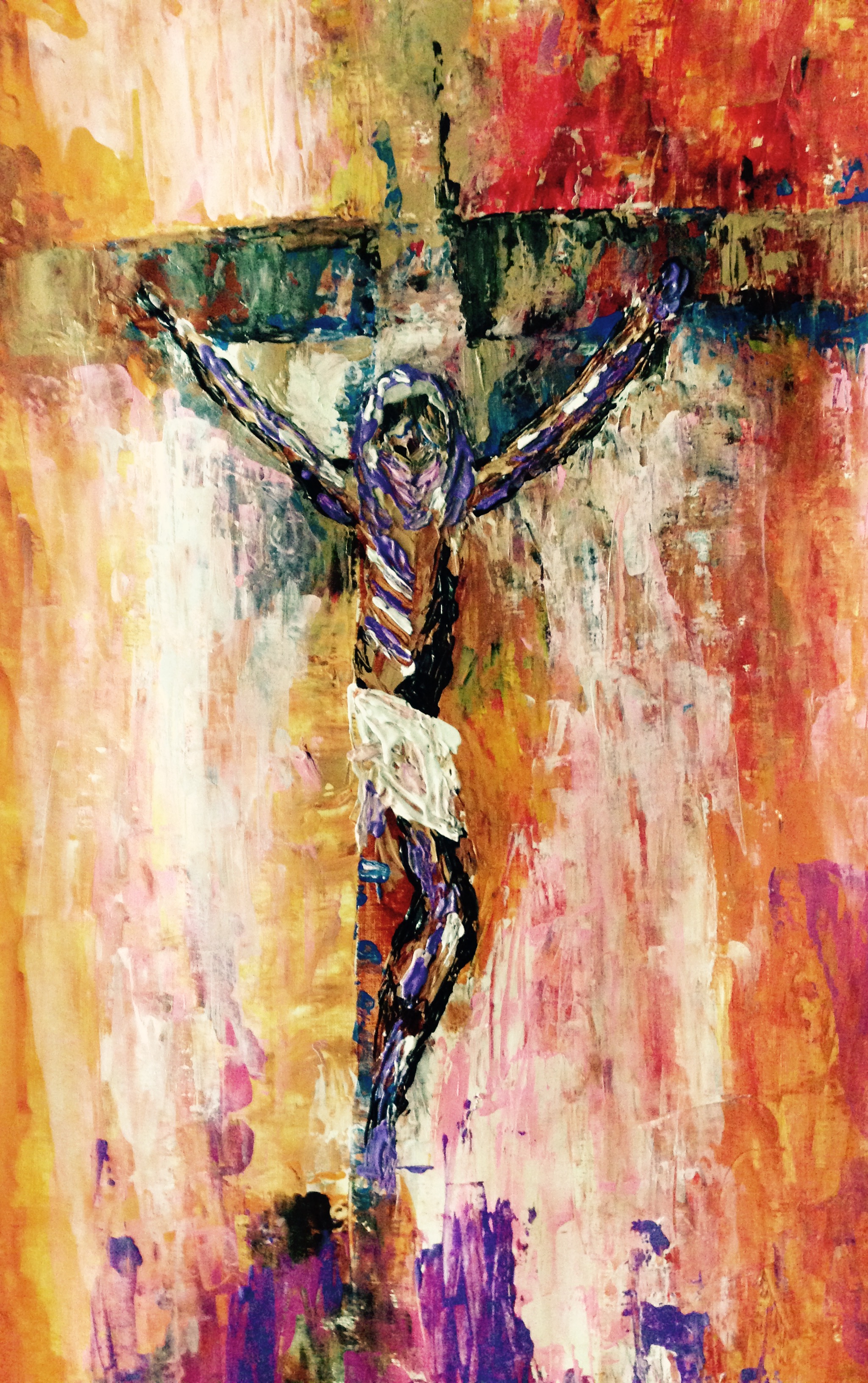
Under the cross where worthiness lives

“I have been crucified with Christ; yet I live, no longer I, but Christ lives in me.” Gal 2

 People seeking faith need to see the Church vulnerable in our need for God. If we are to be credible witnesses to God’s truth and mercy, then our evangelizing efforts must carry within our own hearts a humble need for God. We cannot survive in the life of the Holy Spirit buy living under our own ideas, opinions, answers and directions. Every invitation to join the Church to the non-believer and every act of worship for the believer begins in a humble notion that only God fulfills our lives. Christ’s passion, death and resurrection begins our liturgy not as a pious reminder of the past, but an act of sheer need by all who long to follow Christ Jesus. So we begin in the name of the Father, the Son and the Holy Spirit.

I invite the assembly to mark their mortal bodies with the sign of salvation. This gesture of the Crucified on foreheads, chests and shoulders claims our identity. In the outside of our chapel building a large steel cross tells the world of this brand. In our lobby, the logo of my religious community, the Congregation of Holy Cross, the cross and anchor, shows everyone who walks into the chapel building that the cross of Christ is our only hope. The sign of the cross on our human bodies shows us more personally that Christ Jesus is present for our own lives and that of the community.

Yet, under the cross on our bodies lies the belief of many people that they are unworthy of God and the attention of our community. Within our community I hear many stories of childhood abuse that caused a lifetime of depression and despair. One of the most devastating reminders of abuse is when people look back on the abuse and blame themselves. This self-blaming behavior manifests in the degradation of people for the rest of their lives.

Several years ago, I offered a Saturday morning retreat for people living with depression. Fifteen people arrived in our parish center. As the morning progressed, we all learned that all fifteen people participants were sexually abused as children or young adults. (Certainly not all depression comes from abuse; this statistic is extraordinary from this group.) I saw in the sad eyes of every person that medication could not heal the stigma of abuse. Every person told stories of how no therapy or counseling or psychiatrist had provided solace or a new identity beyond their abuse. These therapies are usually helpful for many people. Many in the group had searched for well over fifty years for answers and relief.

Most of the people in the group had never heard another person verbally link their pain to the healing of Christ Jesus. I spent most of the sessions with two other facilitators listening to their stories and sharing again in a gentle, calm voice the stories of healing and love that are found in the scriptures.

The people who attended the session began to open up; they slowly began to trust people within that supportive circle. The healing that occurred went far beyond any therapy they had received; the healing was deeply rooted in the power of Christ’s presence. People found a glimpse of a new identity in God’s love. The Paschal Mystery, Christ’s passion, death and resurrection became so clear, present and honest.

That single morning of retreat turned into a group gathering every other month for the next three years. In that group, I found the real meaning of the Penitential Rite. I discovered that every time we gathered that we needed to bring our suffering immediately into the promise that God’s fidelity heals us all. This is what this next moment in the sacred liturgy is all about. God’s mercy overwhelms our doubt, our insecurity and our negative labels we have of ourselves and other people.

Lord, have mercy! This crying out is a revelation of love. This posture of prayer means that we have already found our desired home in the graciousness of God. We gather at the great Feast of Salvation ready to affirm the fact that God comes to us in weakness and in honesty. The adults around that conference table still teach me about waiting for grace and searching for healing in the sacred liturgy.

I will never invite people in our community as we begin the Eucharist to strike their breasts in an expression of unworthiness of God. I avoid this particular gesture among marginalized people because life already beats them down. I never want folks to think that their abuse was their own fault. Most people with mental illness do not need to be reminded of their fear that they are unworthy of God. For many people who live with obsessive-compulsive disorder, they know repeatedly that they can get into a trap of hopelessness and despair through this gesture.

For many people who have been beaten and abused as children, they cannot bear a public invitation to keep the abuse going. For many women who have suffered breast cancer, I do not want them to be reminded of their pain and loss. For many women or gay and lesbian people, they do not need another public scolding. This gesture within this Penitential Rite of striking the breast should not be confused with put-downs and unworthiness. We seek God’s mercy that is available for us in our baptismal life and in our willingness to come before God at every Eucharist.

I am reminded of these put-downs now well beyond the circle of stories of people who suffer depression. I overheard a young man walk up to our front desk one day hoping to get some new clothing in our hospitality center. His face was bloodied. His lip was swollen and saliva dripped out of his mouth when he spoke. His arm was swollen and most likely broken. He was robbed the night before in his sleep, beaten by a man using a baseball bat. He did not need on that day to be reminded of his fears of his unworthiness before God by beating himself.

The striking of the breast may become a violent gesture for some people. The women who sleep outside our building on some nights remind me that they are often there in the first place because of domestic violence. Striking the breast may become a cruel gesture for people who have already been beaten by a spouse or tormented by a loved one. The Penitential Rite begins the liturgy for us to be grounded together in our common need for God. Here we know again that God is the source of salvation and we are not. We lift up all that is worldly, sin and doubt, hardship and grief, into the glorious awareness of the mercy of God. Under the cross of Christ marked again on our human bodies, we discover the safety of divine love.

I never take for granted the words of absolution that I speak in the Penitential Rite. I often hear priests rush through these words. The words are a sacred fire that burns within us all. They are meant to invigorate our souls to unite us again in divine love and forgiveness. I give voice to God’s love for the sinner, the marginalized and people living in doubt. I can never speak these words casually or mechanically. These priestly words are rooted in the real lives of the people who hear them. I do not speak them to reveal my own power, or to make me look good or to set me apart from others. Within them, I also claim my own sin, my own unfortunate decisions and my human mistakes. Unless I am willing to connect this absolution to my own sin and the lives of others, I am a cymbal clanging, an empty voice of false power and authority.

Several years ago I told some of my life stories in a parish retreat. I stood in front of the group feeling extremely vulnerable. This takes practice for us who are put on pedestals, who lead others and are bound by various professional boundaries. The following day a woman who suffers profound mental illness spoke to me before Mass. She had attended the retreat on the previous day. I was sitting in front of the Tabernacle. She thanked me for my ministry here among people with mental illness and loss. She then spoke of her appreciation that I was vulnerable in my sharing with the group the day before. She said to me, “The last thing we need here is a priest in a box.”

A great grace was given me in her words. I heard in her voice a message of forgiveness. I felt she spoke for the entire congregation. I felt the grace of an absolution coming from the profound faith of a parishioner who has suffered so severely for many years. From her poverty, illness and abuse, she opened up for me a new reliance on God and the community. This is the dialogue of contrition within the liturgy; this is freedom for us all in the Risen Christ.


On The Margins – Luke 24:35-48

fr_ron_and_kbvm_readingBWListen to  “On the Margins”. This broadcast comes from KBVM 88.3, Catholic Broadcasting Northwest. Jesus appears to his disciples and they are afraid. We are not absent from fear even though Easter is here. Peace is Jesus’ gift to us. Love is an ongoing gift within the Eucharist.  Third Sunday of Easter, April 19, 2015.

Listen now: [audio https://dl.dropboxusercontent.com/u/75239779/On%20The%20Margins/On%20The%20Margins%20April%2019%202015.mp3]

Stream live On The Margins on KBVM 88.3FM on Saturdays at 8am and Sundays at 8am.

On The Margins – John 20:19-31

fr_ron_and_kbvm_readingBWListen to  “On the Margins”. This broadcast comes from KBVM 88.3, Catholic Broadcasting Northwest. Jesus invites the disciples to touch his wounds. Thomas probed the mystery of the wounded Christ. The disciples broke through fear. Jesus invites us to do the same. On this Mercy Sunday, we long for Christ’s healing presence.  Second Sunday of Easter, April 12, 2015.

Listen now:

[audio https://dl.dropboxusercontent.com/u/75239779/On%20The%20Margins/On%20The%20Margins%20April%2012%202015.mp3]

Stream live On The Margins on KBVM 88.3FM on Saturdays at 8am and Sundays at 8am.

Two former pastors: Fr. Clem and Fr. Bill

Fr. LeRoy Clementich, CSC

Fr. LeRoy Clementich, CSC

Fr. Bill Neidhart, CSC

Fr. Bill Neidhart, CSC

I caught up with two of my former pastors, Fr. Clem and Fr. Bill who both live at Holy Cross House. So good to see both of them on my anniversary! What a gift they have been to Holy Cross and the Church for all these years. Such a delight to spend the afternoon with these two holy priests. Fr. Clem and I were together at Sacred Heart in Colorado Springs from 1984-87. Fr. Bill and I were at Saint Francis in Burbank from 1995-96.

Ministry and Liturgy Magazine: April 2015


423cover


(This is my monthly column, “Bridge Work” from the April 2015 issue of Ministry and Liturgy Magazine.)

Touching the hem of leadership

When I returned to Sacred Heart Church in 2013, nearly thirty years after I was assigned here in 1984, I went into the sacristy and opened the vestment closet. The original wool vestments that my pastor, Fr. LeRoy Clementich, CSC commissioned in 1984 were still hanging in the end of the closet. An entire liturgical set of vestments with hand-woven, overlay stoles were designed and sewn by a monk in Minnesota.

These vestments brought back more than just good memories of celebrating the sacraments with wonderful people. These vestments were from an era when we still believed that all church art was to be reinterpreted in the modern era. The 1980’s were still the time that our faith in Christ Jesus was to be interpreted on the local level in architecture, stained glass, vesture, statues, music and hymn texts and all artistic expressions of being church.

I fear that much of our artistic expression within the liturgy, especially in vesture, subsided in that era. It is no wonder that these vestments have been pushed to the corner of our closet. Now with polyester fabrics, the designs and symbols, the style and execution of most vesture is made to look more traditional, from an era before the Second Vatican Council.

So in the colder months since I arrived back to Sacred Heart, I have been wearing Fr. Clem’s vestments. They mean more to me than a fine memory. As I pull down the heavy wool cloth over my body and surrender to the stole over the chasuble, I pray that I may fulfill his role of leadership that so many people loved and admired.

I recall his fine leadership more today than I appreciated at the time I was with him from 1984-87. I ask Jesus to be with me in the celebration of the Eucharist in the ways the Holy Spirit built up our community with the same vesture decades ago. I also pray for Clem who turned 90 in 2014. I want now what he had then when he celebrated the Eucharist, to be open to Christ’s presence and love every day.

The mantle of leadership that the heavy stole represents is never easy no matter if it is designed by hand or machine. This leadership goes back to the power of Christ Jesus. We hear this in Mark’s gospel on the Thirteenth Sunday in Ordinary Time that a woman approached Jesus in the crowd and longed to touch the hem of his cloak. Once again, a woman who was powerless in the culture knew what Jesus could do for her in her greater powerlessness of being ill. This moment also represents Jesus’ resurrection when Mary Magdalene came to his tomb and found his body not in the tomb and a cloth lying in the corner. The small piece of cloth that wrapped the head of Christ becomes our own baptismal garments so that we will all be healed.

Jesus garment was not mass produced by machines, not ordered from a catalogue or designed to look like it came from some other time and place. His garment was significant because he was wearing it. His garment was significant because his healing power could not be contained within it. Jesus’ garment did not hide the fact that healing grace flowed through the material. His sweat-stained garment with a filthy hemline from traveling the road was considered to be all that people needed to touch so that their spirits, bodies and souls could be made new.

Many clergy today would consider Fr. Clem’s hand-made vestments to be out-of-date. However, the real meaning of the chasuble and stole is authentic in any generation. All of these vestments must lead people back to Jesus’ dusty, sweaty garment that was touched by many who needed healing. Today, our vesture must be connected to our baptismal garments and the new life that comes from our sacraments. This garment is also connected to communion veils and wedding dresses, to school uniforms and hospital gowns when people face change and opportunity in life. We need to connect our vesture to the body bags of the dead and even the second-hand clothing worn by people on our streets. Our liturgical vesture is even connected to our death shrouds that will cover our people in burial.

The white chasuble designed by the former monk has now yellowed. The modern designs of the stoles look dated from years gone by. The memories of Clem’s leadership seem alive and new when I feel the cloth on my body. The weight of leadership as a priest and pastor will always be a balance on my shoulders, within my heart and in my prayer and my utter dependence on Christ Jesus.

I know I cannot pray at the Eucharistic table or even live without connecting these heavy wool vestments to the love Christ has for our people and for me. I stand at the altar of God raising my hands in prayer feeling even more the weight of the vesture and the grace that flows from the Eucharist and the hem of this ancient garment.


On The Margins – John 20:1-9

fr_ron_and_kbvm_readingBWListen to  “On the Margins”. This broadcast comes from KBVM 88.3, Catholic Broadcasting Northwest. A Blessed Easter to everyone! We celebrate Christ’ resurrection. This gift breaks through our pain, doubt and suffering. All things are in Christ Jesus, There is promise for all relationships. God is faithful to us.  Easter Sunday, April 5, 2015.

Listen now: [audio https://dl.dropboxusercontent.com/u/75239779/On%20The%20Margins/On%20The%20Margins%20April%205%202015%20EASTER.mp3]

Stream live On The Margins on KBVM 88.3FM on Saturdays at 8am and Sundays at 8am.