Published by: Liturgical Press, Collegeville, MN
60-Second Sermon: Eighteenth Sunday in Ordinary Time, August 1, 2021
Reply

Published by: Liturgical Press, Collegeville, MN
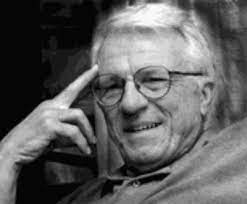
We memorialized a spiritual giant yesterday, Steve Handen. A former priest. An advocate for life among God’s poor. With his wife and children, he offered hope to the marginalized for decades in Colorado Springs. Many service organizations in Colorado Springs bare the mark of his influence, his prophetic words, and his organizational skills.
Steve was the grandfather of the social gospel in Colorado Springs. He believed in God. He believed in people. His prophetic, yet humble voice, challenged church and city leaders. His manner exemplified his inner life. Visiting the prisoner, feeding the hungry, clothing the naked, sheltering the homeless, were not just passing remarks of Jesus Christ, but Steve understood that salvation depends on how we live these commands in our society.
I so admire Steve Handen and his faith life of honest service. After the Mass yesterday, a leader of a service organization came up to me, offered me a hug, and I wept in her arms. I told her I have felt so diminished by the pandemic in my role as pastor. I felt the grief of Steve’s passing, but also the passing of the social gospel in our Church. As I looked at the crowd in our pews, most of the people were older. I entrust the social gospel and the voice of people to God. God’s love will reveal how we care for one another. I must believe.
Tears open new doors. Our role is to continue to listen to the gospel and to learn from our prophets in our world. When grief breaks us open, new life will lead us. Goodness in God prevails. Steve’s legacy has just begun.
Steve Handen, rest in peace.
July 25, 2021
Dear Followers of Jesus,
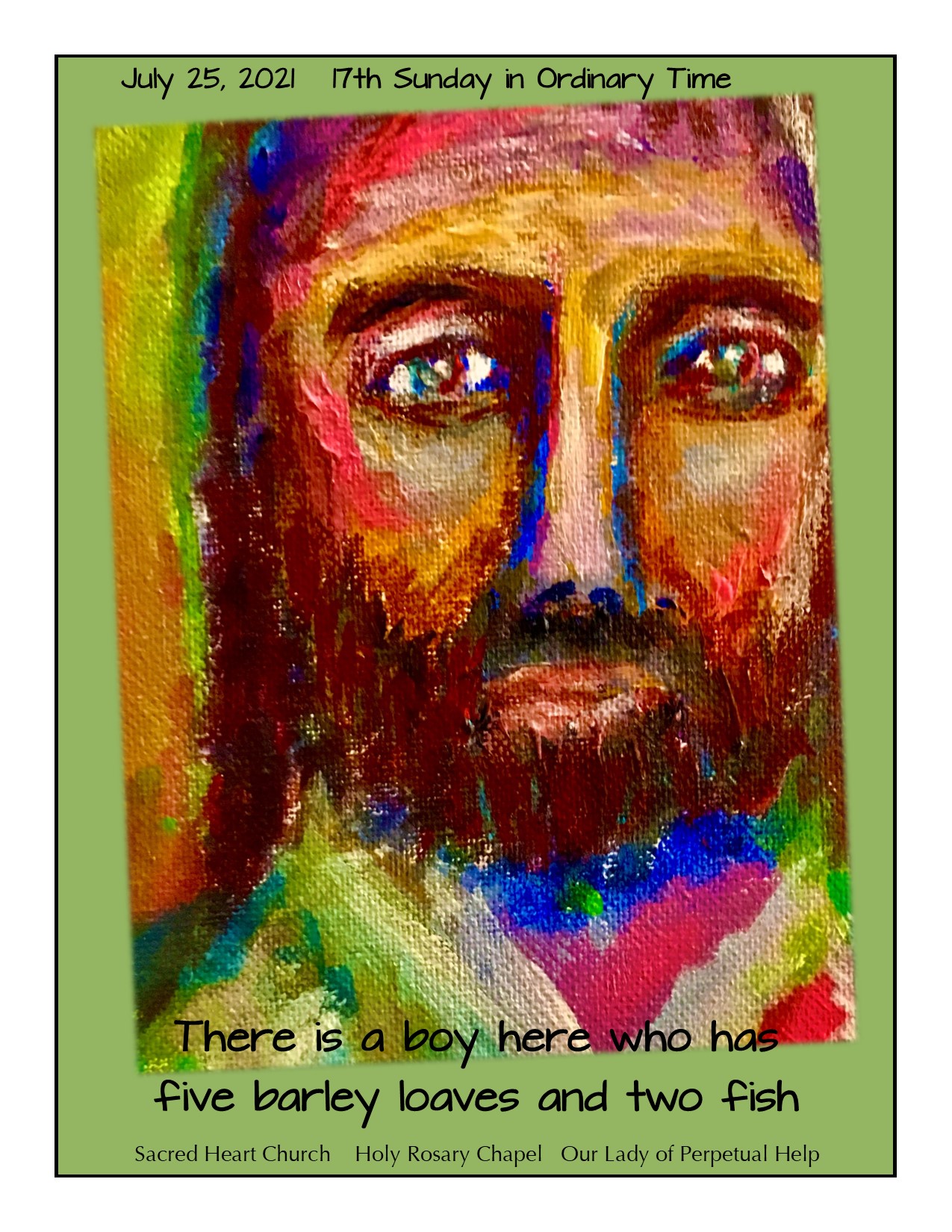
In this passage, John 6:1-15, we encounter Jesus who offers his followers abundance. People gathered to listen to him. They were hungry. They could not find enough food on their own. Jesus takes five barley loaves and two fish and offers it all to the crowd. Everyone was filled, everyone was satisfied, everyone was nourished.
At every Sunday Mass, I look out into the congregation and ponder the many needs of our people. I know a few stories of pain, of questions, of doubt. However, God truly knows us. In the Mass, there is plenty for each of us. God feeds us in the ways in which we need to be fed.
Imagine such a miracle for your own life, God aches to feed your unique hunger. There is plenty of grace, mercy, and kindness from God to go around. We just need to enjoy our portion, in the time given us, in the moment of God’s offering.
In the Mass, the scriptures are proclaimed. We believe when they are heard, they provide grace from God. Grace is present in the breaking open of the Word. The Real Presence of Jesus is revealed in each text. The scriptures become true food. We taste the sweetness of God’s covenant with us when the gospel is proclaimed and preached. We all long for this food of the Word of God to satisfy us. All we need is a heart that aches for such food and a desire to pay attention to what God offers us.
When we approach the altar and receive the Real Presence of Christ Jesus, God is longing to nourish us with forgiveness, with mercy, with hope and with peace. We already belong to his love, and he so desires us to finally conclude that we need Him. We do not receive the Real Presence of Jesus Christ as a reward for being good. We receive communion because we are all in need of such profound mercy and tenderness. God is not stingy. God is pure gift and offers us abundance of miracles where each of us may experience the forgiveness we need. God offers us a gift of himself so to nourish each of us in the ways in which we all need Him.
In today’s gospel, the disciples thought scarcity would rule the day. They just did not have enough food for the thousands of people. Jesus had other plans. He revealed abundance to all the people. In fact, there were leftovers. People had more than enough to eat. This abundance is still present in the Eucharist itself. God’s fidelity to God’s people is revealed in this gift. We may want to put limits on how God loves us. We may believe that God has a limited amount of mercy and forgiveness. When we want to put a limit on God, we then limit our own growth, our own spiritual lives and both God and humanity becomes limit and all too small.
We live in an era where God desires us to experience such abundance for the good of the world. We are constantly challenged to explore our role in living love, forgiveness, and courage from the example of Christ Jesus. We must go deeper in our relationship with Christ if we are to meet the demands of our world. Hate, violence, and despair are not the portions of life we need to feed our children. We need to explore the depth of God’s love, a food that never ends, an abundance that is rich for the asking.
This is truly the Prophet, the one who is to come into the world.
God give you peace,
Fr. Ron
May he rest in peace.
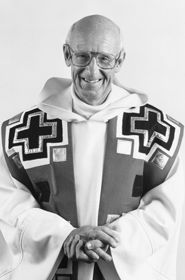
Clem died today, July 16, the 99th Anniversary of Sacred Heart Parish where he served from 1984-1993. I served with him from 1984-1987.
Clem was short in stature and a pastoral giant.
Clem first believed in Jesus Christ as a child, then lived his faith among people brought low by heartache, loneliness, and guilt. He learned in a one-room schoolhouse, then taught in universities and parishes. Clem acquired a work ethic on a North Dakota ranch, then lived out his beliefs at the altar in many sanctuaries.
He served in military discipline, then learned the flow of unappreciable pastoral life. Clem drove a yellow Volkswagen on streets and flew his favorite plane in the sky. Clem loved Texas Blue-Bells, Colorado Aspen, bird songs, and steep mountains, yet his life was firmly planted in the reality of people’s pain.
Clem read gospel commentaries every day, then authored newspaper columns of his everyday life in Christ Jesus. Clem loved new ideas and approaches as a pastor, so to bring the gospel into greater light. Clem broke through the challenges of Vatican II and found God who loved him and the people on the edges of Church life.
Clem jogged his way to health after suffering prostate cancer. Bishop Hanifen in Colorado Springs, now 90, still remembers his 4:00am runs.
Clem taught me to lock church doors. One Christmas he talked down a thief wielding a knife in our unlocked church who wanted to steal the money Clem was carrying. I still ask Clem for forgiveness from that moment.
Clem laughed with us. He loved us.
Clem penned his homilies prior to Sunday, until one day he found them in his heart.
Fr. Clem commissioned a monk to design and sew wool vestments and a local potter to create liturgical cups and plates. He believed that Jesus is revealed in human creativity and the work of human hands. I still wear those chasubles, with remembrance and love.
Clem served nine years as pastor of Sacred Heart Church in Colorado Springs. I serve in that exact position but cannot hold a candle to his leadership and influence.
Fr. Clem, rest in peace.
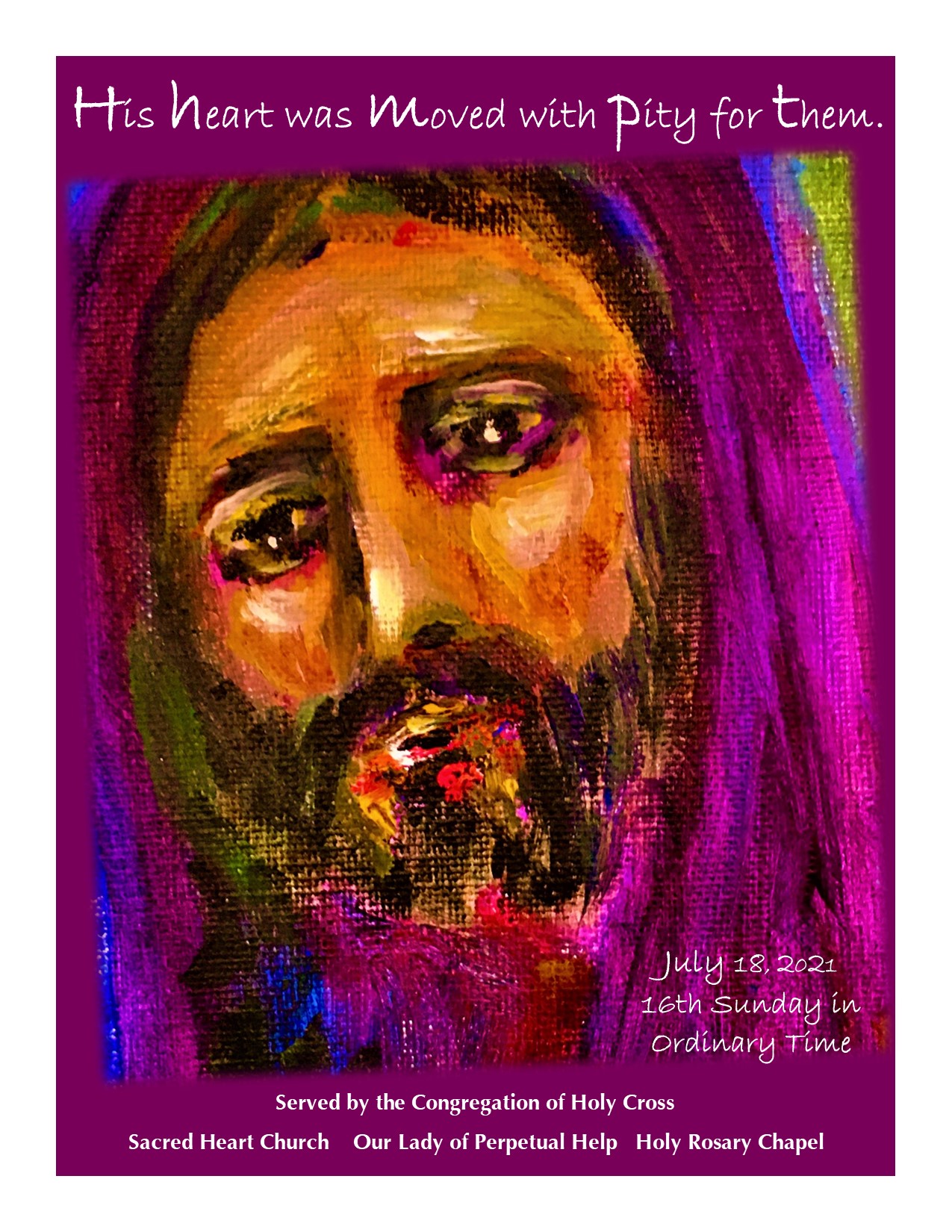
July 18, 2021
Sixteenth Sunday in Ordinary Time
Dear Followers of Jesus,
In Mark 6:30-34, Jesus invites his disciples to gather and rest a while. Jesus modeled a life of prayer and service to this band of brothers who desired good things. He knew that stepping back from service and into some time for prayer was essential. This is no different for us who follow him today.
In summer, we take time for a different perspective. In the heat of the year, we gather for family picnics or work in the garden or take time to cultivate an interest or skill or craft. Vacations, retreats, conferences or wine and cheese on a patio, all offer us a different view and perspective from our yearly work, school, and life of tasks and obligations.
The liturgical scriptures invite us to rest. In doing so, we encounter the Shepherd who comforts us. This image of Jesus is important to both our prayer and our service to one another. Many people think they can muster the human power within them to face any task or any difficult relationship. Many people want to remain their own god. Nothing seems to persuade them, for in our society we are taught to be and remain self-sufficient.
However, this self-sufficiency is the death of our spiritual lives. Eventually, we all conclude that we cannot fix our pain or solve all our relationship struggles. We cannot control people or even heal our own sin. We need God. We need a life of prayer that opens our hearts to the deeper life God has for us. In this deeper life, we can become the people God desires us to become. We can grow in compassion, in forgiveness, in our desire to put others first and not our own needs. Only in prayer can we learn tenderness for the downtrodden and learn to help those who have less power than we do.
The life of the Shepherd is the source of tenderness. After all, the Shepherd chases us down, he desires to heal us, to forgive our past and he puts us on his shoulders and calls us his own. This simple and yet profound image of Jesus Christ is at the core of our life of prayer. Without the shepherd, we lose ourselves in our power that becomes abusive to ourselves and to other people.
Prayer becomes prophetic witness of God in our world. Our prayer is not private devotion. The Mass is not private devotion. Our prayer may be personal, but it is never private because we belong to the Body of Christ on earth. Our baptism is key to our life of prayer. The prayer of our inner hearts becomes a way in which God longs to renew our world. Prayer always leads to conversion, to change and eventually a prophetic witness of God’s love in our world.
The Shepherd, Jesus Christ, challenges our human ego, our human power. We are united to Christ always; we are never alone. The Christian life is not about pulling ourselves up by our own bootstraps. The Christian life is to remain in Jesus Christ in our prayer and in all the ways in which we serve. Jesus, the Good Shepherd, claims us as his own. He desires unity with our hearts and every aspect of life.
I invite you to let go of your stubbornness. Let the Good Shepherd chase after your hardness of heart, your apathy, your ego, your cynicism, and your false power. The Shepherd is here in our midst. The Shepherd rests in every human heart. The Shepherd calls us by name, and then we learn to hear his voice and to recognize him, especially when we cannot find solace and concord in our hearts. Jesus, the Good Shepherd, teaches us to encounter love, and to live such a gift beyond our lives.
In our summer rest, I pray we may touch the mystery of the Shepherd’s love for each of us.
God give you peace,
Fr. Ron
Today is the Memorial of Kateri Tekakwitha. This article was published in 2017 from Liturgical Press, Colleville, MN
Scars, Tenderness, and the Heart of Faith
Kateri Tekakwitha, an Algonquin-Mohawk woman, was baptized in 1674 at age nineteen. Her face scarred by smallpox as a young girl, she carried in her heart a faith-filled relationship with Jesus. She died at age twenty-four, bearing the tension of scars and tenderness within her body.
We all carry ugliness and beauty, despair and hope, insecurity and faith. We are deeply, profoundly human and yet long for the freedom and love only Jesus can offer us. We are sent into the world to bring joy to the dark places of people’s lives. We are to witness the Kingdom of God no matter the threats we face each day.
When we believe in the love of Jesus, we will be in conflict with the world. The heart of faith rouses mistrust, fear, and anger in a world that is threatened by love and gentleness. We carry the scars in our vocations, within our commitments to serve. Yet we possess within our hearts the voice of Jesus that provides food and hope for our journey.
St. Kateri roused conflict among her people when she converted to Christianity. The fire of her heart sent her fearlessly into faith, relying only on the love of Jesus. She endured until the end. Witnesses reported that within minutes after Kateri’s death, the scars on her faced were healed. The love of her heart prevailed.
Take delight in the Lord, and he will grant you your heart’s request.
Fr. Ronald Raab
Liturgical Press is presenting this video on the evening they are praying the Stations of the Cross in Atonement for Abuse and the Healing of All on July 27, 2021 in New Orleans. Click here to learn more about this year’s convention. Paul Turner and I explain the project for the convention.
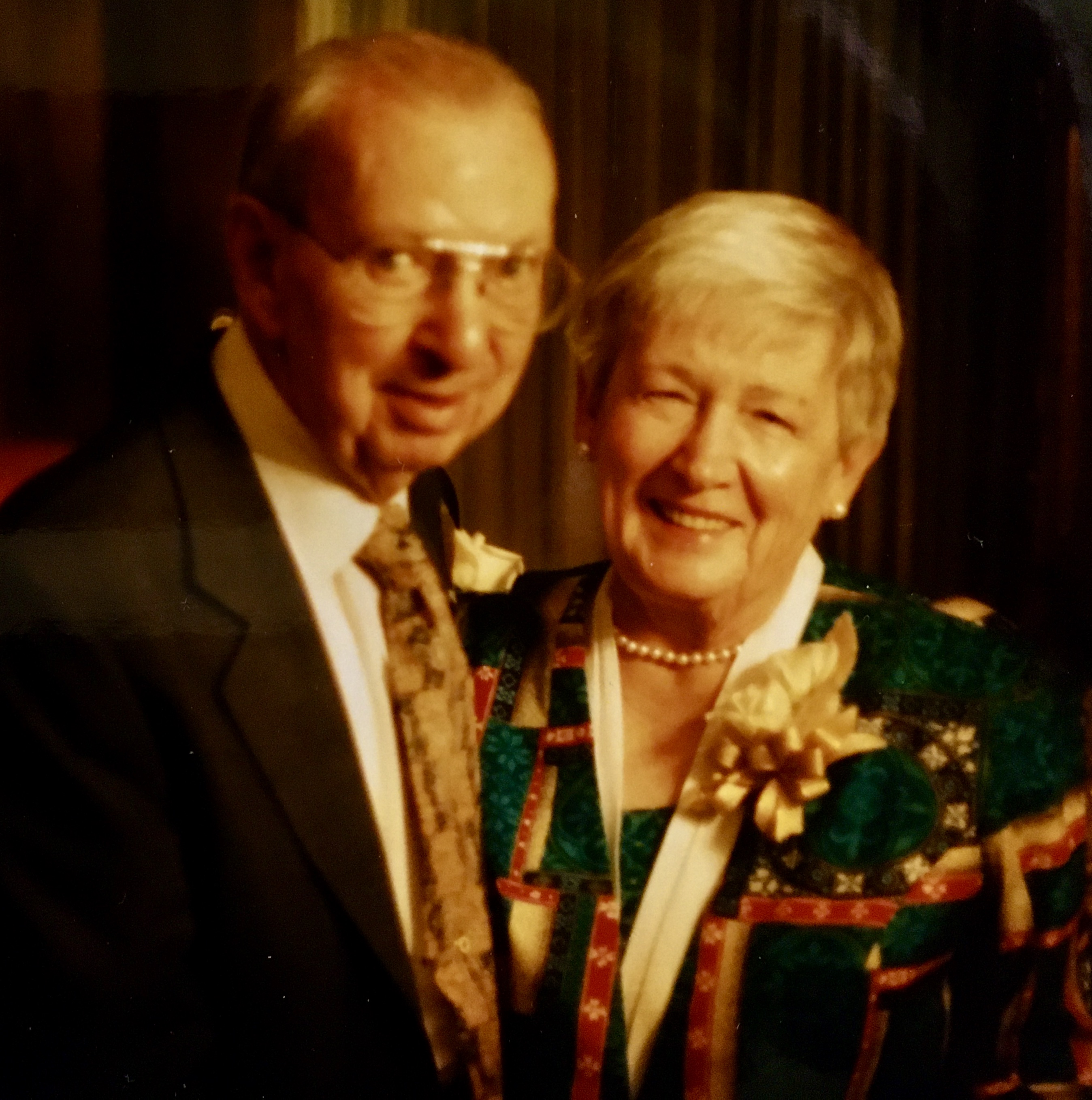
Today would have been my mother’s 100th birthday, July 8, 1921. This article was published in Ministry and Liturgy Magazine in September, 2010. My mother died on July 3, 2004 and her funeral was on July 7, 2004. Rosemary Ella Raab, rest in peace.
Preference for Pink and Perseverance:
I caught the shade of a large tree as I waited for people to arrive at the cemetery. A gentle breeze blew through the branches of the oak. We gathered on the sunny July morning to commit my mother to her grave. Her sister and brothers and their spouses sat in the folding chairs near the large hole in the earth. Large bouquets of white flowers were propped up against the casket waiting for us to say goodbye. My stoic body straddled the green artificial turf covering the mound of dirt that created the opening for my mother’s grave.
The warm breeze felt refreshing after wearing heavy vestments during the funeral at the church some miles away. The moment caught me in a loneliness that I will never forget. Here, in this time and place, this cemetery, I had to say a last goodbye to my mother, the person who birthed me into the world.
After praying the rite of committal, we all waved to my mother with both hands. This was a gesture she used in all her goodbyes. I stood silently in this solemn moment that connected heaven and earth. I tried to feel the light breeze on my skin, the fake grass under my feet, and the ancient prayer book in my hands. I absorbed the vision of her siblings’ aching faces and the empty expressions of my brother and his family.
In that quiet second, something amazing happened. An African-American woman wearing a bright red dress darted up to me. She grasped my right hand and took my arm to her breast. Looking me in the eyes, she told me that she was a seer. She whispered in the breeze that she felt my mother’s passing. Holding tight to my arm, she told me that my mother told her two things to pass on to me.
The stranger told me that my mother enjoyed the white flowers, but she preferred pink ones. She then bent even closer to my face and said that my mother wants me to persevere in my priesthood. The strong-gripped sage told me that I did not need to know her name or anything about her. She let go of my arm and drifted into the crowd, got into her car and drove out of the cemetery.
I could not believe my ears or my eyes. No one overheard that she felt my mom’s passing and no other mourner experienced her grip or felt her words. When I arrived at the luncheon after the services I asked everyone if they knew the red-dressed guest. My relatives and friends assumed she was another friend of mine especially after hearing her sing during the rite of committal.
I reminisce about my experience in light of the gospels proclaimed during the last weeks of our liturgical year. As I look back on that sacred moment, I feel deeply the promise of Paradise. Standing on artificial grass that morning I experienced the beginning of a new heaven and a new earth. The line between this world and the next blurred with the words of a stranger. I never try to guess the sage’s identity or wonder from where she came. I take her at her words. I want to live in the mystery that I do not have all the answers nor can I control how the end of life will take place.
Standing under the shade tree at the cemetery also takes me to the time of Zacchaeus risking his life climbing a tree to glimpse Jesus. Instead, Jesus tells Zacchaeus he wants to stay at his home. On that July morning, I felt the invitation of Jesus to feel the shade of the oak and know that all of life was in his hands. I believe on that sunny morning salvation came to our family’s house.
I felt the humility of the tax collector praying in the temple. He humbled himself and was exalted. He knew his place in prayer in light of his life and sinfulness. Leading my mother’s funeral was indeed a humbling experience, especially hearing the red-dressed woman remind me to persevere in priesthood in good times and bad. Her words were especially humbling knowing that they reflected my mother’s intentions.
I do not know the real identity of the woman at the cemetery or the legitimacy of her words. However, I do know I always sent my mother white flowers, but in fact her favorite color was pink. I always felt my mother’s support and love in my priesthood when she was alive, even on days when I wanted to give up. In these November days, I carry myself back to the moment under the shade tree and remain grateful for my mother and my conversation with a red-dressed stranger.
 Broken But Not Divided