Competing Voices

Originally published by Ministry & Liturgy Magazine, September 2011
– PDF version –

I learn the deep meaning of Advent from people who hear voices all during the year. For many people who experience lifelong mental illness, sorting out the voice of hope and love during the holidays becomes very challenging. Last Advent, I spent some intentional time with several people who regularly teach me the complexities of living in our culture and struggling to hear the voice of God.

The paradoxes between Thanksgiving Day and New Year’s Day are legion. Last year on the day after Thanksgiving, the local news stations were reporting that the advertisements in the Oregonian newspaper weighed four and a half pounds. We were all expected to begin the season listening to the voice of consumerism, carrying the heavy load of a newspaper and the burden of purchasing gifts for loved ones. People living in poverty show me the problem of such expectations. Most people cannot afford such gifts. More importantly, most people suffering mental illness do not have loved ones to buy a gift for in the first place. Many families disown their members with chronic mental illness. Other families may be more supportive, but mental illness itself may cause a son or daughter, parent or spouse to break off contact completely. People living on the streets or in low-income housing have little family support and few friends.

I listen to the voice of the Advent gospels with a new ear. I hear the adult voice of Jesus telling us to be watchful and alert. These words get wrapped around much apprehension for many people who hear voices telling them that they are not worthy of Jesus. So many people become agitated and anxious because they feel they do not live up to Jesus’ standard already. Hearing the voice of Jesus in Advent becomes difficult when people already live with a deep sense of unworthiness and depression. The voice of the beloved Savior eludes so many people.

John the Baptist cries out from the desert to prepare us for Christ’s second coming. His clear and sharp voice may also be interpreted in many other ways. For many people who suffer from post-trauma related conditions, John’s voice may bring much fear to their lives. They clench their muscles and cringe when a sudden voice calls out in the night or when there is a knock on the door. I learn to turn down the volume of John’s insistency to straighten up our lives. John wears minimal clothing and eats little food as do so many people who already live outside and survive the cold nights.

Advent articulates the many competing voices of despair and hope, darkness and light, loneliness and communion. These are the mix of emotions so many families face in preparing for the holidays and the coming of Christ. These are the voices our parish communities must help people discern and sort through. We need so desperately to find the voice of God in our lives and parishes. So many people long to sort through the competing and complicated voices that shout that purchasing material things will make us all happy. We need to help people find life amid the overwhelming expectations that every person is happy, joyful and fulfilled in every way. We must sort out for our children their ingrained sense of entitlement that they deserve every toy, gadget and European trip during the holiday season. This is the real work of our worshipping communities during the time between Thanksgiving and the end of the Christmas season.

A twenty-something college graduate stood in line to be anointed after Mass during Advent. I had spoken to him only one time before. He told me that his mental illness was getting worse. He stood in front of me sobbing, leaning his head on my shoulder. I tried with all my faith to find the words of an angel that greeted Mary “Do not be afraid.” So many people are unable to receive the consoling voices of scripture when the many voices inside them are so convincing. The message of fearlessness must be interpreted in every parish community in so many different ways during the Advent season. We all need the many angels of consolation and hope.

Last year at the conclusion of the Advent season, I noticed a sign posted in our parish office window. “On Wednesday, December 23 we will be distributing sleeping bags and backpacks.” I stood before the sign and started to cry. The sign was a reminder of how people were going to spend Christmas, alone in the cold. However, I was also grateful for the small step to provide something warm for people. Advent and life come wrapped in many unfortunate realities amid God’s voice of love.

Off The Wall

Originally published by Celebrate! Magazine, Fall 2011
– PDF version –

A wooden crucifix hangs on the back wall of our simple sanctuary at the Downtown Chapel in Portland, Oregon. It hangs off-center above the light wood altar. The year when the Solemnity of the Triumph of the Holy Cross was celebrated on Sunday, I decided to emphasize the only cross in our worship space. In the early morning on Saturday, I retrieved our longest ladder from a storage space. I set up the ladder to hang a piece of red fabric behind the crucifix. In our very simple chapel a strip of long colored fabric behind the dark cross easily highlights the liturgical seasons.

I stepped up a few rungs on the ladder and took the cross off the wall and placed it on a side table. I then stepped up on the highest rung of the ladder to hook the fabric on a couple of hidden nails on the wall. Retrieving the cross, I climbed back on the ladder and hung the cross back into its regular position, now over the red material. The fabric seemed to catch the light shining on the cross; it was the perfect way to give a focus to the solemnity.

I started my descent down the ladder and all of a sudden the wooden cross fell to the floor. In a split second the carved wooden Crucifix was now in several pieces on the hardwood floor of the sanctuary.

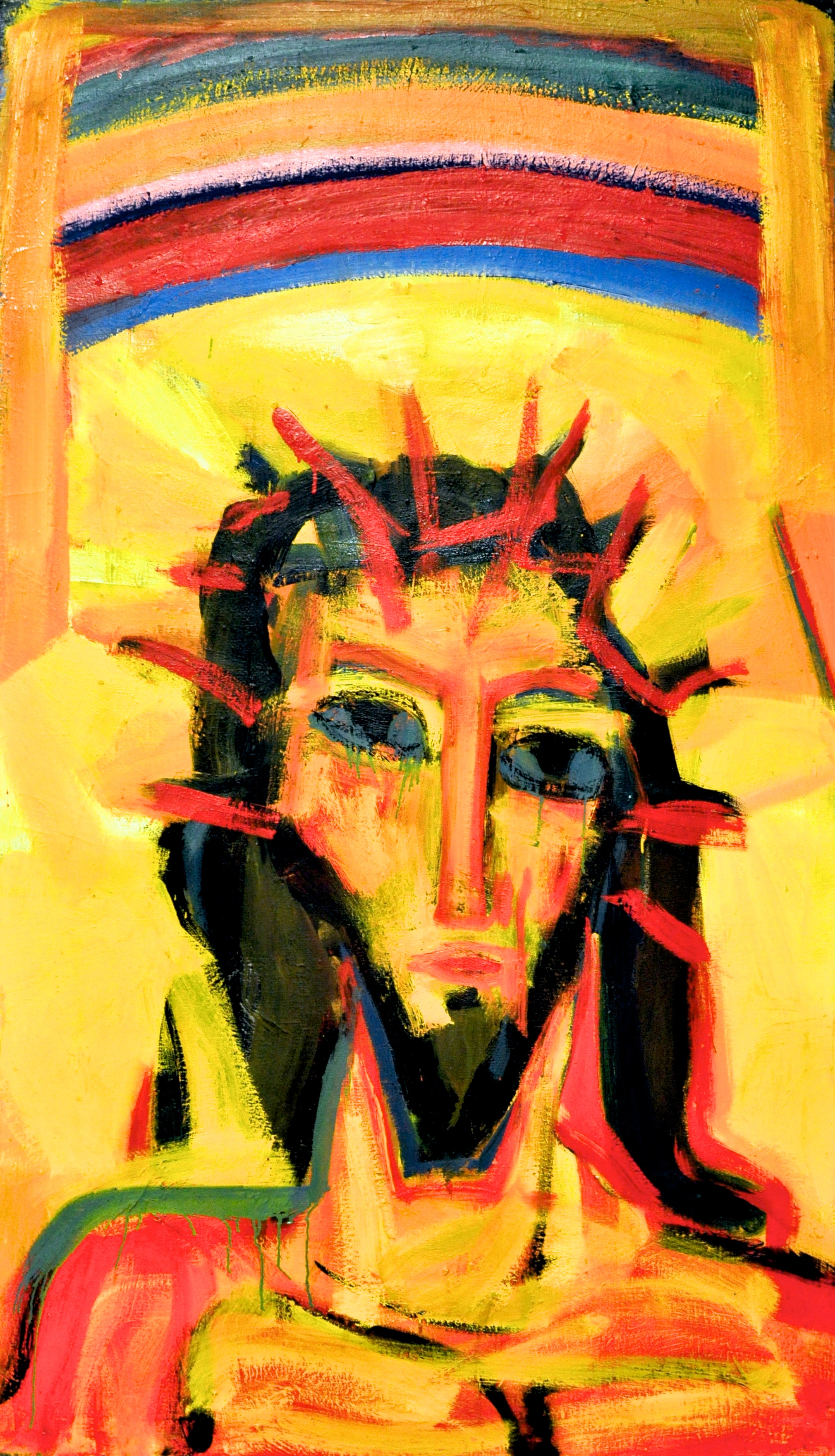
After enduring a few minutes of panic, I considered blaming the accident on the heavy music vibrations from the nightclub located on the other side of the sanctuary wall. Instead, I had an idea about how to replace the broken crucifix for the time needed for its repair by putting something else in its place. We hang a large painting of the face of Christ, normally found in our rectory, in the sanctuary on Good Friday. It is an explosively dynamic portrayal of the Crucified Christ in red, orange, yellow and blue paint.

When our parish gathered for Eucharist that weekend, the bright, bold painting certainly caught their attention for the solemnity. I never told members of the parish of the accident. Seeing again the face of Christ, many members began to connect the pattern of Christ’s death and resurrection to the faces of people living in poverty. As I listen now to the sacred texts now for the closing weeks of another liturgical year, I see the importance of getting the cross off the wall and embracing its life-giving message in the midst of daily life.

Jesus confronts us with the shattering news that prostitutes and tax collectors are entering the Kingdom of God before the rest of his followers. Jesus reminds us that we cannot come to him unless we are willing to change our ways so to live with honesty and love. Jesus asks us to change our minds about following him because it is never too late. This message embedded in Matthew’s Gospel tells us that we cannot stand apart from the dying and rising of Jesus, but we must live this pattern every day.

I witness people facing up to their heroin addiction with a choice for sobriety or to face certain death. I hear the confession of a sex addict who has never known true intimacy in his entire life, the cross he carries into his next one-night stand. Jesus invites us to change our minds, our actions and follow the will of the Father. The cross is not just a piece of fine art hanging on a clean wall in the comfort of a small chapel. People living in poverty become the message of the cross for every person who enters our worship space.

One of our staff members found an artist who spent the next week repairing the cross. I found all the lost tiny pieces of wood that splintered from the corpus. I cannot help but think of the lost being invited to the banquet feast as I searched the floor. The servants invited everyone to the feast whether or not they were prepared. People were invited to feast on fine wine and good food that is still served to us who decide to follow the Christ. So many people are starving for this invitation because so many people feel so isolated from faith and the church. Not only did I pick up the fragments of wood, I began to see our stray people more clearly. I see many lost teens in our neighborhood. They come because the system of foster care and adoption fails many youth when their families of origin beat them or emotionally abuse them. I read recently that only one-third of parents whose child has disappeared even bother to report the child missing or lost. The Kingdom is ready for everyone.

Jesus tells his followers not to follow the example of the scribes and Pharisees. They put heavy burdens on others and do not lift a finger to help. Jesus reminds his followers that only the humble will be exulted. I fret and worry about the many people at our chapel door all week long. These are the people who are living out the message of the cross. This cross of humility is always before my eyes and gets caught in my heart. This cross is not an artist’s rendition of something that happened years ago. This cross is when people come to us daily needing medication for mental illness, diseases and broken bones. This cross means people have not showered for several months, have no families and often do not care whether or not they live. This cross screams out from frustration, urinates on our doors and eats meals from trash cans.

The life of Christ is not contained in wood, plaster-of-Paris, or bronze. We must love God with our entire heart, mind and soul. Jesus tells us that this cross of love must be lived for our neighbor. To extend ourselves in love and commitment to all people we call our neighbors is hard work. The real freedom of the cross of Christ is to live for other people and not count the cost. We must all see the reality of Christ living among people and not get stuck on an artistic image that does not affect our lives.

Jesus tells us that we are worth our daily wage. We are invited into the Kingdom of God even though we may be stubborn at first and only desire Christ in the eleventh hour. We so often take years to make the real decision to follow Christ and come to live the cross in every aspect of our lives. These reminders help every worshipping assembly live out the message of Christ Crucified. I prayed all week that our crucifix could be put together again and I prayed for people who remain weary and beaten down by life.

The artist put the pieces of the broken crucifix back together. He returned the piece of art to us perfectly assembled and polished clean. I hung the cross back in its place and no one suspected the accident.

I view the repaired cross hanging on our wall with greater respect for people who cannot always put their lives together. They live the reality of Christ’s dying and rising. The gospels teach a new understanding of the cross being lived off the wall. Now when I see the repaired piece of art, I pray for the people who teach me the genuine meaning of the celebration, the Solemnity of the Triumph of the Holy Cross.

The Unsheltered Heart: An At-Home Advent Retreat

The Unsheltered HeartNew for Advent 2011 (Cycle B), this at-home, self-directed retreat follows the same widely praised format used in the initial volume published in 2010. Inspired by the author’s ministry with Portland, Oregon’s most marginalized people and based on the Sunday gospel readings (included), this Advent booklet is unique in its profound challenge to find Christ in the disarming presence of the poor.

In the tradition of Thomas Merton, Henri Nouwen, and Mother Teresa, Ronald Patrick Raab, C.S.C., writes from the depths of his own conversion experiences. Living and working among some of the poorest and most marginalized people of Portland, Oregon, Raab struggles with the meaning of the Incarnation in today’s fractured world and with his own calling to promote the Gospel message of justice. His narrative style unsettles, challenges, and enlightens, yet in the end offers the hope of Christ dwelling among us.

This retreat is based on the Sunday gospel readings for Advent 2011 (Cycle B) and the life-anchoring lessons Raab has gleaned from them. The Unsheltered Heart provides a simple four-step process for each day of Advent that includes the gospel reading, personal reflections, commentaries, prayers, writing prompts, and spaces to journal for each day. A guide for small-group use is available for free download.

Order your copy of Father Ron’s latest book today.

The Glittered Dead

Originally published by Ministry & Liturgy Magazine, August 2011
– PDF version –

November in particular exposes memories of the dead. The liturgy celebrates what so many people experience out of doors as seasons change, that life itself gives way to death. The celebration of All Saints and All Souls opens a flood of recollections of the dead. As days get shorter our memories become more intense. The holidays become tender experiences for so many people unable to face the death of loved ones. Love is an incredible bond but so are guilt, regret and shame.

I realized this tension among people who straddle love and regret in the passing of a loved-one some years ago. Members of a family entered my office to prepare a memorial service for a relative. I noticed immediately hardened tension among the living. Each person told me that he or she was closer to the unmarried deceased man than the other relatives. The niece of the gentleman claimed to know him the best. The son raged against her claiming his spot among his father’s affection. The unnamed issues continued to do battle in the confines of my office space.

As the day for the funeral arrived, I felt the tension at peak level. However, what caught my attention before the funeral were the arrangements of funeral flowers that had been delivered to the church. A large colored ribbon flowed out of each traditional display of autumn chrysanthemums and long gladiolas. A word appeared on each ribbon describing the relationship between the person who purchased the flowers and the deceased, -“father”, “uncle” and “cousin”. Each name on the ribbon was written in glue and colored in glitter. The arguments over who was the most important heir continued over which floral design was most expensive and which ribbon carried the largest glittered name.

As I reflect on the gospels for the closing weeks of the liturgical year, I examine the priorities Jesus wants to instill within our discipleship. Jesus insists that the light of the Kingdom will shine brighter among the peacemakers, the poor in spirit and people who mourn humbly in the face of death. My experience teaches me that we need to give people the tools to mourn their losses and grieve prayerfully throughout life. The battles that were exposed during this family’s funeral tell me that we all struggle with our finite existence on earth. So many people are reluctant to believe they have a place in heaven and that relationships on earth can ever be healed, loved and forgiven.

Jesus reminds us that we need to be wise in our preparations for the Bridegroom. My ministry teaches me that we have lost sight of our basic belief that death gives way to life. Many families no longer celebrate funerals. Instead, “Celebration of life” parties have taken the place of the funeral liturgy. A local funeral home has been in business for 160 years. The owner recently remodeled the former chapel to act as a party room instead. Video screens, a grand piano and banquet tables have replaced the pulpit, pipe organ and pews. So many people coming to the funeral do not want any physical evidence of religion, ceremony or ritual. Party planners are replacing funeral directors. The wisdom of God’s invitation is replaced with our human control over how death will be celebrated on earth.

Jesus also tells us that in the end only a few things will be required of us. The kingdom will be offered to those who simply feed the hungry, care for the sick, visit the prisoner and clothe the naked. As believers we will find our true light when we offer service to one another. The person on earth with least influence is our key to heaven. This is the hidden grace of our faith. The Kingdom is open for us who are willing to sit with the dying who make us uncomfortable. The Promised Land is prepared for us who see Christ amid hardship, loneliness, imprisonment and hunger. Christ’s words are clear and challenging, yet our fear of death and our guilt over how we live remain so unyielding. We do not serve people in order to inherit their earthly goods after they die. We serve people in order to discover our true home in heaven and real love now on this earth.

I remember cleaning up glitter for weeks after that funeral. Celebrating each Mass during that time period I saw a speckle or two of glitter somewhere in the sanctuary. I claimed again the family in prayer at the sight of each sparkle. During the month of November, every parish community is invited into people’s memories of the dead. We all minister among arguments and hurt feelings around death so that we may encourage families that our differences will be sorted out in love.


Street Prayer for the Murdered

Today we will once again process from our small chapel into the streets after Mass. We will again pray just two blocks from the sacred sanctuary to end the violence on our urban streets. John was murdered last Saturday evening on the corner of Davis and Sixth. I have not kept adequate records over the years, but I think John’s murder is the ninth time we have prayed as a community that violence be washed from the sidewalks and hatred be swept into the gutters for good.

We will pray in the heat of summer near midday for the people locked in violence and addictions in the dark of night. These holiday weekends bring even more terror than usual. People from the suburbs come to our neighborhood with time and money. People on social security and disability just received their monthly checks this weekend. Loss of jobs, hopelessness has compelled many to give up on sobriety. These are the issues for our continuing procession to the streets after our procession to the altar for communion.

Today also marks the seventh anniversary of my mother’s death. My mother, Rosemary would have been 90 years old this week on July 8. I am reminded today as well about an event that happened at the gravesite on the day of her burial.

After the closing prayers at her grave, a woman in a bright red dress ran up to me. She held my hand close to her breast. She told me she was a seer. She whispered to me that she felt my mother’s passing and that I did not need to know her name. She then proceeded to tell me that my mother wanted me to persevere in my priesthood. The older, kind woman still holding my hand also told me that my mother loved the white flowers we all had for her, but that she preferred pink. She then left without another word.

As I gazed down to the casket on the bright July morning, I saw the mound of white flowers from all the arrangements from relatives and friends. My only thought was that my mother’s favorite color was pink.

I cannot give up on my priesthood amid the violence, addictions and hatred on our streets even though I have no solid answers for any of the issues we face. My mother’s request is not just for me. Her request is for all of us not to give up on the faith that calls us from the safety of the sanctuary into the tragic events that claim our neighborhood. I will process with our community from the dimly lit chapel today mindful of my mother’s request to keep praying for all who suffer and for all who have died.

Rosemary, pray for us.

John, pray for us.

2011 Catholic Press Association Awards

First Place- Best Regular Column Spiritual Life
Novalis, Toronto, Ontario, “Wheels Of Misfortune; Saint Doorkeeper; Advent: A Housing Project” by Ronald Raab, C.S.C.
Father Raab’s columns are marked by strong, clear, and vibrant writing. His descriptions are earthy yet deeply spiritual creating vivid word pictures that fill the reader’s imagination. His stories connect everyday life experiences with profound connections and meanings of the sacred. These columns reflect theology made real and invite readers to a deeper spiritual life.

Third Place – Liturgy/Book
Real World, Real Worship, Rev. Ron Raab C.S.C, World Library Publications, Franklin Park, Ill.
Wonderful personal reflections on the intersection of liturgy and life from the perspective of a pastor of a city parish serving the poor and those on the margins of society. Very creative method of forming ministers.

Articles from Celebrate! Magazine:
Brother Andre: Saint Doorkeeper
Wheels of Misfortune
Advent: A housing project

—–
I am very grateful to my editors at Celebrate! Magazine and World Library. I deeply appreciate Sarah Gregory who edits all my written words and even my thoughts about my projects.

Pentecost Prayer

On the Solemnity of Pentecost we bring the true yearnings of our hearts to the Holy Spirit. We ask for everything. Nothing is left uncared for or neglected in prayer. I write this litany and ask you to add to this sacred prayer the needs of your life and your perspective on the world. Next week we will be able to pray our prayers together.

Response: Ancient Spirit of God, refresh and renew us!

For people recently baptized and confirmed in faith…

For people who have left faith communities…

For people who no longer trust the Church…

For people who have been marginalized by faith communities…

For people who serve our faith communities…

For people longing for deep and lasting faith…

For people who feel unworthy of this earth because of self-loathing…

For people chained by mental illness and thoughts of suicide…

For people emotionally and sexually abused by families and clergy…

For people sentenced to prison because of mental illness…

For people ignored by society because of diseases of the mind…

For people living in shells of isolation and loneliness…

For people surviving multiple addictions…

For people existing under bridges and abandoned buildings…

For people who will never find adequate employment because of addictions…

For people relapsing this day…

For people holding on to recovery by only a breath…

For people who support and walk with wounded addicts…

For people who struggle to find heartfelt peace…

For people lost in war and national violence…

For people searching for survival in a foreign land…

For people grieving veterans and loss of dreams…

For people charged to bring peace among nations…

For people living among gunfire and insecurity…

For people living with chronic pain…

For people existing in fear because of undiagnosed diseases…

For people without adequate healthcare…

For people fearing loss because of illness…

For people longing for genuine healing in mind and body…

For people who care for our ill…

For people who have lost spirit and joy…

For people in transitions because of job loss…

For people who feel trapped in relationships…

For people who have lost family support…

For people needing to rebuild their lives because of storms and floods…

For people grieving family members and loved ones…

For people locked in past regrets…

For people fearful about death…

For people crippled by hoarding of relationships and wealth…

For people who long for a happy death…

For people who trust the Holy Spirit…

Lost Among Translations

Originally published by Ministry & Liturgy Magazine, June 2011
– PDF version –

Last autumn I attended the annual priest convocation for the Archdiocese of Portland, Oregon. Most of the agenda was focused on the new translation of the Roman Missal. We gathered in a familiar setting near the ocean and the structure of the week was similar to previous years. I overheard many priests express their anxiety about the new translation and how it would be received in their parishes. I heard many others speaking of the week simply as a time to relax and talk with one another. The view of the ocean through the window that led to the meeting room seemed a compelling enough reason to me to be present at the convocation.

We did receive an education about the translation of the Roman Missal. We listened to words of many of the presider’s prayers and people’s responses. We discussed our responsibility for implementing the changes. We discussed the need for more education about the liturgy in every worshipping community. However, these are not the issues that I found powerful and provocative about the meeting.

We adjourned for a fifteen-minute break after the last session on the new translation of the liturgy. The meeting then turned quickly to another topic. We reconvened to learn more about the dire topic of human trafficking. The sex trade in Portland is so bad that city officials asked the Archbishop if they could address all the priests of the Archdiocese. Portland is the place for pimps. The sex trade has found its home along the Interstate 5 freeway because Portland is readily accessible to Canada to the north and Mexico to the south. We learned how easily young high school girls are solicited in our local suburban malls by conniving johns. Pimps lure teenage girls into prostitution who seem timid or shy, who wander the mall looking lost, forgotten and in need of attention. These men may find such girls after school walking alone in a mall or a city sidewalk. Most often the young girls do not get along with their parents. They are easy targets for a john who promises freedom from parental authority, offers many material possessions and entices her with a chance to travel.

It took me more than a few minutes to make the mental transition from the Roman Missal to local prostitution. I could not comprehend the vulnerability of these young women and the brutality of their johns. In stunned silence we viewed a PowerPoint presentation on prostitution. The attention of every person in the room was directed on the horrifying statistics of poverty, neglect, abuse and prostitution. I realized during that meeting with my fellow priests how many people are lost amidst our inability to translate our faith into the real issues of life.

As we reflect on the liturgical gospels for the Twenty-fifth Sunday of Ordinary Time until the Thirty-first Sunday in Ordinary Time, I understand once again the connection of translating the gospel message into the messiness of real life. People need a second chance from the landowner who wants to hire workers for the vineyard. Those of us who listen to the gospels every weekend in the comfort of our sanctuaries must be able to welcome people who come to faith even in the eleventh hour. The addict from the suburbs speaks to me on the phone because he wants yet another chance to keep his children after experiencing a weekend blackout. God’s invitation supersedes our rigid rules and certain limits about who is worthy to receive a daily wage. The last will be first and the first will be last.

I hear the gospel of the son hesitating to work in the vineyard when I experience my own uncertainty accepting the smelly veteran or the woman who has stolen from us. I cannot put limits on people’s response to God and to the invitation to believe in miracles. Our worshipping communities must not write off people we label as lost, mentally ill, dirty, abused or people who just feel they do not belong. Everyone belongs within the mercy of God even when we wait until the eleventh hour to believe in God’s invitation.

Jesus tells us that tax collectors and prostitutes are entering the Kingdom of God ahead of other people. I see this with my own eyes in our parish community. The lives of the marginalized and destitute form our humble worship every day. This is the real, honest and genuine translation of the liturgy that our faith must be lived in real life. I realize my hesitancy to accept the girl who continues to cut her self and the one-tooth man with halitosis. Even when I am most tired, I hold on the holy words of Jesus to believe that God still loves our broken world.

The real translation of the Mass in every generation invites every person to the feast. From the byroads of Interstate 5 to the back roads of city alleys, the feast is always ready for everyone to attend. We gather with friends and strangers alike, filling our sanctuaries. The liturgy sends us out into the world to translate bread and wine into the living Body of Christ.


Message in a Bottle

Originally published by Celebrate! Magazine, Summer 2011
– PDF version –

A friend traveled to Saint Joseph’s Oratory in Montreal in Quebec, Canada last autumn. My religious community, the Congregation of Holy Cross, commissioned him to journey to the site of the many healings attributed to Saint Andre Bessette, CSC. His task was to photograph the celebrations of Brother Andre’s canonization both in Montreal and in Rome. During his visit to Montreal he photographed pilgrims walking on their knees on the steep steps of the Oratory. He shot people praying in the chapels and gardens and the room where Brother Andre lived. My friend even photographed Brother Andre’s heart that is still enshrined at the Oratory.

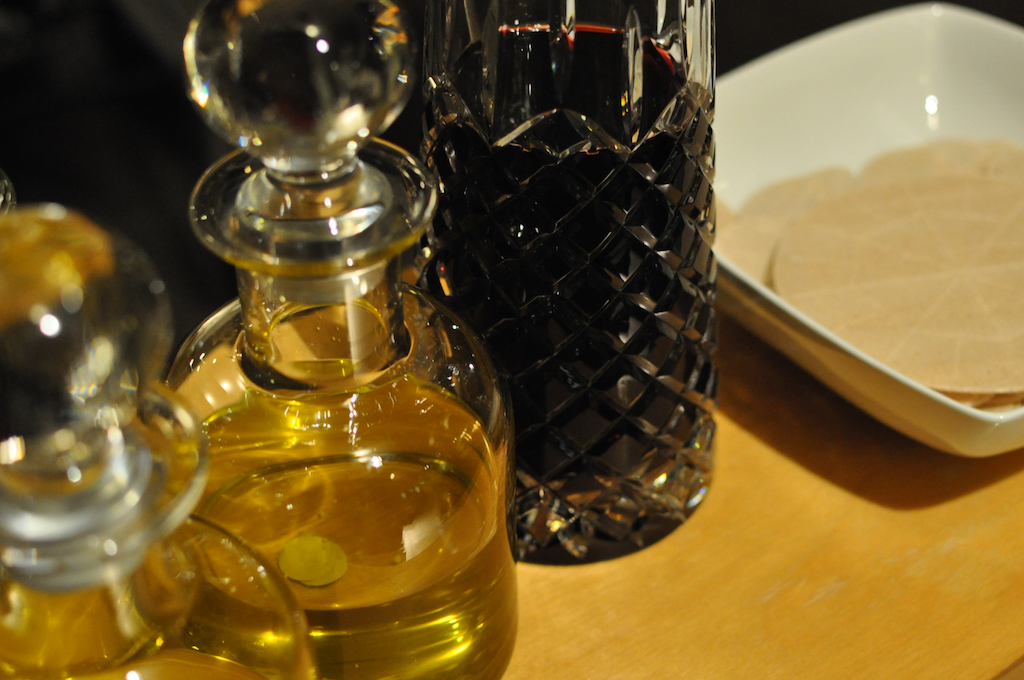
When the photojournalist arrived back in Portland, we shared coffee, stories and the photos from his journey. As we sipped coffee at a local coffeehouse, he handed me a white paper sack and told me it was a special gift. I opened the wrinkled bag and took out a bottle of Saint Joseph’s oil from the Oratory’s gift shop. An artist’s sketch in blue, red and white of Saint Joseph carrying a white lily adorns the plastic bottle.

These words appear in several languages on the side of the 500ml container: “Brother Andre often advised those who came to him to rub themselves with some vegetable oil which had been burning in front of the statue of Saint Joseph. Even today, oil used in this manner remains a link with our tradition. It is an expression of faith. It is not the oil itself which cures, but the Lord who hears the prayers of the faithful.”

The unopened bottle of oil still sits on a bookshelf next to my bible in my bedroom. I admit I really do not know how to use it. I am not sure where this oil of devotion fits into the healing ministry of the Church today. In fact, I am deeply confused about many aspects of healing and how we carry on the tradition of Jesus reaching out to the leper, the blind man and the Canaanite woman’s daughter. I firmly believe there is a message contained in the bottle of oil. I just do not know how to get it out of the sealed bottle and into people’s lives.

Many believers question the use of such oil today within worshipping assemblies. Some people associate healing with snake oil salesman and sleight-of-hand trickery of fundamentalist preachers trying to make a living. Many liturgists frown upon such personal devotion because a bishop in the context of the Chrism Mass has not blessed this oil during Holy Week. This oil does not fit into the traditional sacramental life of the Church. This oil goes well beyond the clerical role of anointing the sick and forgiving sins within the seven sacraments of the Church. This bottle of oil used in the tradition of Brother Andre seems far removed from the sacramental, clerical and liturgical norms.

I know I am also not alone in my skepticism about physical, emotional and spiritual healing within the Church today. People are suspicious about healing because first of all we are all powerless over suffering. I have known and observed priests who refuse to pray with people individually because they are afraid to enter into the depths and uncertainty of people’s real suffering. Others are squeamish about body pain, surgeries, bloody accidents, physical abnormalities, paralysis and the fact that suffering itself is uncontrollable. Sacramental rubrics, liturgical rites and decrees from the institutional church cannot control suffering. For many clergy, if suffering cannot be controlled, the best form of healing is to avoid it all together.

I am also suspicious of healing based upon my graduate studies in our liturgical tradition and my training in pastoral and professional skills. The professional minister today is trained to avoid such attempts to heal because it does not fit into any field education requirements or competencies. In many ways the professional model of the church today has drained much of the Spirit’s presence out of any notion that healing happens with vegetable oil, scapulars, personal devotions, holy cards or prepackaged devotions of any kind.

During the lifetime of Brother Andre, the ministry of healing was a prime mission of many religious communities.  Religious communities of men and women in the past set out on horseback in the United States to found and build hospitals, orphanages, and care facilities for anyone who was lost, forgotten, ill or dying. Today the presence of priests, brothers and sisters in institutions of healing has given way to the latest technology and concerns over insurance coverage. Our church has lost much of its personal mission of healing.

I am desperate to find healing today. I simply do not know where to turn to discover answers. I stand daily amid the brutal chaos of people living with severe mental illness. Many people hear voices that tell them to kill themselves, to ignore their medications and to punish themselves. People sit in the rain around our building and cry out in the night. They lash out at passersby and refuse to speak with their counselors who are assigned to our streets.

I pray for healing for people who blame homeless people for being homeless. I want healing for every family so that our gay and lesbian children will not be abused or bullied. Hundreds of children have fled into the woods or the streets in Oregon because of domestic abuse. I lash out in the night to God that young girls are being trafficked in our suburban shopping malls or in upscale grade schools. I am not sure how much more I can take of the young mother diagnosed with breast cancer or the addict that refuses treatment or the honor student who cuts herself.

I realize I cannot control countries at war or how the institutional church treats people. If I can find my way into this bottle of oil, I may be able to focus my belief that God alone heals. I desire healing amidst the shambles of people’s stories and their regrets from the past. I am now realizing the message in the bottle is also for the cynic and the critic.

Hundreds of people came to Brother Andre every day during his ministry. I now sense his frustration about people’s lives. Andre first guided people to stay close the healing sacraments of the Church. However, so often people were not healed. They needed so much more than what he could give them. He reached for the oil that was there at the Saint Joseph statue because that is what was available to him. Brother Andre told some mothers to wash their children in dishwater and or to go to confession. He said all those things because he did not have answers to the depths of people’s suffering and anguish.

There is something in this bottle of oil that frightens me. I must come to terms with God’s healing love in the world that is more potent than my fear and more consoling than the oil from the Saint Joseph statue. God’s healing happens without our permission, rules or guidelines. God does not commit healing power only to the well educated, the immaculately dressed or the clean cut. God’s healing happens amidst the mess, chaos and confusion of everyone trying to figure out how to ease suffering, whether of others or their own.

God healed many people through Brother Andre’s intercession even though Andre was not a priest, not within the confines of the sacramental church.  The oil for so many was simply a reminder of what they already knew but had forgotten in the midst of their pain, that God alone eases suffering, forgives sin and offers new life for the body and the soul.

Someday I will have the courage to open the bottle of oil. I will take the risk of unsealing the bottle and opening my heart. I will risk that my relationship with suffering people allows God to enter and heal everyone beyond my imagining. I will take the step to pray with people upon their request. I will pour out the holy oil and believe in the miracle that Jesus’ passion leads to new life for me and for every person. Someday I will receive the message hidden in the plastic bottle on my bookcase.