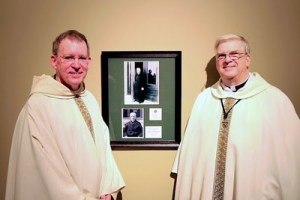
Review – The Unsheltered Heart: An At-Home Advent Retreat

by Linda Showman,
U.S. Catholic – November 29, 2010 –

At first glance, the title of this book is not the most enticing approach to a retreat: Does one not enter into a retreat with the purpose of finding calm and peace? Don’t we expect the results of reflection to be direction, comfort, protection, even answers from God? Shelter from heartbreak is the very thing we seek when approaching God.

Father Ronald Raab, C.S.C., works from the premise that the slings and arrows, the sufferings of life shut down the heart, cover it, close it to fend off further wounds. This all-too-human response, however, also closes it to love—love of God, love of neighbor. He suggests that through the difficult process of exposing the heart, we can recover our ability to receive the love of Jesus and others, and to give love in return.

This retreat is meant to move during Advent toward the celebration of complete Love revealed in the Incarnation, so that we might hope to obtain authentic direction, comfort, protection, and answers from God by assuming this intentional place of vulnerability.

Raab presents a workable structure. He sources the retreat in scripture and exhorts the practitioner to read and reflect upon the Cycle A gospel readings of Advent for a given Sunday. He assists the process with significant imperatives as steps for each day: “Welcome the Stranger Called Silence, Discover Your Story Within the Word, Connect to the Waiting World, Respond to the Cry of the Prophets, and Pray.

He offers assistance through his own thoughts, providing examples for honest self-reflection in light of the gospel. Raab contributes interpretations of the prophets, while offering prompts with specific directions for thought and action. Practically, the format is very clear, with space for writing for each day in response to his guidance. His instructions lend themselves to faithful daily practice and the “pamphlet” sizing makes the entire retreat self-contained and easily managed.

Linda Showman is the Associate Director of Pastoral Formation, Mount Angel Seminary in St. Benedict, Oregon.

Blessing of the Doors

Response: “Bless us, O God”

This blessing takes place on the First Sunday of Advent at the 10:00am Mass. Father Ron welcomes people at the beginning of the liturgy and then invites everyone into the lobby of the building. Father Ron will invite everyone to silence then he will sing the litany.

For the homeless, seeking shelter, we pray…
For the forgotten, believing in companionship, we pray…
For the mentally ill, longing to be understood, we pray…
For the abused, hoping for a safe environment, we pray…
For the angry, expressing trust in community, we pray…
For the hungry, knowing God satisfies, we pray…
For the suffering, struggling to find compassion, we pray …
For the dirty, searching for acceptance, we pray …

For the new born and catechumens, walking toward the waters of baptism, we pray…
For the hungry of heart, desiring Holy Eucharist, we pray…
For the restless, hearing God in Scripture, we pray…
For the weak, discovering the Holy Spirit in Confirmation, we pray…
For the ill, touching God’s strength in Anointing of the Sick, we pray…
For the sinful, believing in the power of reconciliation, we pray….
For the lost, finding their place at God’s table, we pray…
For the marginalized, resting in a new home of peace…
For those asking for marriage, believing in God’s covenant, we pray…
For the dead, entering the doors for the last time, we pray…

For all the staff, volunteers and parish community entering the doors in faith and service, we pray…
For people afraid to enter…
For those peering into our windows…
For those urinating on our doors….
For those selling drugs at our doors…
For those prostituting themselves…
For those we ignore…
For those we can not help or console…
For those who sleep at our doors…
For those entrusted to God alone…

And for all God’s people…

(After the litany is sung, the presider will sum up the prayer with the collect.)

Let us pray:

God of our longing and source of life,
In these Advent days,
We wait to be awakened to your presence among us.

Help us welcome the lost and faithful.
Give us courage to hear the voices of fear.
Welcome the hungry to your table.

Bless these doors of entrance to our community.
May these doors remind us of our journey to the gates of heaven.
May these doors teach us how to welcome the lost on earth.

Bless these doors and open your salvation to your people.
We ask blessings in the name of the Father, the Son and the Holy Spirit.

Amen

(The presider will then bless the doors with holy water. After that gesture of prayer Father Ron will invite everyone to go back into the chapel to begin the opening hymn. The presider goes to the back of the center aisle and processes as the usual start of Mass.)

Webinar – The Unsheltered Heart

The Unsheltered Heart: Exploring the Spiritual Riches of Advent with Fr. Ronald Patrick Raab, C.S.C.

Advent is a new beginning for all people. It is a time to awaken within us a deep desire Christ’s presence and to awaken our hearts to God’s faithfulness. Join Fr. Raab for an hour of guided reflection on how to prepare your own heart to be unsheltered, open, vulnerable, and free

In partnership with the National Association for Lay Ministry, the National Association of Catholic Chaplains, JustFaith Ministries, and the National Association for Catechetical Leadership, Ave Maria Press presents a series of free, live webinars on professional development for Catholic ministers. Take a break from the professional track this month with Fr. Ronald Patrick Raab, C.S.C., of the Downtown Chapel in Portland, Oregon, to refresh your own spirituality in preparation for the Advent season!

This webinar originally aired live on Tuesday, November 2, 2010 at 3:00pm EDT. To learn more about the Ave Maria Press Professional Development Webinar series please visit our website at avemariapress.com.

Blessed

Originally published by Ministry & Liturgy Magazine, November 2010
– PDF version –

I regret many of the words that fly out of my mouth. The sarcastic one-liners, the zingers and the offensive phrases that effortlessly role off my tongue. I catch myself only when my comments have already hurt another person. I hear myself and then realize I had better options. I could have used words as precious instruments of blessing. Rather than being put-downs or the continuation of gossip, my words can build up people from their hurt or misfortune.

I often fail to connect the daily words I speak with the gesture of prayer I model at the end of Mass. My hand rises up in the sign of the Crucified to bless people in all aspects of daily life. My fingertips reach for my forehead and then touch my chest then rest on my shoulders. I understand in my heart that God wishes to transform every aspect of my life and relationships as well. This blessing is not just a perfunctory gesture, an empty ritual or an ancient archaic rite, but the reality that God has already marked us with blood in Christ’s death and resurrection. This intention to offer ritual blessing on the community is simply expressing our true identity.

This holy gesture shelters nameless sinners, defiant unbelievers, stubborn children, rowdy teens and helpless elders in God’s forgiveness and mercy. The blessing reminds us how Jesus lived out his Father’s mission to offer welcome to outcasts, kindness to the weary and acceptance to the undeserving. The words of blessing invite our worshipping assemblies into living out God’s plan for all people. These words consecrate people’s lives, bridge relationships and invite people into the community as God’s beloved.

As I listen to the liturgical gospels from the Second Sunday of Ordinary Time until the Ninth Sunday in Ordinary Time, I am reminded of Matthew’s desire to bless the meek and lowly. John the Baptist points us into the direction of the Lamb of God. Jesus will bless us not only with water as John did, but with the Holy Spirit. This blessing will bring fire and compassion to peoples’ lives.

Jesus then calls the disciples out from the ordinary means of life. No longer will they haul heavy nets of fish, but they will carry the burden of fishing for believers. These days of heavy work will only be carried out by the grace and blessing that is offered them from Christ’s life and example.

Jesus also calls his new followers to a mountainside and he begins to teach them about how to continue this message of blessing, healing and love. These words of beatitude, of extraordinary blessing come directly from Jesus’ mouth. These words come as a shock, so much so that to this day we have yet to put them into practice. The people who will fall under the arms of Christ’s blessing are the poor in spirit. They include people who mourn the loss of a loved one in death, the meek who cannot inherit land by law and people thirsting for the springs of righteousness. Jesus names those whose intentions are honorable and whose hearts are clean of anger, hatred and violence. He calls peacemakers those who will be blessed by God. These people stand in the shadows of any culture, yet are called into the light of God’s rich blessing.

Jesus blesses his believers to become salt and light for the forgotten and the doubtful. He tells us still that no light can ever cast a shadow over this bright light of faith and goodness. He continues to tell his followers that real blessing comes in authentic forgiveness even when wronging a brother. He commands followers to turn the other check when wronged, give the extra coat to warm a stranger, walk the extra mile for the needy and give something worthwhile to the beggar.

Jesus also tells us that we cannot receive such blessings by serving two masters. If we all in fact give ourselves to God then worry shall be stripped from our hearts. This blessing will enable us all to have adequate clothing, enough food to eat and be sheltered from the cold and even our sorrows.

Every day I feel my fingertips at my forehead and my hands on my shoulders being blessed under the love God has for every person. I know from my ministry among the marginalized that today brings many problems. Blessings of food, shelter, kindness and companionship become real miracles. Reaching out to bless the lowly, the ill and impatient become the reasons why any Christian community exists. The blessing that Christ offers us transforms not only our thoughts about what we own but about other people who long for us to serve them.


Advent: A Housing Project

Originally published by Celebrate! Magazine, November 2010
– PDF version –

My parents decided to sell our family home in Edwardsburg, Michigan the year after I was ordained a priest. Even though I had not lived in the cozy house for ten years prior to that decision, the news of my parents’ move devastated me. I was an adult having made decisions about my future, but my past seemed to be slipping out from under me. This charming white, renovated home sitting on the edge of Garver Lake was not just a commodity; it felt as if it were at the core of my identity.

I did not realize the emotional power of this piece of land and the house with the open view to the lakefront until I visited my parents just before they sold our home. I walked into the familiar setting to see cardboard boxes being filled with family heirlooms, everyday items and simple gifts I had given them. I saw antiques that my mother and I purchased at flea-markets through the years being carefully stored in bubble-wrap. The setting in which I felt safe, comfortable and protected from the world was being torn up and being sold to strangers.

I felt so alone walking through once-familiar rooms. I strolled through the home one last time before saying goodbye to my past and my parents. I ambled out of the house being stripped of so much of what I thought was important. Part of my angst was that I was being transferred for the first time as a new priest to a different state in the western part of the country. Not only could I not visit my old house, I would be living even further from my folks.

I stood on the driveway looking back at the house and wept like a baby. My mother held me and I felt my father’s arm on my back. This moment was a clear transition into adulthood. There was no going back on my decisions or my parents’ choices. At that moment I was a lost child, a homeless adult.

I remember my fear on the driveway especially during another transition into a new liturgical year. I hear the gospel writer Luke tell us again that people were speaking of the temple adorned with costly stones and votive offerings. Jesus explains that a day will come when there will not be one stone left on another at the temple site. I can imagine the fear people felt hearing these words. The temple was a place of security, community and faith. The panic of change overwhelmed many believers. Saying goodbye to my family home that last day crushed many stones in my memory of what I thought was secure.

As Advent unleashes its prophets’ voices, I hear Jesus spearheading the end of time. He commands our wakefulness. He cuts our ties on earth telling us that two men will be out in a field, one will be taken and one will be left. Two women grinding at the mill will be separated, one taken and one left. If the master of the house would have known when the thief was coming, he could have saved the home from robbery.

Panic must have been written on their foreheads and fear inscribed in their hearts. The one who was to come, the Messiah, first separates us from people we love. I still sleep with one eye open remembering the day that Jesus invited me to let go of the home of my youth.

John the Baptist insists that good fruit must be born in us from our change of hearts. This conversion remains costly as we try to adjust our attitudes about our human priorities and cling to God alone. The Advent wake-up call challenges even the most dedicated believer and the most sophisticated parish assembly to let go of earthly ties of safety and familiarity. This challenge for every individual and community comes at the time of year when we prefer to focus on our cultural nests of financial security, family relationships, warm memories and stable futures.

As I got into the car at my parents’ old house after saying goodbye, I wondered why I was really leaving. I questioned God’s plan for me to move, to live a vocation that would always separate me from my family and my past. I hear again in Advent the reasons for my growing up.

John the Baptist’s followers see that Jesus is healing the sick, getting the lame back on their feet and cleansing the lepers of all disease. They witnessed deaf people hearing and friends being raised from the dead. Jesus also preached news that the poor should always be housed in our concern and love.

I left the security of my childhood home to find my real shelter in God. Finding my life in God enables me to provide a home for others. Now I experience the need for people suffering poverty to always have good news preached to them. I see in other adults the devastation of childhood abuse and the deep grooves of generational poverty and loss. I let go of my childish ways to teach the illiterate, welcome the outcast and befriend the sinner.

Advent calls every worshipping community into adulthood.Our faith cannot remain in cozy corners of sentimentality or in rooms locked in the past. Our common faith is not a dusty antique packed away in our history. God calls our generation to open our eyes to people suffering mental illness and those who make their homes on the streets. We must show our children the real reasons why the Church exists. Advent calls us again to step into the unknown, to cling to God and to embrace people living on our cultural margins.

I celebrate now the gift of being an adult and leaving my hometown so many years ago. I still miss my deceased parents every day and I hold tight to the support they instilled in me as I left home.

As we enter into a new year of grace, some memories still stick to the pavement of our family’s former home. However, now as an adult I do not weep for my loss but instead grieve for people who have never known the security of love, self-worth and family integrity. I now understand my real home in Christ Jesus. He was born humbly on earth so we will know our relationship with heaven. Now I minister among God’s fragile who teach me to wait for a new earth where everyone will find our true home in Christ Jesus.

Blessing of photographs of Saint Andre

(This litany was prayed at Mass today for the blessing of the relic and images of Saint Andre)

Cantor: Hear us, O God

People: Hear us, O God

Cantor:

Saint Andre of Montreal; open our doors to the hospitality of Christ Jesus …(response)

Open our doors to the lost sinner and the illiterate friend…(response)

Open our doors to the abandoned child and to the abused neighbor…(response)

Open our doors to the weary traveler and the teenage prostitute…(response)

Open our doors to people starving for daily food and friendship…(response)

Saint Andre of Montreal; open our doors to the healing of Christ Jesus…(response)

Open our doors to friends relapsing from heroin, cocaine and alcohol…(response)

Open our doors to people with every incurable disease, illness and affliction…(response)

Open our doors to adult friends living the affects of childhood sexual abuse…(response)

Open our doors to families living outside and surviving under bridges…(response)

Saint Andre of Montreal; open our doors to the hope of Christ Jesus…(response)

Open our doors to people stranded in valleys of undiagnosed mental illness…(response)

Open our doors to our bullied children considered weak and outcast…(response)

Open our doors to neighbors lost in thoughts of suicide…(response)

Open our doors to people jailed because of mental illness and homelessness…(response)

Saint Andre of Montreal; open our hearts to the love of Christ Jesus…(response)

Open our lives to the care of Saint Joseph, Husband of Mary…(response)

Open our suffering to the consolation of Mary, Our Lady of Sorrows…(response)

Open our doubt to the Cross of Christ, our only hope…(response)

Cantor: Hear us, O God

People: Hear us, O God

Cantor: Hear us, O God

People: Hear us, O God

The holy doorkeeper

by Most Rev. John Vlazny,
Archbishop of Portland,
Catholic Sentinel – October 13, 2010 –

On Sunday, Oct. 17, at the Vatican Basilica, Pope Benedict XVI will canonize six saints. The announcement of these canonizations took place last February in the Vatican. One of them is André Bessette, a religious of the Congregation of Holy Cross, who was born and who died in Canada. The others are Blessed Stanislaw Soltys, a 15th century priest from Poland, St. Candida Maria of Jesus, a Spanish foundress of the Congregation of Daughters of Jesus, 1845 -1912, Blessed Mary of the Cross MacKillop, Australian founder of the Congregation of the Sisters of St. Joseph of the Sacred Heart, 1842 – 1909, and two Italian women, Julia Salzano, founder of the Congregation of the Catechetical Sisters of the Sacred Heart, 1846 -1929, and, Camilla Battista Da Varano, founder of the Monastery of St. Clare in Camerino, 1458 – 1524.

The canonization of André Bessette is a special moment in the history of the Congregation of Holy Cross. Brother André will be the first saint of this community which serves here in the archdiocese at the University of Portland, Holy Cross Church, Holy Redeemer Church and St. Vincent de Paul Church (Downtown Chapel). The founder of Holy Cross, Father Basil Moreau, was beatified in 2007. Brother André is highly acclaimed among the French-Canadian people and has been credited with thousands of reported miraculous healings. He was beatified back in 1982 and Pope Benedict approved his cause for sainthood on Feb. 19 of this year.

Brother André was orphaned by the time he was 12 years old. He lived with an aunt and uncle after the death of his parents and was not a healthy child. He wandered from job to job and had little education. We know that he worked in a variety of occupations, a tinsmith, a blacksmith, a baker, a shoemaker and even a wagon driver. He was a very spiritual young man. He prayed and embraced many penitential practices. He lived in the United States for a short time but returned to Canada when the Canadian Confederation was formed in 1867.
His pastor recommended Brother André to the Congregation of the Holy Cross. He said to the superior, “I’m sending you a saint.” He was eventually accepted, in spite of his poor health, and was given the task of porter (doorman) at Notre Dame College in Quebec. For 40 years he performed this task as well as many other menial services. Brother Andre had a special devotion to St. Joseph. He loved to visit the sick and recommended they pray to St. Joseph. He became intent upon having a chapel built in honor of the foster father of Jesus. Eventually, in 1924, the construction of a basilica named St. Joseph’s Oratory was begun, thanks to Brother Andre’s persistence. Brother André died in 1937 at age 91 and his body now lies in a tomb underneath the St. Joseph Oratory’s main chapel.

The members of the Holy Cross community are understandably greatly enthused about the canonization of one of their confreres. A delegation from the University of Portland will be present in Rome when Pope Benedict declares him a saint of the church. The Holy Cross community is typically associated with the ministry of Catholic education. In that sense Brother André was not typical. He has been described as “largely illiterate,” but it was his gracious spirit of hospitality, his kindness, practical advice and spiritual guidance that made him highly renowned. St. Joseph’s Oratory in Montreal where Brother André is entombed, attracts some two million pilgrims every year. When the news of his canonization was announced last February, Father David Tyson, CSC, provincial superior of the Indiana Province, stated, “It seems wonderfully apt and instructive that the first Holy Cross saint was a man who insisted, sometimes testily, that ‘to serve is sweeter than to be served.’”

Catholics are not as well acquainted with brothers as they are with priests and sisters. Brothers are consecrated religious who make vows of poverty, celibacy and obedience, like the religious sisters with whom many of us are acquainted, but they do not receive the sacrament of Holy Orders. The Holy Cross Congregation explains the vocation of a religious brother this way, “The vocation of a religious brother is complete in and of itself, professed in and lived through his vows and his dedication to prayer, community and service.” The founder of the Congregation, Blessed Basil Moreau, dedicated the religious brothers to the patronage of St. Joseph. Hence, Brother André’s devotion to St. Joseph is not surprising. Brothers, like their female counterparts in religious life, commit themselves to growth in holiness. In the Holy Cross community, many of them are indeed educators, like many of the priests, but others serve in different ways, as did Brother André.

A visit to the Oratory of St. Joseph is an undertaking worth the consideration of every Catholic in North America. In fact, the Oratory of St. Joseph is North America’s most prominent pilgrimage site. More than one million people attended Brother André’s funeral back in 1937. Thousands of crutches belonging to people cured through his intercession hang on the walls of the oratory.

Father Ronald Raab, CSC, a priest at Portland’s Downtown Chapel, wrote an article about Brother André entitled “Saint Doorkeeper” in the September/October 2010 issue of Celebrate magazine. It is available on the CSC website and I encourage you to read it. Brother André’s work among the poor serves as an inspiration for the clergy, religious and laity who serve the poor at our Downtown Chapel. An image of Brother André can be found among the stained glass windows in our Cathedral of the Immaculate Conception here in Portland. Father Raab thinks he looks a bit too healthy and robust in stained glass when compared with the reality of his appearance during his life. But to those who serve the poor in downtown Portland, as Father Raab observes, this “holy doorkeeper still lives among God’s poor.”

Brother André’s feast is celebrated each year on Jan. 6. That was the date of his death at 91 years of age. His humility was evident in his reaction to the acclaim he received in life because of the power of healing attributed to him As he once stated, “It is St. Joseph who cures. I am only his little dog.” This man who could scarcely read or write was a gift from God for the poor. It is my sincere prayer that we here in the church of Portland will be a similar gift for the needy among us as well. St. André Bessette, pray for us.

Archbishop John Vlazny writes columns that appear at CatholicSentinel.org during weeks when an issue is not printed.

Healing doorkeeper, Holy Cross brother, to become a saint

by Ed Langlois,
Catholic Sentinel – October 13, 2010 –

In Montreal, he doggedly established a spectacular shrine to St. Joseph and eschewed praise as, one by one, an estimated 10,000 sick people experienced healing at his touch. A million mourners attended his funeral in 1937, despite frigid temperatures and sleet.

In Portland, a free Friday night café for those down on their luck is named for him and he is depicted in a stained glass window in Portland’s cathedral.

André Bessette, a sickly and humble Holy Cross brother, will be recognized as a saint Sunday at St. Peter Basilica in Rome. A hospitable man who could barely read, he’ll be the first person canonized from the Congregation of Holy Cross, known for its prowess in education, including the University of Notre Dame and the University of Portland.

Pope John Paul said of him: “In each age the Holy Spirit raises up such humble witnesses of the Gospel, who turn things topsy-turvy.”

Brother André will be the first male saint from Canada.

“What an amazing model he offers our modern world about the importance of relying on God rather than our own powers,” says Holy Cross Father William Beauchamp, president of the University of Portland.

Born Alfred Bessette Aug. 9, 1845, near Montreal, he was one of 12 children. His father died when he was 9 and his mother died when he was 12. He suffered from a chronic stomach ailment that kept him out of school and often without work. When he could, the diminutive young man toiled at U.S. textile mills and on farms.

When he entered the Congregation of Holy Cross in 1870 after initial rejection, his childhood parish priest sent a letter to the novice master saying, “I am sending a saint to your congregation.”

For 40 years, Brother André served as hardworking doorman and barber at Notre Dame College, the community’s secondary school in Montreal. There, he developed and spread devotion to St. Joseph.

His biographers recount tales of crippled rheumatics healed and fever-stricken schoolboys made suddenly well, often aided by “St. Joseph’s oil,” which Brother André rubbed on wounds and sick limbs after burning it before a statue of the saint.

Thousands upon thousands of regular people in need came to him and he welcomed them all. School officials built him a chapel across the road to deflect some of the hubbub.

Meanwhile, Brother André wore his clothes until they were threadbare and when donors gave him money, he always turned it over to superiors.

“He didn’t want to be brilliant or have a great job,” says Holy Cross Father George Bernard, a retired theology professor and former vice president at the University of Portland. “He wanted to be a servant of all the servants. He is an amazing example of what Christ wants us to be.”

Father David Tyson, superior of the Indiana Province of Holy Cross priests and former UP president, says Brother André did everything and anything that was needed, from cleaning the floors to fixing shoes, from doing students’ laundry to cutting hair.

“What an example of prayer in action, of active service to others as the most eloquent and powerful prayer of all,” Father Tyson says.

“Bother André has always been a great example of humility for me, especially in accepting his illnesses and struggles to respond to the needs of so many,” says Holy Cross Father John Donato, associate vice president for student life at UP. “I hope as the first saint in the Congregation of Holy Cross he will inspire us all to a simpler life, humbler and full of trust that God does provide for us in amazing ways.”

The Oratory of St. Joseph, which Brother André founded in 1904 on the slopes of Mount Royal, continues to be visited by millions of pilgrims each year. He is buried there, his tomb marked in Latin: “Pauper Servus et Humilis” — “poor and humble servant.”

“In recognizing the holiness of Brother André, the church is also affirming, among other things, his ministry of hope and hospitality which I consider basic virtues of Holy Cross,” says Father Robert Antonelli, the University of Portland archivist and a spiritual mentor to many young members of the congregation.

Brother André could be kindly but also testy, especially when someone tried to shower him in praise for the healings. He always gave God and St. Joseph the credit and referred to himself as a mere handyman, or the “wire” that transmits the good works.

Old photos show piles of crutches left in the oratory, which began small but grew into one of the largest houses of worship in the world.

Cures are still attributed to Brother André’s intercession. Several from the past decade were studied by doctors and affirmed during the process of naming him a saint.

Holy Cross Brother Charles McBride, who works in communications at the brothers’ Notre Dame headquarters, hopes Brother André’s story will speak to young men worldwide. The congregation has already seen brisk growth in west Africa, Bangladesh and India. Brother Charles does not predict an uptick of Canadian and U.S. vocations, but he’s a man of hope.

For the wider church, at a time when family life is on shaky ground, Brother André’s devotion to St. Joseph could be timely.

“He is the right man for the right time,” Brother Charles says.

Brother André is important to many lay Catholics who collaborate with the Congregation of Holy Cross.

“It’s yet again an example where an ordinary person who really opens himself to the will of God is then able to do things that most of us recognize as being beyond what ordinary people should be able to do,” says Paul Myers, director of the health center at the University of Portland.

The Downtown Chapel, a Portland parish led by Holy Cross priests, models its service after Brother André, opening the doors daily to the needs of neighbors, most of whom are homeless and poor.

“I continue to be amazed at the stamina that Brother André had in his ministry, spending entire days listening and praying with people who were desperate for hope and healing,” says Andrew Noethe, pastoral associate at the parish. “Brother André was placed at the doorway of inconsolable suffering, and offered the only thing that he could — his uncompromisable faith.”

Also to be canonized on Oct. 17 in Rome are:

• Sister Mary MacKillop, 1842-1909, to become Australia’s first saint and founder of the Sisters of Saint Joseph of the Sacred Heart.
• Father Stanislaw Soltys Kazimierczyk, a Polish-born member of the Canons Regular of the Lateran, who lived 1433-1489. He was famous as a preacher and confessor.
• Sister Juana Josefa Cipitria Barriola of Spain. She died in 1912 and was the founder of the Daughters of Jesus.
• Sister Giulia Salzano, the Italian founder of the Catechetical Sisters of the Sacred Heart of Jesus; she died in 1929.
• Sister Camilla Battista Varano, an Italian Poor Clare who lived 1458-1524.
Hope

Brother Andre Series: Number Ten

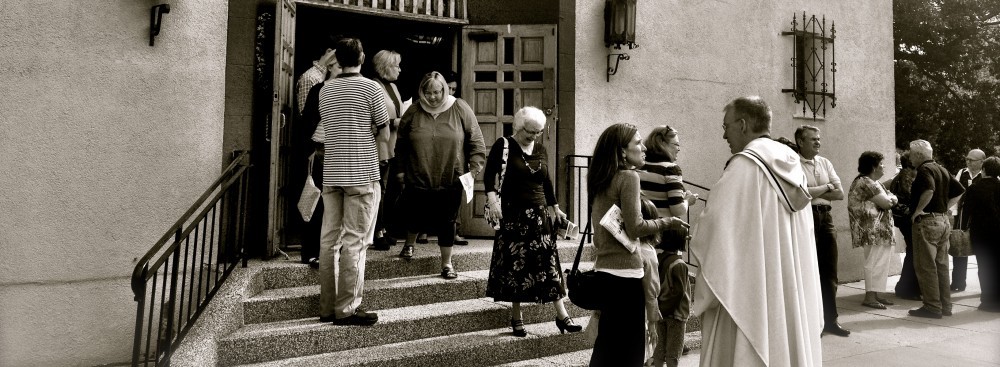
A twenty-something man limped to our front desk one morning to sign up for his routine of coffee, snacks and his monthly allotment of supplies. He gingerly approached the open window breathing heavily, his eyes and face blackened with bruises, his ripped clothing stained with blood and dirt. He requested just the basics of underwear and hygiene products, along with a new shirt and jeans. Our staff member jumped to her feet and asked him what happened. The street-warrior admitted that while sleeping in a doorway he had been beaten by a stoned teenager. He begged the on-duty staff member not to call the police or the ambulance because he had no money for any type of health care.

A middle-aged woman walked shyly into our parish lobby. Her years of severe depression weighed visibly on her rounded shoulders and tired body. She has been unable to find employment lately because of the lingering shadows of low self-esteem. She tries over and over again to feel better about her adult life, occasionally smiling and joining us for Sunday worship. Living in the present moment remains difficult because her childhood emotional and sexual abuse still causes threats of suicide and deep moments of feeling unworthy of life itself.

These raw stories are replicated daily at the Downtown Chapel. People’s lives are so complicated by abusive parents, lingering mental illness and people using drugs and alcohol to numb the pain of survival. Some years ago we invited a psychiatrist to help educate our staff on these many issues. He spent several hours deeply listening to us express the concerns of our ministry. He simply reminded us of our true role in people’s lives, to offer hope within community, to offer faith in the midst of suffering.

Sometimes it takes someone from the outside to remind us that we cannot fix someone’s abusive past or change their desire to sell their body. However, we can offer people a place of profound faith, of true and honest welcome, of genuine forgiveness and acceptance. We can welcome people when every other agency or center has turned them away. In other words, we can offer people hope.

Brother Andre surfaced hope in people’s lives. Thousands of people lined up to speak with Brother Andre because there was no other place for them to go with their bodily ailments and their weariness. Brother Andre welcomed everyone regardless of their pain. He touched their illnesses with prayer and sent them on their way with new hope. Even when people were not physically healed, they felt a deep sense of God’s tender mercy and love for them.

Brother Andre realized hope comes from embracing the Cross of Christ. “The more you suffer as you follow the Stations of the Cross, the closer you come to Jesus Crucified.” He never wanted to live without trials in his life. “In our prayers, we should not ask to be spared hardship; we should beg for the strength to bear it.” Brother Andre’s example still lives among us. He helps us realize the hope of Christ Jesus at the Downtown Chapel in every person who comes to us in need of love. We live boldly the motto of the Congregation of Holy Cross, “ The Cross is our only hope.”

The canonization of Brother Andre Bessette, CSC will take place on Sunday October 17, 2010 at the Vatican in Rome. Please join us for our Mass celebrating Brother Andre on Sunday October 17, at 10:00am at the Downtown Chapel.

Brother Andre, be our guide!

(Photo: Steve Scardina, St. Joseph Oratory, Montreal)