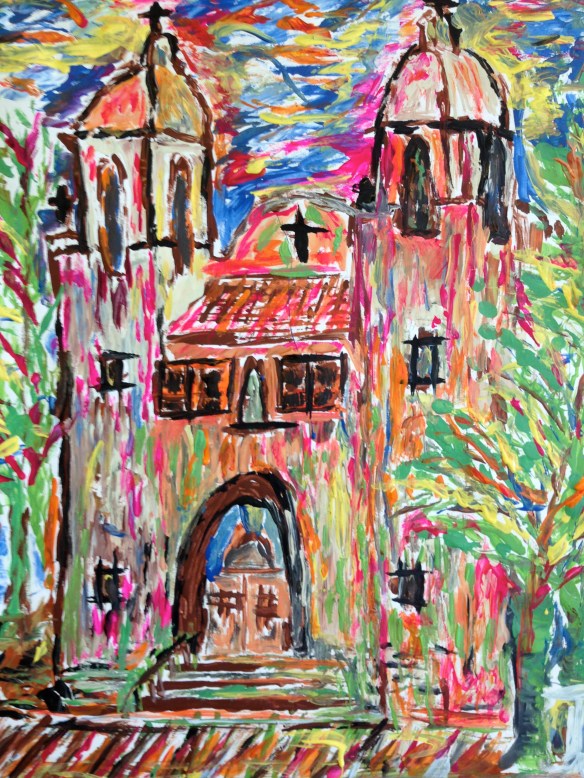
“Sacred Heart Church” Painting with cardboard, by Ronald Raab, CSC
I painted this in class this morning using the end of a piece of cardboard. How grateful I am to serve as pastor of this church.
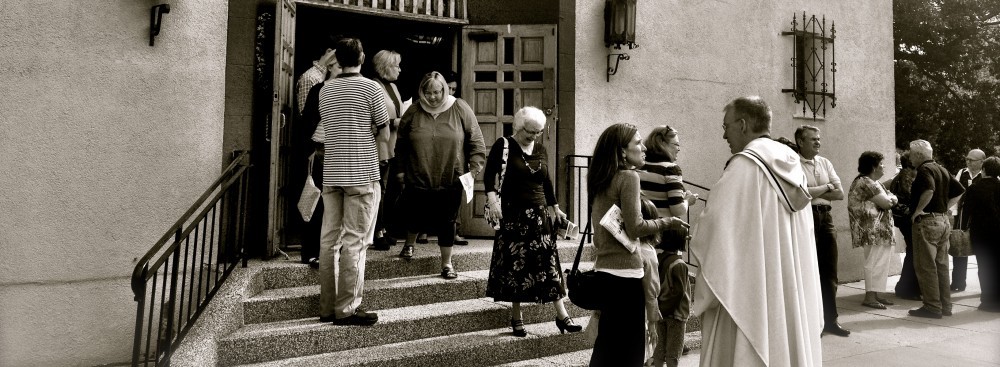
“Sacred Heart Church” Painting with cardboard, by Ronald Raab, CSC
I painted this in class this morning using the end of a piece of cardboard. How grateful I am to serve as pastor of this church.
 Listen to “On the Margins”. This broadcast comes from Mater Dei Radio 88.3. The fulfillment of our lives will be in God’s Kingdom. Not easy to let go of what we own, what we possess. Our lives here are very unstable, our security comes in God’s love and presence. Thirty-Third Sunday in Ordinary Time, November 15, 2015.
Stream live On The Margins on KBVM 88.3FM on Saturdays at 3:45pm and Sundays at 8am.
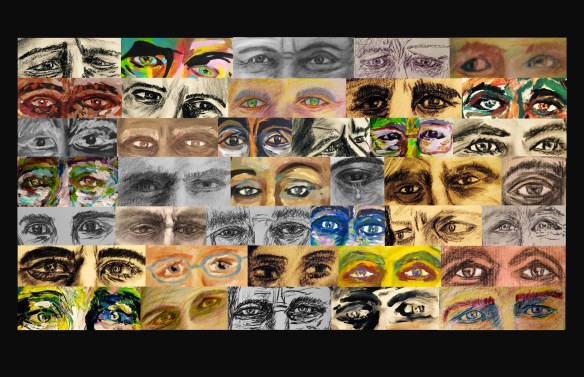
“The eyes have it”
Drawings and paintings by: Ronald Raab, CSC
A collection of “eyes” from my paintings and drawings, assembled by a staff member of the parish.
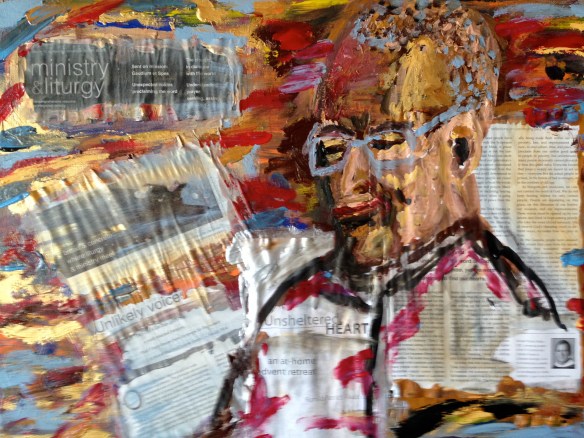
“At Sixty”
Painting: Ronald Raab, CSC
I celebrate my 60th birthday today.
This painting reflects my life as a writer, artist, preacher and priest. I used the November issue of Ministry and Liturgy magazine to express the heart of my ministry. The title of the feature article is “Unlikely voices”. Notice the drip of paint that covers the “s”. My life has been an “unlikely voice” to express the compassion, love and mercy of God for people who are marginalized. I also used the first page of my book, “The Unsheltered Heart” to express the path that I have found in ministry toward people’s suffering and consolation.
I am so grateful this day for my life and my ministry as a priest. Today, everything seems so intertwined, so beautiful and so filled with the Holy Spirit. I am so grateful for all the ways I can use my unlikely voice, through writing, preaching and painting to lift up our human poverty into the love of God.
With gratitude and prayer,
Ron

“The Widow”
Ronald Raab, CSC
Dear Believers,
We listen to Mark 12-38-44 this Sunday telling the crowds to be aware of the scribes who go around in long robes and enjoy seats of honor. What they give to the treasury is more about their status than a true offering to God. A poor widow gives a couple of small coins, an offering that evokes a message of genuine giving—her few cents come from her survival and her need, from her genuine poverty. She gives to God all that she possesses from her earthly survival.
There are many ways to interpret the poor widow. She is often used for fundraising, for inviting people to give from their need. We hear this gospel in November, at the conclusion of the liturgical year, and I think this changes the message. We reflect on end times in the liturgy today, on the ways we are to see God as our only priority here on earth.
The anonymous widow offered her entire soul to God. She gave to the offering most of her earthly attachments. She gave more than money; she offered God her lowly status, her cultural powerlessness in a time when widows could not own land or have a job. As a widow she had no status and no authority or voice among the village. Her life was tough. My drawing reveals her struggle. Her face is complex; her expression is sheer bewilderment, exhaustion, and uncertainty about her future. She is exhausted by her life on the earth and turns to offer God all that remains and all that has been stripped from her.
The liturgy in this month challenges us to let go of all that keeps us from offering our real lives to God. We hide behind our judgments about people. We cling to our attitudes that put more people down than we elevate by our good will. This gospel challenges us to let go of our pride, our illusions of control, and our excuses not to pay attention to God. The woman’s offering illustrates how to let go of what holds us back, what clings to our souls, what stains our relationships. We give to God all that we have, all that is valuable to us and all that means something to other people.
God wants everything in our lives if we are to fully follow Jesus. We leave nothing behind. Everything must ultimately be offered to God. Jesus transforms our poverty, our weariness, our small efforts, our ill health, our worries about our children, and our weak hope for the future. We let go of every little thing we posses in order to discover God’s grace for us. Like small coins in the coffer, we drop our pride, our sin, our stubbornness, and our anger so that God may reveal his riches within us.
Here are some statements to consider from this week’s gospel:
How is the Holy Spirit challenging you to give more of yourself to the Father?
What are the small tokens you offer to God—such as your regrets, your history, your lack of attention?
What in your life, what secret do you keep, from God, that you hoard for yourself?
How can you offer to God your time and relationships?
How can you offer your talents and gifts for the common good?
What does the widow represent for you?
How would you describe her in the story?
How is the widow a challenge for you?
How is she a consolation?
How does she speak to you personally about how you are to pray?
Blessings,
Fr. Ron

Sketch: Ronald Raab, CSC November 5, 2015
O Lord, hear my prayer, and let my cry come to you. Do not hide your face from me in the day of my distress. (Psalm 102)
Listen to “On the Margins”. This broadcast comes from Mater Dei Radio 88.3. We offer to God our entire lives, slowly but surely as life unfolds, our gifts, talents, relationships and all of life. We give from our poverty, as the widow. She gave not only money, but her entire livelihood. Thirty-Second Sunday in Ordinary Time, November 8, 2015.
Stream live On The Margins on KBVM 88.3FM on Saturdays at 3:45pm and Sundays at 8am.
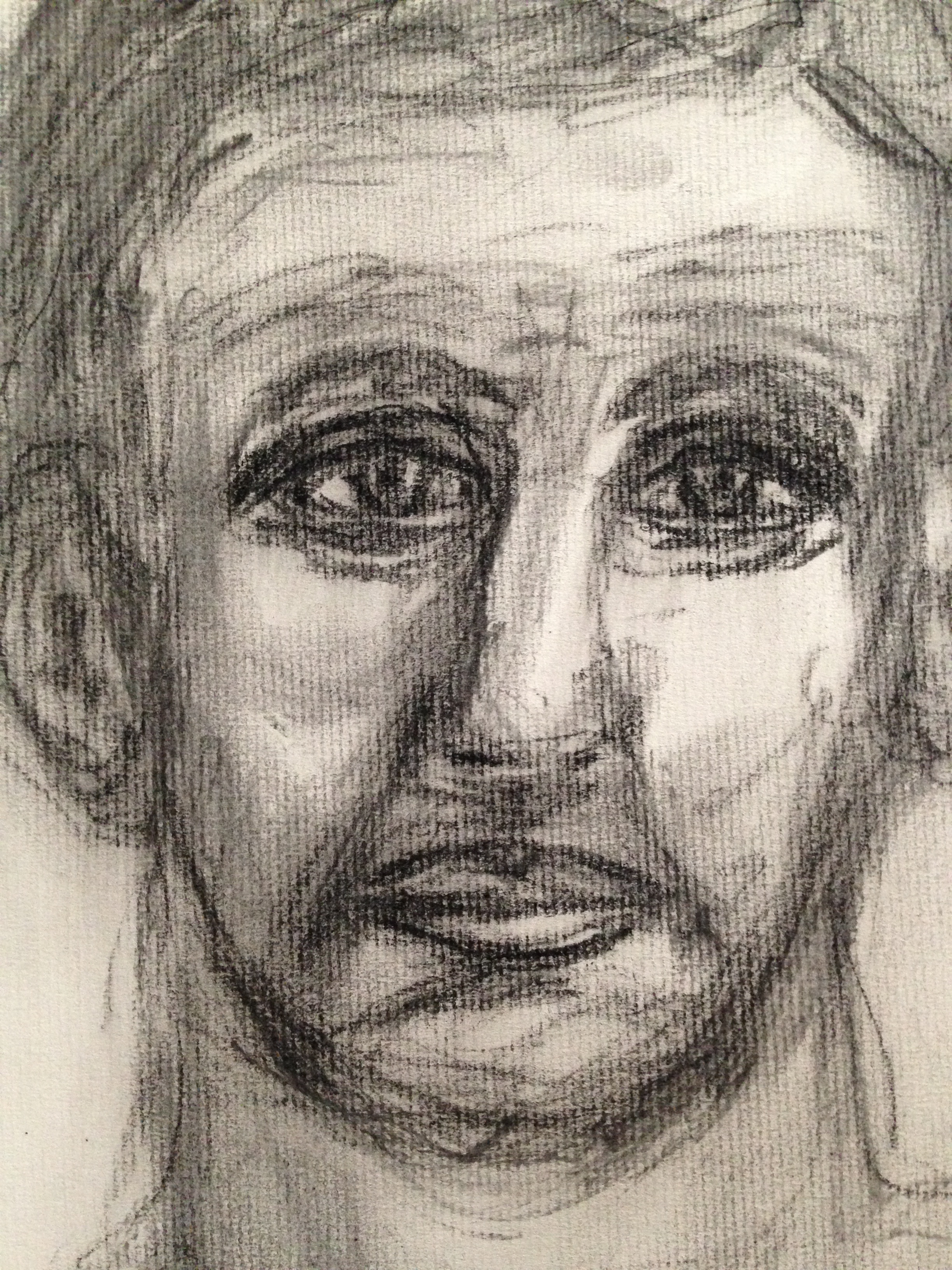
Sketch: Ronald Raab, CSC
November 4, 2015
Forsake me not, O Lord, my God; be not far from me! Make haste and come to my help, O Lord, my strong salvation! (Psalm 38)

(This is my monthly column called, “Bridgework” from the November issue of Ministry and Liturgy Magazine.)
The determined word
Several years ago, I attended Mass in a very active parish. The parish excelled in music and leadership among the parishioners. I found myself sitting behind a lovely, elderly woman sitting next to her caregiver. The older woman wearing a hat from another generation was fixed on her prayer book. She was engrossed in her book because she suffered hearing loss and her eyesight was very faint. She wanted to find her place not only within the book but also within the church in which she obviously felt very comfortable.
The spirited woman sang the opening hymn only after her caregiver found the correct page for her. The elderly parishioner struggled to hear the prayers and the first scripture reading for the Mass. She started to get agitated when the musicians sang a different psalm than what was designated for the Sunday. She wanted to see the text within her book of prayers. When the second lector approached the ambo and started reading a different scripture text than what was printed in her ritual book, she threw the book at the caregiver and yelled, “I can’t hear the bible!”
As I reflect on the gospels in the initial few weeks of Ordinary Time, I go back to the woman sitting in front of me during that Sunday Mass. I realize that often the Word of God becomes flimsy within our assemblies. The lector may proclaim the scriptures with intention and clarity but the sound of one falling kneeler or the cry of one sick infant or one sneeze from an elderly man derails the Word of God for people in several pews. The sound of salvation seldom makes it to the rear of the church. A priest whose native language is not the language of most people sitting within the pews cuts these inspired words of our history short in our generation. Most people just cannot understand the proclaimed Word of God and yet the Word is determined to find our hearts. So many people are visual learners who struggle to hear words from the ambo let alone trying to make them real prayer. Many people who are hearing impaired or visually impaired cannot understand what is going on praying just ten pews from the sanctuary.
Jesus in the gospel comes to Nazareth and enters the temple. He unrolls the scroll and proclaims the liberating message to those who can hear. He proclaims in his spirited voice glad tidings to the poor. He proclaims in his own voice liberty to captives and sight to the blind. Jesus reads that the oppressed are free.
We need to go back to Jesus’ message after rolling up the scroll, “Today, this Scripture passage is fulfilled in your hearing.” We need to go back to how we form our lectors and how accessible the scriptures are in our generation given our carpeted churches, cheap sound systems and acoustical tiles on the ceilings of the church. The elderly parishioner sitting in front of me challenged my notion of this passage of scripture when I realized how people with disabilities desire God. After all, she is exactly the person Jesus was speaking about in offering glad tidings to people in need.
In these first few weeks in Ordinary Time, the gospels are arranged in order to establish the authority of Jesus after his baptism. Jesus’ role is to offer people the Kingdom of God. The Word of God is literally being made flesh within our own poverty, loss and imprisonment even in our culture, time and place. We proclaim good news to people in poverty from our ambos but unfortunately so many people in poverty cannot physically hear this good news. People know that Jesus’ words are to set us free, everyone but the actual people in prison, in the bonds of bad marriages or in the confines of old age.
As liturgists and musicians, we cannot control the Word of God. We do not keep healing hidden for only certain people. People are depending on this grace, on this liberation of our bodies, our wounds and our imprisonments. These words must be opened up by our lectors and lived in hope among people who take the Word of God seriously. We all receive God’s liberating Word in different ways no matter how we pray at Mass.
In these gospels, people were amazed at the words that came from the mouth of Jesus. They wondered where he received such wisdom. Jesus’ words led his disciples on to the shallow waters of the lake where he asked them to cast their nets into deeper water. These words remain in our hearts so that we may learn a greater and far deeper trust in God.
These are the words that are waiting for our lives, to set our hearts free and to show us how to live in faith. These are the strong words given to us in our crowded and noisy churches on Sunday mornings. We act on these words that get a chance to settle within our souls whether we read them on a page with our failing eyesight or hear them with our subtle hearing loss.
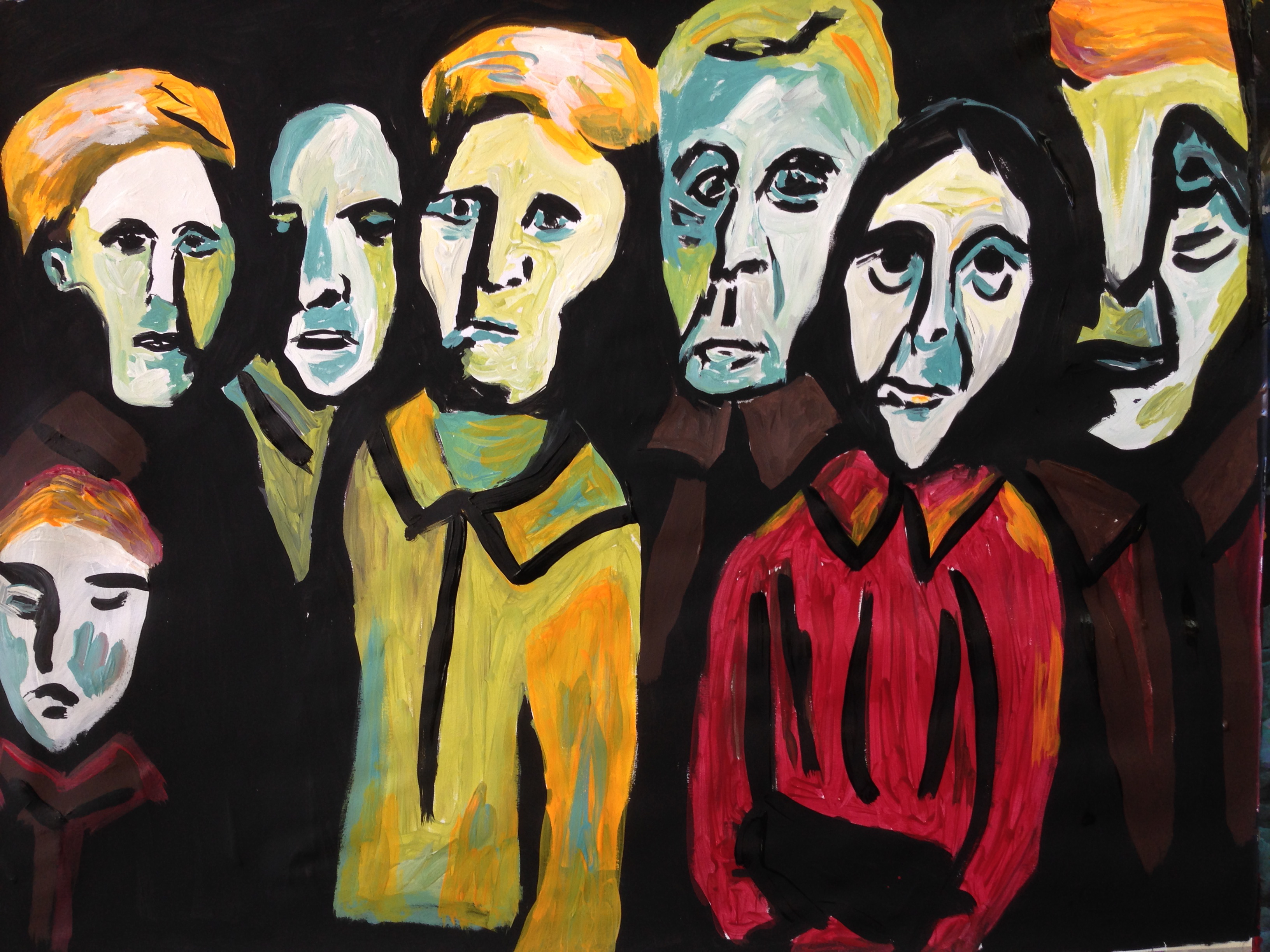
“All Souls” Painting by: Ronald Raab, CSC
Today, we believe that the stories told of our loved ones will bring healing to our souls as well. I invite you to pray for all the dead. For Christians, reflecting on death and remembering our loved ones is part of the mystery of faith in Christ’s passion, death and resurrection.
I hope these statements will help you enter into prayer today:
As I take stock of my life, I am afraid of letting go of ______________________.
I fear death because_______________________.
I carry so many hurts about losing friends and family and I regret________________.
I need to mourn____________________________.
Jesus, show me how to die to my own selfishness, my illusion of security, my anger about my past and my rage that my life has not turned out as I had planned so that ________.
I entrust my life, my past and my future to Jesus today so that_________________.
Today, I pray within my heart for________________________.
Today, I remember (bring to prayer the names of your loved ones)______.
 Broken But Not Divided