Unknown's avatar

About Ronald Patrick Raab, C.S.C.

Ronald Raab, C.S.C.,serves as religious superior at Holy Cross House, a medical and retirement home for the Congregation of Holy Cross, Notre Dame, Indiana

Eccl 1:2-11 Vanity of vanities

august-15-16

Reading 1 Eccl 1:2-11

Vanity of vanities, says Qoheleth,
vanity of vanities! All things are vanity!
What profit has man from all the labor
which he toils at under the sun?
One generation passes and another comes,
but the world forever stays.
The sun rises and the sun goes down;
then it presses on to the place where it rises.
Blowing now toward the south, then toward the north,
the wind turns again and again, resuming its rounds.
All rivers go to the sea,
yet never does the sea become full.
To the place where they go,
the rivers keep on going.
All speech is labored;
there is nothing one can say.
The eye is not satisfied with seeing
nor is the ear satisfied with hearing.

What has been, that will be;
what has been done, that will be done.
Nothing is new under the sun.
Even the thing of which we say, “See, this is new!”
has already existed in the ages that preceded us.
There is no remembrance of the men of old;
nor of those to come will there be any remembrance
among those who come after them.

Prayer: (Ronald Raab, CSC)
Lord God, my eyes are never satisfied with what is and my ears wait for more. Forever do I see and hear the refrain from your heart that I cannot be in control or fashion life into my own ways. Allow me to feel the sun of a new day. Radiant from within my heart your love, kindness and gentleness. Open my eyes and ears. Help me appreciate all that has been and to be grateful for all that will be. I stand in awe of you with a deep, refreshed breath of peace. Amen

Saint Matthew, Feast 2016


img_1421

“Saint Matthew” Painting: Ronald Raab, CSC

Painting: My illustration of Saint Matthew includes some of the classic images usually associated with Matthew and his role in the Church as an Apostle. First, the three coins on the left side illustrate Matthew’s old life, his livelihood. He was a tax collector and because of this profession, he was marginalized by the community. He was not trustworthy in the eyes of the people. The coins become an image of how Jesus uses our weakness or sin or past offenses to show that conversion and change is possible. The three coins also show us the value of his new call, the three images of God, the Father, Son and Holy Spirit. Second, the wing on the right side refers to the classic symbol of the winged man or angel from Revelation that guided the hand of Matthew. In all the early paintings or images of Matthew, this winged creature is present. Third, notice the gospel book itself. I illustrated it as looking more like tablets, which are associated with Moses and his role in the ten commandments. Matthew’s gospel is viewed by scholars to show how Jesus is the new Moses which is best demonstrated in Matthew’s Beatitudes. These Beatitudes are the new teaching of the law. Jesus becomes the teacher, the new way of living and viewing our relationship with God, the new invitation of Jesus’ mercy and forgiveness.

Today’s gospel:

Matthew: 9:9-13

As Jesus passed by, he saw a man named Matthew sitting at the customs post. He said to him, “Follow me.” And he got up and followed him. While he was at table in his house, many tax collectors and sinners came and sat with Jesus and his disciples. The Pharisees saw this and said to his disciple, ” Why does your teacher eat with tax collectors and sinners?” He heard this and said, “Those who are well do not need a physician, but the sick do. Go and learn the meaning of the words, I desire mercy, not sacrifice. I did not come to call the righteous but sinners.”

Reflection questions:

How is Jesus calling you from an old way of life?

What do you need to let go of or change to put your call into practice?

What does following Jesus mean for you?

How is the Holy Spirit writing a gospel of hope and love within your heart, your actions?

Proverbs: 21:1-6,10-13: Opening eyes and ears

img_1422

“The emerging self” Painting: Ronald Raab, CSC

Reading 1 Prv 21:1-6, 10-13

Like a stream is the king’s heart in the hand of the LORD;
wherever it pleases him, he directs it.

All the ways of a man may be right in his own eyes,
but it is the LORD who proves hearts.

To do what is right and just
is more acceptable to the LORD than sacrifice.

Haughty eyes and a proud heart–
the tillage of the wicked is sin.

The plans of the diligent are sure of profit,
but all rash haste leads certainly to poverty.

Whoever makes a fortune by a lying tongue
is chasing a bubble over deadly snares.

The soul of the wicked man desires evil;
his neighbor finds no pity in his eyes.

When the arrogant man is punished, the simple are the wiser;
when the wise man is instructed, he gains knowledge.

The just man appraises the house of the wicked:
there is one who brings down the wicked to ruin.

He who shuts his ear to the cry of the poor
will himself also call and not be heard.


Reflection:

“…He who shuts his ear to the cry of the poor
will himself also call and not be heard.”

We know the old refrain that once our consciousness is raised to a new level it is hard to lower it again. This is the reality of both our prayer and our service. Once we feel the tenderness of God’s mercy, then we see mercy in every relationship and act in our world.

This painting is meant to show the self that comes to life as we listen to God and listen to our neighbor. We are not fully developed people of prayer and action. There is always more to become. We rest in the assurance that God has more in store for us. When we open our ears and eyes, the beauty of God’s call becomes the action that the Holy Spirit wants of us. We emerge from darkness, sin and division, hatred and violence, to the beauty and light, hope and wonder of our relationship with God challenging us to live in the world.

Our prayer is not just for ourselves, our own benefit or our own salvation. Our prayer is meant to change our hearts to make them more of a home for God’s love and tenderness. This tenderness rests in God’s hands and is the source and fruit of our service to other people.

Our prayer and service are never separate realities. We cannot lower our awareness to make them separate, apart from love of God and others.

Entrance Antiphon

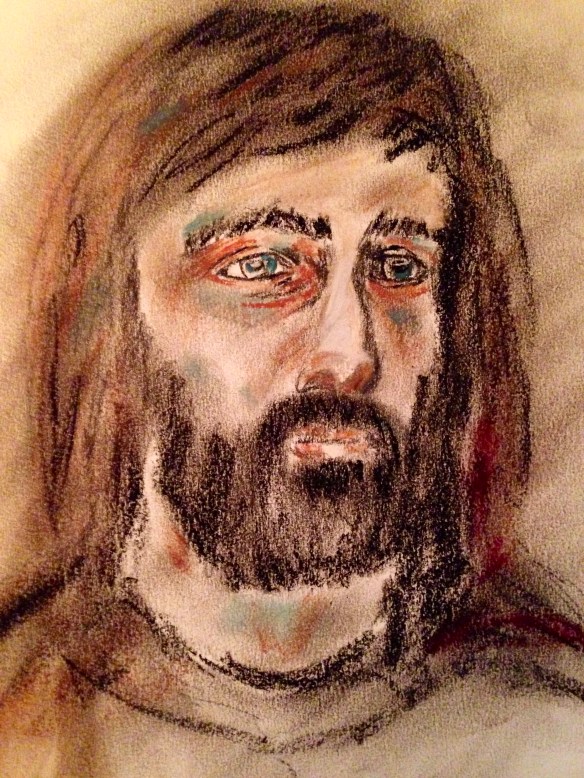
img_1420

“Should they cry to me” Pastel: Ronald Raab, CSC

Entrance Antiphon

I am the salvation of the people, says the Lord. Should they cry to me in any distress, I will hear them, and I will be their Lord for ever. 

Litany text: Ronald Raab, CSC

Response: Hear my cry, O Lord

When I am searching for meaning…

When I am lost and afraid…

When I am conflicted about change…

When I am confused by my actions…

When I hesitate to cry on my own…

When I choose not to remain sober…

When depression overtakes me…

When I hold on to a grudge…

When I lack kindness and generosity…

When I wonder about my future…

When I regret the past…

When I cannot forgive myself…

When I am too selfish to have faith…

When I am enraged by anger…

When I am lost among the shunned…

When I fret about not being good enough…

When I search for love and cannot find it…

When others put me down…

When my mind swirls with revenge…

When I am jobless and cannot manage my family…

When I am overwhelmed with grief and loss…

When I worry about needless things…

When I am trapped in doubt and wonder if you hear me…

When I finally let go and listen to your voice…

Luke 16:1-13 “We cannot serve both God and mammon”

img_1414

“True wealth” Pastel: Ronald Raab, CSC

Gospel Lk 16:1-13

Jesus said to his disciples,
“A rich man had a steward
who was reported to him for squandering his property.
He summoned him and said,
‘What is this I hear about you?
Prepare a full account of your stewardship,
because you can no longer be my steward.’
The steward said to himself, ‘What shall I do,
now that my master is taking the position of steward away from me?
I am not strong enough to dig and I am ashamed to beg.
I know what I shall do so that,
when I am removed from the stewardship,
they may welcome me into their homes.’
He called in his master’s debtors one by one.
To the first he said,
‘How much do you owe my master?’
He replied, ‘One hundred measures of olive oil.’
He said to him, ‘Here is your promissory note.
Sit down and quickly write one for fifty.’
Then to another the steward said, ‘And you, how much do you owe?’
He replied, ‘One hundred kors of wheat.’
The steward said to him, ‘Here is your promissory note;
write one for eighty.’
And the master commended that dishonest steward for acting prudently.
“For the children of this world
are more prudent in dealing with their own generation
than are the children of light.
I tell you, make friends for yourselves with dishonest wealth,
so that when it fails, you will be welcomed into eternal dwellings.
The person who is trustworthy in very small matters
is also trustworthy in great ones;
and the person who is dishonest in very small matters
is also dishonest in great ones.
If, therefore, you are not trustworthy with dishonest wealth,
who will trust you with true wealth?
If you are not trustworthy with what belongs to another,
who will give you what is yours?
No servant can serve two masters.
He will either hate one and love the other,
or be devoted to one and despise the other.
You cannot serve both God and mammon.”
Prayer: (Ronald Raab, CSC)

God of our longing, help us listen to the cries of those who are in need. Give us the grace to truly listen to the burdens people carry, to the grief that shreds relationships, to the difficulties of raising a family, to the sudden pains of ill health and disease. Protect us all in your mercy and tenderness, especially in those moments where we do not know where to turn. Help us not squander the gifts of compassion and concern. Allow us to serve you and your people. Raise up our burdens and wipe clean our eyes so that we may gaze upon your face forever and ever. Amen


On the Margins: Luke 16:1-13

fr_ron_and_kbvm_readingBW

On the Margins from Mater Dei Radio, Portland, OR

Sunday September 18, 2016, Twenty-Fifth Sunday in Ordinary Time: Luke 16:1-13

(Today’s edition does not have the usual opening and closing from the radio station due to technical difficulties)

LISTEN NOW: CLICK HERE

Living a life of integrity is not easy…who compare ourselves to others, who are steeped in pain, who are anxious about our own redemption.


Luke 8:1-3 Mary, called Magdalene

img_1413

“Mary, called Magdalene” Sketch by: Ronald Raab, CSC

Luke 8:1-3

Jesus journeyed from one town and village to another, preaching and proclaiming the good news of the Kingdom of God. Accompanying him were the Twelve and some women who had been cured of evil spirits and infirmities, Mary called Magdalene, from whom seven demons had gone out, Joanna, the wife of Herod’s steward Chuza, Susanna and many others who provided for them out of their resources.

Prayer: (Ronald Raab, CSC)

Gracious God and healer of souls, you called Mary Magdalene from the depths of infirmities and evil to a new and abundant life. From her healing, she witnessed to the resurrection of your Son, Jesus the Christ. Open our lives to the healing that rouses within us the desire to live for others, to recognize hope in the center of our deepest, personal infirmities, our mental illness and despair, our addictions and the darkness that settles into our lives from depression, grief and hopelessness. Through the intercession of Mary Magdalene, may we always witness to the power and love of Jesus, the Living Christ, now and forever. Amen

Memorial of Mary, Our Lady of Sorrows

Our Lady of Sorrows 2017

Mary, Our Lady of Sorrows. Painting: Ronald Raab, CSC 2016

This is my article published today in FaithND, an online gospel reflection from the University of Notre Dame. Our Lady of Sorrows is the patroness of the Congregation of Holy Cross. READ THE ONLINE VERSION: CLICK HERE


September 15, 2016

Our Lady of Sorrows

Patroness of the Congregation of Holy Cross

Ronald Patrick Raab, CSC, ’78, ‘82M.Div, ‘90MA

LK 2:33-35
Jesus’ father and mother were amazed at what was being said about him. Then Simeon blessed them and said to his mother Mary, “This child is destined for the falling and the rising of many in Israel, and to be a sign that will be opposed so that the inner thoughts of many will be revealed—and a sword will pierce your own soul too.”


Mary under the title Our Lady of Sorrows is the patroness of the Congregation of Holy Cross, the founding order of the University of Notre Dame. Mary’s faithfulness forms our religious community of brothers, sisters, and priests so that we, too, may stand next to human suffering. Mary models for believers how to befriend the sorrow that we simply cannot change or control in our world.

Simeon prayed a lifetime in the temple waiting to rest his eyes on Jesus. Simeon’s proclamation pierced Mary and Joseph’s parental expectations of Jesus. This encounter is Mary’s first of seven sorrows. Mary would watch her Son heal sick people and embrace the marginalized with tenderness. Mary would also trace the path to her Son’s death on the cross.

Mary still stands with us next to the cross of injustice and turmoil. I learn this posture of hope in Jesus’ redemptive love from people with little power, money, privilege, or education. As a Holy Cross priest, I continue to learn how to stand among people who face anguish with patience. I remain with Mary among the fragile and broken, waiting for the mercy of Jesus.

Mary’s first sorrow must have hurt the most. Simeon’s piercing words shocked Mary severely. I learned this insight a few years ago from a stranger who started drinking as a teenager. Her 30 years of consuming alcohol and drugs were not her first sorrow. She thought her addiction would hide her childhood sexual abuse even from herself. She turned to Mary, Our Lady of Sorrows for a compassionate response toward a lifetime of inconsolable suffering. She listens to Simeon today realizing even Mary’s first sorrow and her own are redeemed in Jesus the Christ.

Prayer:

O God of ancient and abundant mercy, help us listen to the voices of the weary and isolated with courage and hope. Through the intercession of Mary, Our Lady of Sorrows, keep us vigilant in our efforts to serve all people most in need of forgiveness and peace. Receive the many sorrows of your people and help us stand patiently next to all human suffering with heartfelt hope in your Son, Jesus the Christ, who lives and reigns forever and ever. Amen.


John 3: 13-17, Feast of The Exaltation of the Holy Cross

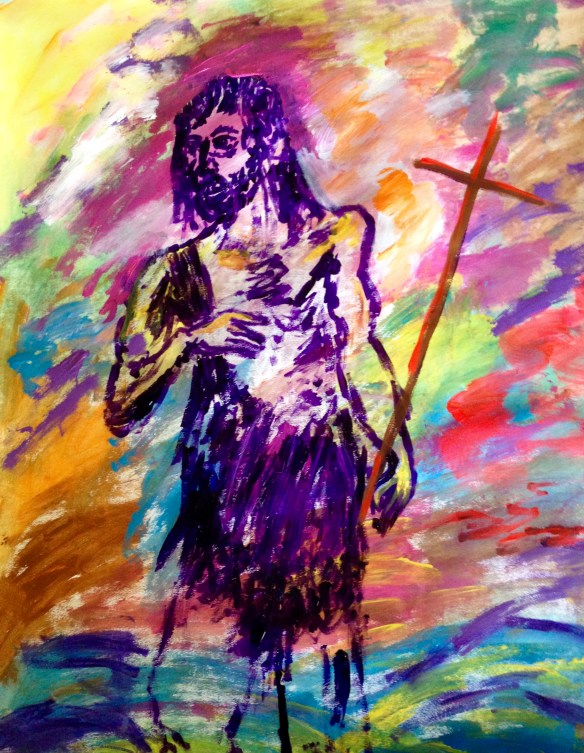
IMG_1383

Exaltation of The Holy Cross: Painting: Ronald Raab, CSC

READ MORE ABOUT THIS FEAST: CLICK HERE

Feast of the Exaltation of the Holy Cross
JN 3:13-17

Jesus said to Nicodemus, “No one has ascended into heaven except the one who descended from heaven, the Son of Man. And just as Moses lifted up the serpent in the wilderness, so must the Son of Man be lifted up, that whoever believes in him may have eternal life.

“For God so loved the world that he gave his only Son, so that everyone who believes in him may not perish but may have eternal life.

“Indeed, God did not send the Son into the world to condemn the world, but in order that the world might be saved through him.”

 Prayer: (Ronald Raab, CSC)
God of all eternity, you lift up all human suffering in the glory of your Son’s Cross. In his passion, death and resurrection, he redeems all life, forgives all sins, and encourages the life of all people. In the midst of war, you bring peace to human hearts.  In the core of despair, you open up the potential of love. In the reality of division, you call us back to forgiveness and in our days of restlessness, you sustain us in faith. Rouse within us the courage to live for others in the midst of all that casts down our hearts and give us the tenderness of your love and the gentleness of your Holy Spirit. In the Cross, we find our home. Amen