Unknown's avatar

About Ronald Patrick Raab, C.S.C.

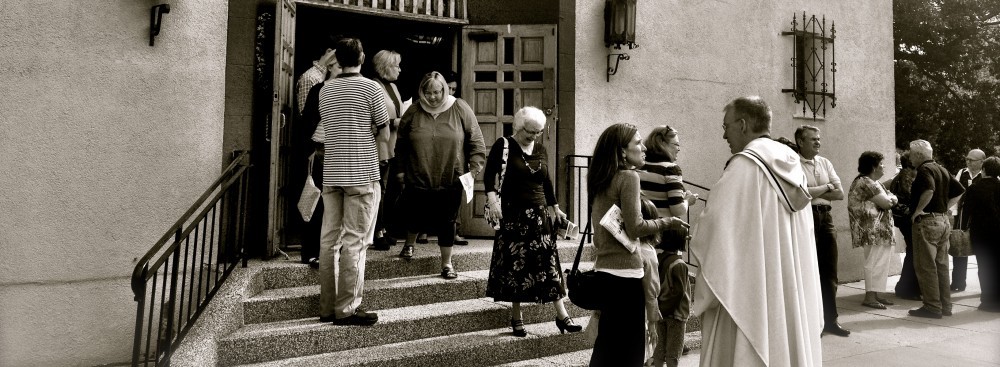
Ronald Raab, C.S.C.,serves as religious superior at Holy Cross House, a medical and retirement home for the Congregation of Holy Cross, Notre Dame, Indiana

On The Margins – Mark 10:35-45

fr_ron_and_kbvm_readingBWListen to  “On the Margins”. This broadcast comes from Mater Dei Radio 88.3. The disciples had given up everything to follow Jesus. They wanted a place of honor. Jesus teaches us all how to serve, how to live for other people.  Twenty-Ninth Sunday in Ordinary Time, October 18, 2015.

LISTEN NOW: CLICK HERE

Stream live On The Margins on KBVM 88.3FM on Saturdays at 3:45pm and Sundays at 8am.
Twenty-Eighth Sunday in Ordinary Time, October 11, 2015

septeber 12(4) 2

I prayed, and prudence was given me; I pleaded, and the spirit of wisdom came to me. I preferred her to the scepter and throne, and deemed riches nothing in comparison with her, nor did I liken any priceless gem to her; because all gold, in view of her is a little sand, and before her, silver is to be accounted mire… (Wisdom 7)

Jesus, looking at the young man, loved him and said to him, “You are lacking in one thing. Go, sell what you have, and give to the poor and you will have treasure in heaven; then follow me.” (Mark 10)

CLICK HERE TO READ MY WEEKLY PARISH COLUMN 

On The Margins – Mark 10:17-30

fr_ron_and_kbvm_readingBWListen to  “On the Margins”. This broadcast comes from Mater Dei Radio 88.3. Jesus invites the young man to go beyond the rules. He must give all in order to follow Christ. We live dependent on God and we are called to live that message for other people. God provides for people and we are grateful.  Twenty-Eighth Sunday in Ordinary Time, October 11, 2015.

LISTEN NOW: CLICK HERE

Stream live On The Margins on KBVM 88.3FM on Saturdays at 3:45pm and Sundays at 8am.

Bulletin Column: Sunday October 4, 2015

Click here for the printed version in our parish bulletin

Dear Followers of Jesus,

I was deeply inspired during Pope Francis’ visit to the United States. His humble presence stirred my own faith in Jesus and enlivened my leadership as a pastor. Translating faith in Jesus’ passion, death and resurrection to our modern world is never easy. However, affirming the life of all people is how we live our faith in our families and in the marketplace.

A couple of weeks ago, I spoke at Saint Peter’s Church as part of a panel on the subject of human trafficking. The link from sex and labor trafficking to issues of poverty, addiction and mental illness is very real in El Paso County and beyond. These issues must be the foundation on which we affirm all life during this month of October.

My experiences of poverty have shaped my faith and my awareness of people struggling to survive. For me, even the issue of abortion must be seen from the perspective of poverty to understand why women make the decision for abortion in the first place.

In Portland, our parish welcomed 150 people each morning for food, clothing, and the basic needs of life. We estimated that 85% of the men who walked through our doors had been sexually abused as children—and 100% of the women. Imagine the raw trauma of being continually abused from as early as four or five years old, of beginning life stripped of all dignity and self-worth. People growing up in poverty, with little education or hope, numb the pain of abuse with alcohol and drugs, and then mental illness takes over.

When a woman must sell her body just to eat and have a place to spend the night, abortion becomes a survival option. In our Portland neighborhood, many of the women huddled together at night under the lights outside our building, sleeping in the cold and rain to keep from being raped or having their belongings stolen. Prostitutes, both women and men, would have sex in dumpsters in exchange for a six-pack of beer, to make it through another morning of their heroin addictions. These are the people arrested for sitting on the sidewalks or for screaming out in the night. These are the people whom we blame for not having jobs; for being mentally ill; for not being like ourselves. These are the people who roam the streets in Portland—and in Colorado Springs.

These issues are essential for us to consider when we pray for the dignity of life. When we avow life we acknowledge all of it, not just the parts that are comfortable and confirm our own life view. As believers in Jesus, our role is to befriend the sinner; to avail people of the mercy of God; to offer comfort and healing for people we neglect…and to not judge people by our own prejudice. We have to offer hope and dignity to women who have had abortions, and to all who struggle with desperate choices. We must give people a chance to not only survive but to thrive.

We live our faith in the world by learning the real issues people face each day in order to survive.

v v v

Below are the seven elements of Catholic Social Teaching from the United States Conference of Catholic Bishops. To ground us in the dignity of life, I hope that you will pray with each one during this month of October.


Life and Dignity of the Human Person

Every human person is created in the image and likeness of God. Therefore, every person’s life and dignity must be respected and supported from conception through natural death.


Call to Family, Community and Participation

The human person is not only sacred, but social. How we organize our society—socially, economically, legally and politically—directly affects human dignity and the ability of every human person to grow in community. Marriage and family, the foundations for social life, should be strengthened and supported.


Solidarity

We are one human family. We are our brothers’ and sisters’ keepers, wherever they may be. Loving our neighbor has global dimensions. At the core of the virtue of solidarity is the pursuit of justice and peace.


Dignity of Work

The economy must serve people, not the other way around. Work is more than a way to make a living; it is a form of continuing participation in God’s creation. To uphold the dignity of work, the basic rights of workers must be respected—the right to productive work, to fair and livable wages, and to organize and join a union.


Rights and Responsibilities

Every person has a fundamental right to life—the right that makes all other rights possible. Each person also has a right to the conditions for living a decent life—food, health care, housing, education and employment. We have a corresponding duty to secure and respect these rights for others and to fulfill our responsibilities to our families, to each other and to our larger society.


Option for the Poor and Vulnerable

Scripture teaches that God has a special concern for the poor and vulnerable. The church calls on all of us to put the needs of the poor and vulnerable first. This preferential option for the poor and vulnerable should be reflected in both our daily lives and public policies.


Care for God’s Creation

The world that God created has been entrusted to all of us. Our stewardship of the earth is a form of participation in God’s act of creating and sustaining the world.


Let’s continue to learn more about how the Church calls us to support people, from conception until death.


Blessings and peace,

Fr. Ron


“In the presence of the Angels I will praise you, my God” (Ps 138)

angel oct 4

This past week the Church celebrated the Archangels Michael, Gabriel and Raphael. On Friday we celebrated the Holy Guardian Angels.

We all long to know that we are cared for, that things will work out in the end. We are receive the messages from angels that new things will happen for the good, that we are protected, loved and cared for as individuals. Even though we know nothing about angels, we cannot see them or touch them, the idea of these Godly creatures are fascinating to the human spirit.

Life is pretty messy and surprisingly difficult. Sometimes we may feel so incredibly distant from God and even from those we love. We turn to the creatures of spirit that in the scriptures have shown the world mercy, protection and have been a voice of fearlessness.

We reflect this week on our closeness to God, how God cares for us and how we are given a new chance when things do not turn out as we had planned.

Jesus said, “See that you do not despise one of these little ones, for I say to you that their angels in heaven always look upon the face of my heavenly Father.” (Matthew 18)

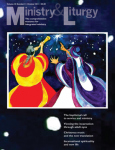
Ministry and Liturgy Magazine: October 2015

My monthly column called “Bridgework”. This column for October is titled, “Camouflage Christmas”

428cover 2

Camouflage Christmas

We celebrated five Masses on Christmas Eve in my first year at Sacred Heart Church (Tri-Community) in Colorado Springs. I remember well that my heart carried much grief that first Christmas after leaving downtown Portland where I was part of a community that cared for people living on the streets and who suffer from mental illness and long-term addictions. I left behind something very familiar where I witnessed every day the miracles of hope being born in such poverty.

I welcomed parishioners and visitors into the simple stucco church of Sacred Heart that night. I extended my hand in welcome and I am sure people felt in my handshake the shivering grief of loss that night. The crowds at each Mass seemed overwhelming to me because I was visualizing the contrast of a small group of folks gathering in the urban chapel in Portland. I was not sure why people came to our church on Christmas Eve, what they were expecting from God and me. I was not sure of how to speak about such a mystery to families. I was at a loss to make God real for people who gather one night a year with profound cultural expectations about Christmas.

Just before the third Mass of the evening at Sacred Heart, I took my post at the door. I noticed an older gentleman walk up the steps of the entrance. His wife wearing an oversized wool coat was slow to take the stairs and remained tightly next to her husband’s side. I extended my hand to him and he politely received my greeting. I welcomed his wife but she did not respond. The husband quickly took her hand and led her into the church.

I stared at the couple and I realized that the woman wrapped in wool was suffering from some form of dementia. The husband’s quick gesture to take her hand was his way of not only keeping her safe but also his way of keeping her illness a secret or at bay for at least one more Christmas Eve. I felt my heart open as I realized that these people coming to Eucharist on Christmas Eve are no different from any community. We are all suffering on such a silent night with deep expectations that life, family and even our bodies are to be perfect given society’s expectations about what Christmas means.

On that Christmas Eve in my new role as pastor, I realized that suffering on Christmas Eve is so often camouflaged. Family relationships are tender and hidden behind the exhausted faces of parents. The loss of family life for the elderly is so veiled behind the quiet presence of grandparents in the second pew. On Christmas Eve, young parents cover their anger about the fact that their marriage may not survive another year.

As I ponder the gospels of the Christmas season, I am aware again that Jesus is born in camouflage among people who did not have room for him. Among the animals during the nighttime, the Savior brought hope. Jesus still runs after the lost, the forsaken and hope abounds when we finally become aware that God is among us for real. Even when we try to hide our human needs, God breaks through our lonely hearts. Christmas is for those who believe that they cannot make it through one more night in pain.

The shepherds got word that God was born in the camouflage of straw and darkness. Even Kings followed a star to find their way through the darkness where another King was born among people in poverty. Our Savior still makes his home among those bundled in wool to protect themselves from the cold and the exposure of their disease. Jesus even strips us of our grief when we finally trust again that we cannot control the past or fix people in the present.

Mary the Mother of God models for us a life of fidelity and it is at Christmas that we all wish we could make our home in the mercy of her Son. Mary helps us all become aware that love abounds in the limitless mercy of God. I want Mary to hold the hands of those whose bodies are growing weaker and whose lives are shattered by disbelief that God could be born in their pain.

On Christmas Eve, my desire is for all ministers of the Eucharist to know that God’s mercy is revealed among the lost, the lonely and weak. There is no hiding from the God who desires to be among the fray. Our ministries must help people find their way up stairs of our churches and into the rituals that will expose love among them.

On Christmas Eve, the Mass is more that gold cups, elaborate decorations and perfect music. On this night we help unveil the mystery that is often camouflaged among the poinsettias and artificial trees. Our ministry especially on Christmas Eve is not a performance of perfection, but a rich and deep belief that God is being revealed among the quiet desperation of people who struggle to make it up the stairs of our churches.

On The Margins – Mark 10:2-16

fr_ron_and_kbvm_readingBWListen to  “On the Margins”. This broadcast comes from Mater Dei Radio 88.3. We know a covenant relationship with God. God wants the best for us. We approach Jesus with childlike qualities. We rest in the assurance that God’s love is lived out in our relationships.  Twenty-Fourth Sunday in Ordinary Time, October 4, 2015.

LISTEN NOW: CLICK HERE

Stream live On The Margins on KBVM 88.3FM on Saturdays at 3:45pm and Sundays at 8am.

Bread and Concrete: (Ministry and Liturgy Magazine, October 2015)

Bread and Concrete: Where Liturgy and Ministry Meet, Part 8 from Liturgy and Ministry Magazine, October 2015

The Word seeks a home among us

“She wrapped him in swaddling clothes and laid him in a manger,

because there was no room for them in the inn.” Luke 2

  For over twenty years I carried a small red lectionary around with me. The former translation of the scriptures for Mass from 1970 shaped me as a young priest and preacher. The hardbound book with tattered pages rested on the floor against the chair in my room in which I prayed in the mornings. I carried the book under my arm to parish meetings, to prayer services and even to some gravesites as if the red book was an accessory, part of my clerical uniform. The binding of the book broke under the pressure of years.

The cover is now darkened from the grease of my hand carrying the book in the same way to all those events. The book sits now on a bookshelf in my room only because the translation of the scriptures has changed in the Roman Rite as well as the placement of some of the texts.

No one book can replace for this lectionary. The new books are bulky, separating the Sunday scriptures from the weekday texts. Multiple books are needed now for Mass or personal prayer. The once handy, simple lectionary is no longer a convenient source of psalms or reading the gospels for an entire liturgical season.

What I miss most about my old and frayed book is that I became acquainted with the phrases, responses and translations of the Word of God. These words as they were written became a daily friend and a source of inspiration. In over twenty years of carrying the same book from place to place I learned that my life was embedded between the pages. My instincts in ministry found their roots among the consoling stories of Jesus on earth and his followers telling the tales long after he left our world.

The book is filled with more than scripture passages. I miss the pieces of folded paper with pen scratches of prayer tucked between the pages. If I open the old book now, the smell of aging paper and dust is a memory of years past. Some of the pink message forms with addresses of parishioners from other parishes where I served are folded up deep within the book. Some of those addresses led me to home visits because a parishioner’s loved one was dying. I also jotted down some homily ideas on scraps of paper. There are prayer cards from funeral homes of people whom I buried many years in the past and people who died too young. Phone numbers of grieving relatives and even simple reminders about plans for a wedding are still there. I am reminded that some of the weddings took place with sad or unfortunate circumstances and many of the funerals happened way too soon. These scraps of paper tell the stories of my ministry and the people whom I have encountered all these years. The ink scratches remind me of how the Word of God has shaped my pastoral life and consoled me along the way.

As I look through the dusty book now, I hold on to the memories and I pray for the people whose vows I witnessed. I pray for the souls of the bodies I buried. I recall the places and parishes where I preached the Word and how the Spirit inspired me among complicated family relationships and fragile moments of grief. The pink messages, the death cards and the scraps of lined paper all tell the stories of how I have lived God’s Word in my priesthood and how I invested my life in the liturgy of the people.

These memories teach me even more that God is trying desperately to make a home among us. Even though the old book remains shelved, the Word of God is still active and alive. I now hold years of reciting texts, memorizing responses and preaching homilies as rich treasure within me as I now minister among people in poverty. These are the memories that I bring to the Liturgy of the Word, when the richness of mercy and consolation are proclaimed anew at Mass.

God’s Word is not from the past but speaks today in ways I least expect. Ministering among people on the margins of society, I observe God becoming flesh among us in most unlikely ways. God’s word speaks through the morning hangover of an addict who confesses to me, the loss of a child that a disillusioned mother tells me about and the horrific affects of disease and the quiet of loneliness uttered to me by a stranger. I see this at every Mass as I sit down to listen to the Word of God that resonates among people who understand what suffering is all about. I reflect on the eternal presence of God in the Liturgy of the Word by first listening in prayer as I wake up to begin the day.

In my silent morning hours of prayer, I long for words that will set people free. In the daylight hours, so many vile and obnoxious words are bantered about our neighborhood. I overhear public cursing and angry threats from addicts and dealers on our sidewalks, words that pierce the heart. Our staff is steeped in words that weave stories of abuse, addiction, rage and hatred. These words and public stories hurt us all worse than sticks and stones and destroy us as surely as bullets and knives.

So many people wait in various lines in our neighborhood for food or a shower, for clothes or to replace an identification card. People wait for gentle words that will satisfy their needs such as, “Yes, I can help you.” However, most likely they will hear, “No, I am sorry we do not have the resources for that,” or “We are not hiring today.” As I write this paragraph well before dawn, someone is yelling words of fear and accusation outside my window, “You fuckin’ idiot!” People wait in line here for words that will ease their fright, comfort their loneliness and shorten their pain.

I struggle to give all of these hurtful and sorrowful words to God in my morning silence. However, I cannot carry them in the stress in my shoulders or in the fear of my voice or in the red lectionary under my arm or in the sadness I feel around my heart. I rely on the Liturgy of the Word just like everyone else so to hear the fulfilling words of hope among us. I wait with all who wait in private silence for an antidote of healing and consoling words from the public liturgy itself.

After years of ministering among marginalized people, I realize more than ever that we are all searching for home in so many different and unique ways. I am not speaking just about getting housing in a single-room occupancy hotel or finding shelter tonight. I am not referring to earning enough money to build an expensive home near the ocean or a new loft in a newly gentrified area of an urban center. I am referring to the journey for every human being to find a real and unique place in life, to discover the gift of life here on earth and to live all life from that gift. People are ultimately trying to make sense out of their suffering. We all strive to find the healing we need. We all long to make sense out of the corrosive names we were called when we were young. As adults, we all need to be healed of the mockery so many of us endured as children, and of the fears that caused us to mock others as well. My experiences show me that no matter how our lives have turned out, we all long to be in communion with other people.

The Word-made-flesh was first housed on the outskirts of town. In the dark night, Jesus was born on earth seeking housing. This image of Christ our Savior is not lost on our parish community. Christmas night is the hope for every night. We struggle to believe that Christ is still searching among people living on the margins to find home, to be born in the heartache and suffering of every one of us. Every Christmas Eve my heart is heavy for people searching for housing, not just the people who are sleeping at our doors. Christmas night is about the refugee, those scattered by war and violence. The night speaks to children surviving divorce, and for a young mother who lost her husband in an accident. The night is for parents who betray their children, and for children who cannot live with their parents. The night is for the safety of foster children and for the addict who has broken up the family unit. I pray for all who need to find their way in life and how we turn so many people away because we cannot make room for them in our lives.

Every day as I hear the scriptures at Eucharist, my heart aches for people who search for such meaning and comfort. We displace people from discovering their homes in Christ Jesus when we name them “sinners” or “unworthy” or “not suitable to be worshipping with us in public”. I know I am part sinner and part believer in welcoming people to discover their true homes in the Word of God. The healing words in the scriptures that echo in our chapel offer love in the poverty of every person here.

The Word of God finds a home in our midst because most people in our parish community do not have enough money to hide their suffering. People in our pews need God in raw and obvious ways. People stink, they hear voices and even many of our volunteers are struggling to get past a divorce or job loss or the death of a spouse. People in our pews cannot hide their own poverty, the place where God is trying to abide among us.

I never want to glamorize poverty in any way. However, poverty shows us where to put our priorities in order to find healing and hope. People in our parish community cannot hide suffering behind pretense, material possessions or advanced college degrees, and even those among us who are materially comfortable and who have received great formal education recognize our shared humanity and shared poverty in our need for God. I believe now in the message of Jesus who tried to show his disciples that the handling of serpents, healing the sick and preaching the goods news were tasks that will only be received and honored among people who do not cling to earthly possessions or prideful ways.

I remember my own journey to the Word of God as a young priest. I was working in Chicago at the Office for Divine Worship and ministering at Saint Clement Parish in Lincoln Park. At that time, I was not living and working among people in poverty; in fact all of my life was far from it. It was a time, however, where I was confronted with many aspects of my own poverty.

I struggled to find a voice in the Church and a place to really use my gifts and talents. I felt I was always on the outside of my religious community and outside of the mainstream of what was expected of me as a priest. I was searching for home. I was waiting for God to show me the direction. I wanted to be part of the plan. I wanted in the worst way to cooperate with grace and not to fight against it.

One Sunday morning I was presiding at Eucharist in the worship space in the basement of the Church. I had my arms raised up during the Eucharist Prayer and I remember being emotionally stirred by the gospel that day. During that moment, I felt deep within my being that God would be with me through the Word. While I was speaking words of the Eucharist, God was speaking to me and practically knocking me over with the fact that my life must continue to be centered on the gospels. I felt that my entry into the covenant and meaning of the Eucharist would come through the Word of God. I wanted to weep. I wanted to stop Mass and just take in this sacred moment of grace for me. I finally felt a greater ease, a new doorway into the ministry of my priesthood, the life that was before me. I felt for that brief moment that I had found housing and purpose from the Gospel.

This insight has formed my ministry in the Word of God. The healing that I experienced so many years ago is at the heart of my invitation for others to find shelter today in the Word. I realize that these sacred texts still do not keep people dry in the Portland rain or provide a place to sleep. They do not provide a comfortable space for people to be creative or a table around which to invite others to dine with them. The Word of God does provide for us a moment of emotional stability. The Word among us does offer the spiritual and emotional safety people need so to discover their dignity and worth, their place among others at the holy table of the Word of God.

Several years ago I met a college professor who heard about our parish community. Even though he lives about an hour away from our downtown parish, he wanted to visit and find out how we are serving people in poverty. I had the privilege of having an extended conversation about his life and the reasons for his journey to pray with us.

Reggie teaches young adults who are struggling to survive in school. Some of his students are struggling to learn English, others are addicts who cannot concentrate on studies and who are not ready to be clean and sober. Multiple issues of abuse and even domestic violence keep young people from the emotional stability they desperately need so they can learn in a school setting. Reggie shared the stories of his students with me and asked my advice about dealing with people who face such poverty and insecurity.

Reggie then began telling me the real reason for his journey here. He is a professed atheist and he was discovering that God is being housed in the lives and hearts of his young people who are struggling to learn and to survive. He initially came to see me in order to make sense out of this insight. He did not want to admit that he himself might be finding God or that God could possibly be leading him from the storytelling of his young people.

Reggie and I have regular conversations now. He drives up to see me and to share coffee or a meal and to tell me stories of his life and students and also to come to Mass. He admitted to me that he suffers from debilitating depression. He told me that when he comes to Mass and he hears the Word of God proclaimed here that for just a moment, there is a flash of healing within him. He tells me that when the scriptures are read out loud in this place of honesty and poverty, he feels a refreshing glimpse of love deep within his life that he has never received from any medication or psychiatrist. Reggie tells me that love is here when the scriptures meet people in need.

Reggie’s story goes beyond the confines of any bound book. I see in his eyes the communion we all seek in God. He hints to me that he desires faith. He has not come to admit his faith and perhaps he never will, at least in a way that is familiar in our Catholic tradition, but his experience teaches me what the Word of God is doing not only in our small parish community but also in the world. The Sprit of God is continuing the mission of love and healing. The words of life are being spread like seed in the lives of people who are lonely, depressed, addicted and who are burdened by words of hatred and violence. Housing for the heart is possible not only for people who proclaim the Word, but also for people in need of healing.