Unknown's avatar

About Ronald Patrick Raab, C.S.C.

Ronald Raab, C.S.C.,serves as religious superior at Holy Cross House, a medical and retirement home for the Congregation of Holy Cross, Notre Dame, Indiana

Saint Andre Bessette: Feast Day, January 6, 2012 Part 5

(This is a six part series leading up to January 6, the Feast Day of Saint Andre Bessette, the patron of our parish community.)

Our parish community strives to connect the prayer of the Church with dedicated service of people. We celebrate Mass with honesty and intention which calls each member to serve people in need. We are feed by God in our small chapel on the corner of 6th Street and Burnside and we welcome people every morning to be nourished with food, companionship and nonviolence.

Every year on Holy Thursday, we wash feet during the Mass, the ritual prayer of the Church. We also wash feet every Wednesday in our hospitality which connects us to Jesus’ request to not only be feed at the altar of the Eucharist but also to wash the feet of people in need.

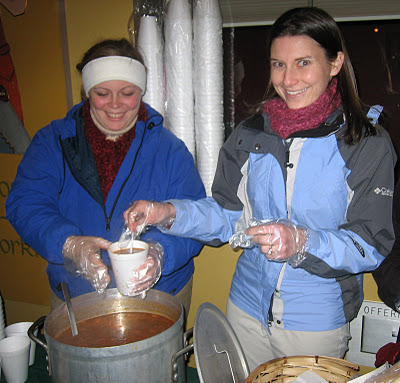
Members of our staff begin our hospitality center every morning reflecting on the upcoming Sunday Gospel that will be proclaimed at Mass. We pray for people who will fill our upstairs center and then learn a deep humility by caring for people, offering clothing and food, hygiene products and haircuts, bus tickets and a kind conversation.

Brother Andre lived from a deep devotion to the Mass and to the saints. He prayed for the intercession of Mary and Joseph to care for people who were ill and living in chronic fear and pain. He often spent the nights in prayer offering the suffering of people whom he had met during the day to God. He slept only a couple of hours a night because of his great devotion to God and his love for people who came to him in their suffering.

We connect our prayer and service by praying for people who have been murdered in our neighborhood. For the past ten years, after a murder occurs in Old Town, our parish community processes from Sunday Mass into the streets to pray for the victim and for peace. We are compelled by the love of God and the suffering of our neighbors to take our prayer out of the chapel confines and into the brutal issues of the streets. At the conclusion of our prayer we also pray that we will never have to pray on the streets again.

Saint Andre Bessette models for our parish community how to trust God in the midst of suffering and poverty. Brother Andre believed in his heart that God alone can heal people who feel worthless and abandoned. We strive in our parish community to put that belief into practice in so many different ways during our prayer to God and our service to people.

Saint Andre Bessette: Feast Day, January 6, 2012 Part 4

(This is a six part series leading up to January 6, the Feast Day of Saint Andre Bessette, the patron of our parish community.)

Our neighborhood is desperate for healing. Answers to long term poverty and heartache elude us on a daily basis. Our parish community walks with people in the mystery of human suffering. Our faith provides solace when our efforts fail, when human trial is beyond our expertise, when our answers fall short. Our parish community relies on a power greater than our selves to make sense of human tragedy and anguish.

Alfred (Andre) Bessette was born on August 9, 1845. He was a sickly child and by the time he was twelve years old, he was orphaned. He experienced poverty, loss and hardship. He professed his vows in the Congregation of Holy Cross in 1872 even though the community was reluctant to receive him because of his illiteracy and poor health. He developed a great devotion as a child to Jesus Christ and to Saint Joseph. When he was assigned to become the porter at the college, the gift of healing became evident to those he welcomed. The first written testimonies of cures attributed to his prayers were published when his was 31 years old.

Brother Andre received 600 people a day asking for healing. Many people were cured of their physical ailments and many others were brought to a deeper faith in God. Healing happened in many ways through his forty years of answering the door at the college.

Saint Andre Bessette becomes a model for us of hospitality and healing as we base our ministry in the sacraments of the Roman Catholic Church. The mission of the Gospel challenges us to welcome to stranger, feed the hungry, clothe the naked and visit the imprisoned. Healing happens when community is formed, when our reliance on God is celebrated, when we turn to God for the answers we so desperately seek. We live and pray in the mystery of addictions, mental illness and long term poverty.

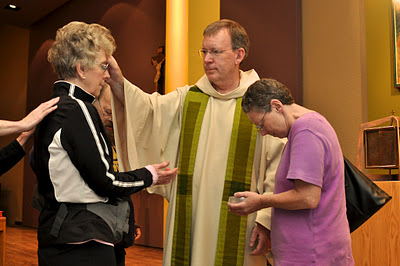
Photo: We celebrate the Sacrament of Anointing of the Sick at each Mass on Wednesdays and on the first Sundays of the Month. This is one aspect of our healing ministry at Saint Andre Bessette Church.

Saint Andre Bessette, pray for us.

Saint Andre Bessette: Feast Day, January 6, 2012 Part 3

(This is a six part series leading up to January 6, the Feast Day of Saint Andre Bessette, the patron of our parish community.)

Many present organizations and service agencies in our Old Town community were founded by various Roman Catholic communities. For example, Blanchet House began serving food from the faith of former University of Portland students and clergy. Transition Projects and Sisters of the Road had their origins in the social teachings of the Church and several other non-profit organizations created models of hospitality for people in our neighborhood.

For many years, our parish community hosted Loaves and Fishes and the MacDonald Center. Both agencies found new homes prior to 2002. Now the MacDonald Center, founded by Rev. Richard Berg, CSC, which opened in 2000 continues just a block away.

Since 2001, our parish has sponsored a hospitality center in our building. The mission of welcoming the stranger is rooted in the message of the Gospel and the living out of the Eucharist. Hospitality is a radical acceptance of people. We cannot fix people’s longterm suffering or take away the violence people deal with every day. We can offer the basics of life, call people by name and create a safe environment for a few hours a day.

Hospitality is the message of Saint Andre’s life as well. He served as the Porter at Notre Dame College in Montreal, opening the door to people, listening to people’s stories. The grace that Andre was given was that he also was an agent of healing for many people. In our day, we believe that hospitality is also a grace and model of healing. We accept the stranger, provide a serving of food and offer a place of rest. Andre’s life continues in our community as we learn the complexities of people’s stories and pray through the suffering so many people experience.

Saint Andre, pray for us.

Saint Andre Bessette: Feast Day, January 6, 2012 Part 2

(This is a six part series leading up to January 6, the Feast Day of Saint Andre Bessette, the patron of our parish community.)

The first priest of the Congregation of Holy Cross to serve as pastor of the Downtown Chapel was Reverend Richard Berg, CSC who began his ministry in the late 1980’s. He served until 2001. During the Provincial Chapter of the Indiana Province in 2000, the Holy Cross community decided to make the Downtown Chapel a commitment of the community. In 2001, Reverend Robert Loughery, CSC was appointed pastor of the Downtown Chapel as the first pastor in this new agreement between the Archdiocese of Portland and the Congregation of Holy Cross. He served as pastor until 2010.

In July 2010, Reverend Steve Newton, CSC was assigned as pastor to the Downtown Chapel. The name change of the Downtown Chapel to Saint Andre Bessette Church serves as a sign of the commitment of the Congregation of Holy Cross to the ministry of people living in poverty and surviving homelessness, mental illness and addictions. The presence of Holy Cross also makes the commitment of education and formation for people serving other people in the issues of social justice and nonviolence. The Congregation of Holy Cross also serves the University of Portland and Holy Redeemer Church in Portland, Oregon.

On Sunday, October 17, 2010, Brother Andre Bessette, the first member of the Congregation of Holy Cross was canonized a saint in the Roman Catholic Church. Brother Andre

was also the first male to be canonized from Canada. His simple life and ministry of healing provides for our parish community a patron that certainly lived a life identifying with suffering and poverty, with illness and homelessness. This moment in our parish community of changing our identity, our name, is significant for our parish and very significant for the Congregation of Holy Cross.

This photo was taken on Sunday, October 17, 2010 during our parish celebration of Brother Andre’s canonization in Rome. The photos of Brother Andre and the relic are now a part of our worship space.

Saint Andre Bessette, pray for us.

Saint Andre Bessette: Feast Day, January 6, 2012 Part 1

(This is a six part series leading up to January 6, the Feast Day of Saint Andre Bessette, the patron of our parish community.)

The Downtown Chapel began in 1919 as an outreach to sailors returning from World War I. The original Catholic worship space provided sacraments and the basics of life to men who were struggling to find work and a way back into civilian life.

In 1943, the Downtown Chapel became a parish of the Archdiocese of Portland. The new name was Saint Vincent de Paul Church. The two names remained as the identity of the parish even in the many physical moves of the church. Today, we are housed in the fifth location of the parish worship space.

The two names of the parish remained confusing for many people. Many people did not know that the Downtown Chapel was a Catholic community. The name Saint Vincent de Paul was confused with the Saint Vincent de Paul Society.

In January 2011, the Archdiocese of Portland changed the name of the parish to, “Saint Andre Bessette Church.” This was at the request of the new pastor, Father Steve Newton, CSC. This was in honor of Brother Andre being canonized a saint in the Roman Catholic Church on Sunday, October 17, 2010.

Since that time, we have been gradually using the new name of the parish. This week in celebration of Saint Andre’s Feast Day, we will promote the new name to all of our parishioners and community partners.

In the past several years, we have remodeled the worship space and the exterior of the building. The new exterior sign will be installed in a couple of months. This photo shows the remodeling process from several years ago, but is still an image of our renaming our parish community, “Saint Andre Bessette Catholic Church.”

Pouring Out Prayer On Concrete

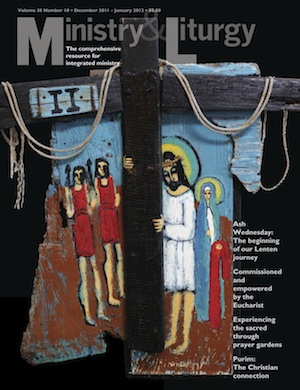
Originally published by Ministry & Liturgy Magazine, December 2011
– PDF version –

I began praying the Triduum noticing the floor. This was the first Triduum without the old burgundy carpet in the chapel. The simple concrete floor with noticeable old screw holes, chips, scratches and flaws invokes a rugged, urban environment. The poured concrete aisles also convenience our friends in wheelchairs and others who come in with soaking-wet boots and soggy backpacks. I noticed that everyone moved around the chapel with ease and purpose without the threadbare carpeting. I realized that I never really noticed the floor as we began the sacred dance of death and resurrection.

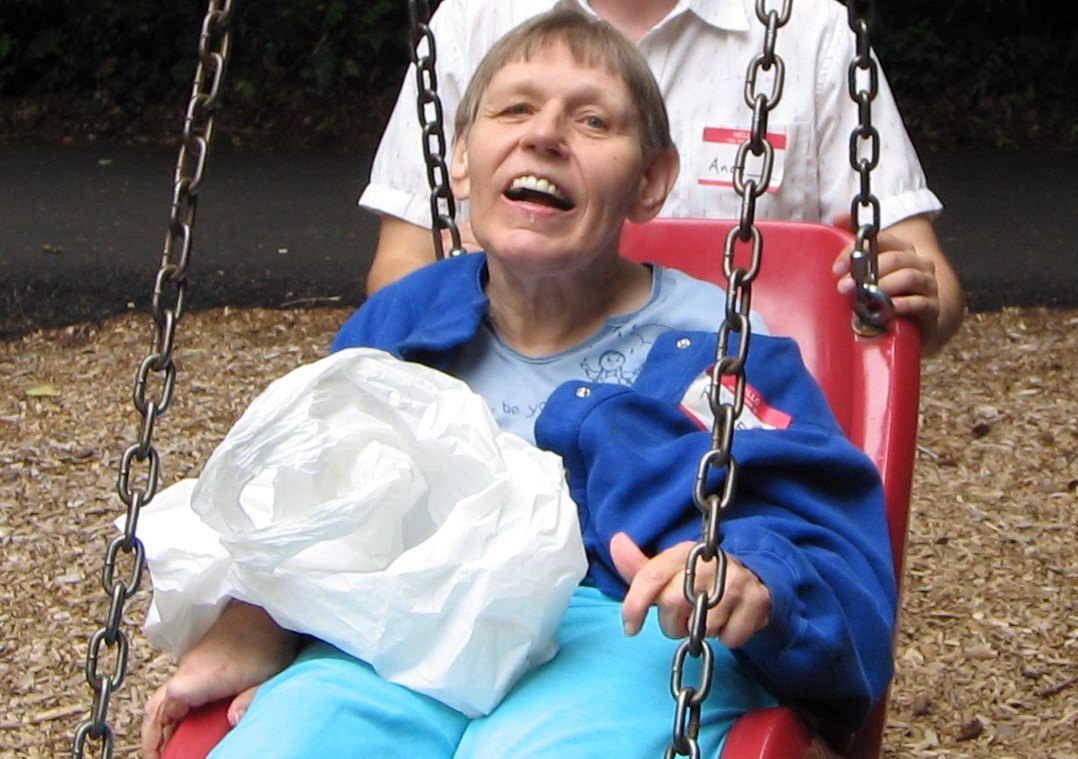
Rosie wheeled herself in through the doors and into her usual spot near the sanctuary as we prepared for the evening Mass of the Lord’s Supper. Living with cerebral palsy, Rosie is a bold presence in our neighborhood. Her lifelong disease stiffens her body and makes her speech very difficult to understand. She protested in City Hall and held banners in parades rousing attention for civil rights for people suffering disabilities. As we began the Holy Thursday liturgy, I saw her ease her motorized chair into her usual spot with a flick of her finger. I cannot take her suffering away but at least she no longer has to battle the carpeting.

We washed feet on the concrete aisles. Watered splashed, dripped and danced everywhere. Dirty socks and assorted sneakers spotted the grey aisles. I poured out the water along with my prayer for all of us who walk the treacherous ground of street life and the uneven ground of church life.

We processed with the consecrated Eucharist to a small altar near the emergency exit. Mary’s image is there. We invited everyone to follow in the procession. I approached the small altar after weaving our way on the concrete path. I noticed Rosie had been first in line to follow the sacred bread and wine. We all sang with yearning from our broken hearts.  I stood at the small table watching the faces of people who desperately need God. My gaze was interrupted, as I smelled an unpleasant odor. Rosie’s urine bag leaked during the sojourn. A stream of urine trickled along the aisles to the place of holy reservation. Jesus invites everyone to wait with him. I felt the deep love of his tears streaming on to the rocks in the garden.

I quietly processed alone on the concrete aisle as we began the liturgy on Good Friday. I prostrated myself before the sanctuary on the cold concrete. I felt the floor under my entire body for the first time. I breathed and relaxed there. I was there on behalf of everyone. I felt in my entire being the people who wheel themselves around the chapel and people who are too tired to stand up and the people who are too depressed to understand their own lives. The cold floor makes us one in offering everything to God.

I heard a woman weeping. I noticed her as I stood up and continued the liturgy. She is not Catholic and lives in daily recovery. When the liturgy was over she came to speak with me on the sidewalk. She was still crying as she began telling me of what happened just before the liturgy began. As she approached the chapel before noon, she noticed a man sleeping on the sidewalk near the chapel covered with a large, bright red blanket. All of his possessions were piled up next to him. She told me as she noticed me prostrate on the concrete floor with my body covered in red vesture her heart realized the profound connection of Christ’s suffering for us. She could not stop crying as she continued to connect the sleeping man on the street and her priest on the chapel floor.

After flipping on the light switches on Easter morning, I walked into the chapel and noticed white candle wax dotting the grey floor. Some leaflets had fallen to the ground in the rush of cleaning up after the Easter Vigil. Bags of canned goods and assorted used clothing piled up near the sanctuary were donated during the Easter duty. I remembered Jesus’ used clothing next the open grave.

We buried Rosie this past year. Her body could no longer be bound in such suffering. Many people suffering disabilities assembled for her funeral in another parish. Our floors could not take the size of the crowd. I told the story of her urine bag leaking on Holy Thursday. I reminisced of her determined prayer no matter what the obstacles.

We continue to pray without the old carpeting. Many stories will walk, stumble, hobble or be wheeled into our chapel in the year to come. In future Holy Weeks, I will pay more attention to our prayerful dance of Christ’s passion, death and resurrection on the chipped concrete.


The Stations of the Cross: The Faces of Friday

Originally published by Celebrate! Magazine, Winter 2011
– PDF version –

I encounter the restless suffering of people every day. The pain that I meet at the Downtown Chapel in Portland, Oregon does not easily scab over nor does it ever heal from the inside out. This pain comes from the consequences of surviving generational poverty. The suffering is long term when a middle-aged man tells me he has never loved anyone as an adult because he was raped as a child. A young bearded city-stroller confesses that his brother and sister prostituted their mother to make some quick cash for drugs. A dirty-faced woman suffers from years of mental illness and repeatedly asks me why God hates her so much. These are some of my encounters here on our urban parish corner. Our staff and volunteers spend their days listening, working and helping to sort out what the Church means on such a street-savvy block.

During this Lenten season, I begin my tenth year on this beloved block. I have learned throughout these years to honestly lean into the mystery of Christ’s dying and rising with our staff and many volunteers. I cannot sustain my presence here without taking stock of my faith on a daily basis. I have been stripped of every false notion and pious sentiment that I ever held. However, I know I can turn toward bitterness and rage when I see the ways our society treats individuals. I can rant and rave at how little the Church seems to care about people living in poverty. I sort out these options daily in order to survive my ministry.

I turn toward the only path that I know will bring life. This path is the real journey toward Jesus’ death and resurrection. The Stations of the Cross live in our midst. The moment-to-moment issues of suffering, denial, hatred, prejudice call me to go deeper into the real meaning of my faith. This past year, I wrote a version of the Stations of the Cross so members of our community could more easily find their stories in Christ’s love and resurrection. This version of the Stations of the Cross will also help educate benefactors about the lives of people in our community. Our pastoral associate, Andy Noethe, photographed volunteers and staff and produced a DVD. These stations tell composite stories of people whom I have met in ministry. These scenes of real people’s lives interpret the action of Jesus and the people whom he encountered on the way to the cross.

I share the stories to enable all of us to enter more deeply into the mystery of Christ’s life today. This Lenten season tempts us all to give up on our faith. The Gospels call us to wake up with the disciples to a new perspective of being with Jesus, not under a tent, but on the solid ground of our lives and ministry. Jesus longs to encounter our lives, to tell us how we have sinned in the past and then challenges us to be bearers of Good News. Jesus exposes our common blindness of neglect and ignorance and longs to set us free from the entombment of our fears. This is the journey toward the life Christ longs for us in every worshipping community.

The first two “Stations of the Cross: The Faces of Friday” are presented here. The video version will be available on the websites of Celebrate! Magazine. The video version and the written text will also be available on the website of the Downtown Chapel. I invite you to pray the various stories with faith and longing for the love God has for every person. These stories call me to realize I cannot control people’s lives, or change their circumstances, or solve their problems. However, I am changed profoundly by the depth of people’s sorrow in the center of life itself, in the promise of Christ Jesus.

The First Station: Jesus is condemned to death.

Leader: Show us your face, O God
People:  Save us, O Christ, through your Holy Cross!
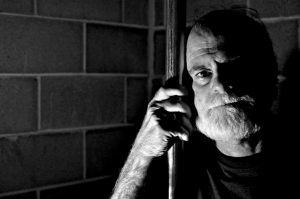
I remember when Henry landed in jail. The newspapers said that he was arrested because of his violent outbursts in the streets in the middle of the night. Everyone who knows him realized quickly that his mental illness caused his lashing out, his violence.

When I visited him in jail he told me that he woke up that first morning lying on the concrete floor of his cell. His jittery words and shivering body could hardly express his confusion as I sat in front of him. He admitted that his real sentence is his lifelong mental illness. His fingers shook as he gestured his words. He cannot afford medication and cannot remember to take his pills anyway. Henry is simply unable to care for himself.

Henry so often condemned himself by thinking that he was worthless in other people’s eyes. He always apologizes for his slow ability to utter words or to speak up for himself. When Henry lived on the streets he used to swear that people hated him because some people would spit on him as he slept in a doorway. He would plug his ears as people condemned him with insults, loud obscenities and rude gestures as they passed him lying on the sidewalk. I was struck by how Henry’s jail cell is the place of Jesus’ unfair condemnation.

Leader: From the condemnation of poverty and discrimination:
People: Save us, O Christ, through your Holy Cross!
Leader: From the condemnation of mental illness and false accusations:
People: Save us, O Christ, through your Holy Cross!
Leader: From the condemnation of insults and obscenities:
People: Save us, O Christ, through your Holy Cross!

Personal Prayer and Meditation:
1.Where do you witness innocent people being condemned to suffering in the world?
2. How do you relate to your own struggles, personal suffering and loneliness?
3. How are you responding to the suffering of other people in your prayer and service to others?

The Second Station: Jesus is given his cross

Leader: Show us your face, O God
People:  Save us, O Christ, through your Holy Cross!

I never felt so helpless as the day I met Michael for the first time. He called me and asked to come to the parish office and talk. I will never forget his sad, drawn face, his skinny body standing in the threshold of my office door. I invited him in, but he refused to enter. He stared at me and said, “I have tried to speak with three other priests and they would not listen to me. Would you at least listen to me?”

I remember looking down at the floor and quietly assuring him I would listen. He came in and I offered him a soda. He nervously sat down and immediately told me he had AIDS. I did not confess my naïveté at that time about the complexities of his disease. We sat in the quiet office for hours, going over in detail the physical effects of his illnesses. But it was the emotional toll that devastated him. His parents threw him out of their home. He had not spoken with them in months. He was not getting proper medical care and his friends all disappeared when they heard of his diagnosis.

I sat in my office feeling so afraid because I knew I could do little to change anything for Michael. He taught me that to enter into real suffering means listening with an open heart. I walked with him on his ground of suffering for several months. And when he died, I walked with his family to a fresh grave as they tried to bury all the regrets of not caring for their son.

Leader: From the cross of fear and rash judgments:
People: Save us, O Christ, through your Holy Cross!
Leader: From the cross of shame and guilt:
People: Save us, O Christ, through your Holy Cross!
Leader: From the cross of family apathy and neglect:
People: Save us, O Christ, through your Holy Cross!

Personal Prayer and Meditation:
1. What does carrying the cross mean for your own life?
2. How do you view the crosses other people have to carry?
3. How do these crosses change your attitudes about people?
Finger Pointing

Originally published by Ministry & Liturgy Magazine, November 2011
– PDF version –

My parents taught me not to point my finger at strangers. I was told it was rude to point to another person and whisper behind his or her back. As a child I dare not point to a person with a different skin color or another child who somehow did not fit into my scheme or pattern of life. It was simply rude to be seen in public pointing to other people. Most other children were also taught not to point at anyone in public.  However, on playgrounds everywhere, new kids, different kids, gentle kids, smart kids, big-eared kids, freckled kids and fat kids were all pointed at by just about everyone I knew.

I live now on a block where children and adults still point. Strangers point at other adults who line up on the sidewalk outside our doors.  They also point in the direction of a teen who is so stoned he cannot walk across the street. Other passersby do more than point– they spit, wag their fists and kick men who are sleeping on the sidewalk. I still believe it is impolite even to point.

As we listen to the Scriptures during the beginning of Ordinary Time, once again John the Baptist appears strong and sure. We relied on him to show us the way to Christ and the Kingdom of God all during the Advent season and even during the Christmas holiday. John continues to do one thing—he points toward Jesus. John has been portrayed in art throughout the centuries as pointing to Jesus. He has been caught in paintings and in sculpture doing the very thing so many parents and teachers have taught us not to do, that is point to another person in public.

John’s pointing is different. He points to his cousin because he is sure Jesus is the one who will bring unity and peace to the world.  John points to Jesus during his baptism because Jesus is the revelation of the Father’s love. John assures us that the Spirit will continue to point us all into the direction of the Kingdom. John also points to Jesus with more than his index finger. John’s heart, mind and soul are also oriented into the direction of Christ Jesus. His very soul knows that the only way through earthly life will be in the direction of the Kingdom of Heaven.

John’s voice is also pointing to Christ. As Jesus walks by, John proclaims with his entire being, “Behold, the Lamb of God.” This is one of the most sacred statements and recognitions in the Scriptures. This is an act of sheer love and deep awareness of the living Christ. This statement is a profoundly contemplative act on John’s behalf. This statement is the result of John’s years of pointing into the direction of the holy. This is an awakening moment, a joy filled expression, which comes from a loving and profound understanding of Christ on the earth.

As we continue in this Ordinary Time, we all need to reflect on how our lives point toward Christ. We need to take some retreat time for our parish staffs to view where we are heading.  We need to evaluate our liturgies, education and service if they are rooted in our deep awareness of the Lamb of God. Do we recognize the Lamb of God from our hearts and in our worshipping assemblies? Do we have the conviction and the awareness to know Christ in such a passionate way? Perhaps our finger pointing is to our own selfishness or to point out the differences of other parishes in order to make ourselves look good. We point to the fact that we have more money and parishioners. We point to our music ministry because our liturgical style is certainly better than the parish next door. We point out that we are glad we have no one sleeping at our church doors and that no homeless people are sitting in our pews. Fingers, hearts and lives may be pointed in many other directions than the Lamb of God.

These days of Ordinary Time also show us that Christ is pointing directly to us. Jesus rebukes our unclean spirits. He reaches out with his entire hand to heal Simon’s mother-in-law. He heals many who are sick with various diseases and drives out demons. Jesus also stretches out his hand to touch the people we have pointed to as dirty such as the lepers. Even the leper pointed to him and asked to be made clean.

Our finger pointing must imitate John the Baptist so we may know who Jesus is among us. We also need to continue to stretch out our hands in the name of Christ Jesus and heal the lepers, the outcasts, the marginalized and ever person whom we judge as different from ourselves. I long to point my finger in love, “Behold, the Lamb of God.”

What You Have

Originally published by Ministry & Liturgy Magazine, October 2011
– PDF version –

I unlocked the red steel doors of our parish building last Christmas morning, noticing a special holiday silence on the streets. The business executives were safely tucked in the suburbs and the night clubbers were sleeping off a Christmas Eve drunk. Only the drug dealers were roaming the city streets in the early hours on Christmas morning. More people purchase illegal drugs during the holidays because people have to spend more time with their families, I guess. I did notice one thing as I unlocked the panic bar of one of the heavy doors. A man was sleeping next to the door near the corner of the building. He was covered with blankets to protect him from the Christmas rain. However, his face was uncovered. I did not recognize him and there was no reason to wake him up and have him move from that spot. So I went back into the chapel to prepare for our simple Christmas Mass.

As the Eucharist ended, I processed outside to greet the humble assembly on the sidewalk. I noticed that my sleeping friend was awake with his belongings piled up and covered with plastic near the wall. He was bearded and exceptionally tall. He noticed me and I felt his energy standing behind some parishioners I was greeting. He approached me bashfully; his head swaggering from sided to side. He said to me, “ I hope you don’t mind, but I stood in the lobby and listened for about five minutes.” I immediately assured him this is the very reason why we are here on this corner. I then stopped listening. I started telling him that we were closed and would not open for clothing and supplies until after the New Year. He put up his hand to stop me. “No”, he inserted, “I am not here for clothing, I am here for what you have inside now. What do you call the service today?”

I was completely taken aback. I felt red embarrassment dance on my face. I was so quick to judge, so sure I was correct. Then I realized I had to explain what we have inside. I fumbled to explain the Eucharist, the God-made-flesh, the Christmas miracle among the marginalized of the city.

As I reflect on the Christmas scriptures again, his piercing question still unsettles me. I take what we have inside for granted. I now have a new sensitivity for people seeking God and who long for the simplest of praying communities. I was also tied up with my own Christmas loneliness, the holiday haze that still covers my heart and perspective on Christmas morning. His statement snapped me out of my holiday selfishness.

Christmas morning is time for John the Baptist’s testimony to the Light. Every parish community must give testimony to God even though we are exhausted trying to meet everyone’s spiritual expectations. Every worshiping assembly should stop mid-Christmas Eve and find the silence to understand what we are doing in our churches and try to articulate what we have. We have the Word becoming flesh even among the scraggly-bearded and the foul breathed. We have treasures of college students back home only going to church so to keep peace in the family. We need to feed people not only with the Bread of Heaven but also with words of welcome and actions of true acceptance. We need to sort out our disappointments and get over our hurts before we preside at the Eucharist or lead the tired, elderly choir. We have so much of what really matters.

Every worshipping assembly in every corner of the earth proclaims God’s saving power. Every corner may include a man tucked under a bridge or sleeping in the church entryway. Every corner may include a veteran just home from war and full of anxiety to be in a crowded church on Christmas morning. Every corner should include the lonely heart of the priest and the grief of a new widower sitting in the last pew of the assembly. Every corner may include the angry preteen that only wants acceptance from her parents after telling them of her first sexual encounter. Every corner may include the new gay couple that started coming to Mass after a friend’s suicide. These are the corners of the world in need on Christmas morning. People want so much of what we have but we do not see the miracles.

When I open the doors this Christmas morning, I will remember my friend from last year. I am sure I will not see him. I will be reminded of him when I meet the next stranger and invite him to join us inside the chapel. I will invite him to stay beyond five minutes and experience the treasure of all we possess inside our small community of people who believe God-with-us.