Unknown's avatar

About Ronald Patrick Raab, C.S.C.

Ronald Raab, C.S.C.,serves as religious superior at Holy Cross House, a medical and retirement home for the Congregation of Holy Cross, Notre Dame, Indiana

Holy Week 2012 Saint Andre Bessette Church

Last Saturday, I gathered some of our Eucharistic Ministers and Lectors to reflect on the Triduum. We brought with us our experiences of living the gospel here in this community among the issues of mental illness, addictions and homelessness.

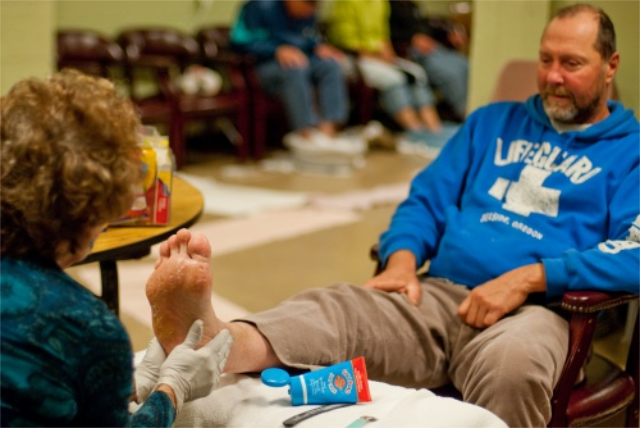
One parishioner reads the scriptures on Sunday then washes feet of people coming to our parish hospitality center on Wednesdays. The connection in our community to the gospel on Holy Thursday is not only obvious but essential to our mission of prayer and service.

Another parishioner described her serious and yet hilarious encounter with our community on Good Friday before she became Catholic. She thought we were absolutely insane reverencing the wood of the cross. She wept as she recalled her need for God and the suffering she carries within her. She also noted the connection on that first experience of Good Friday with a man who was sleeping near the door wrapped in a red blanket. She saw me beginning the liturgy face down in prayer on the concrete floor wearing a red chasuble.

A woman who serves as Eucharistic Minister admitted her many years of sobriety. She told us that she ministers the Blood of Christ to others because she cannot receive the cup. This is her way of participating in the Church. The cup is an initiation of God’s love and mercy every time she says, “The Blood of Christ.”

Join us for Holy Week.

Wednesday, April 4, 2:00pm: Ecumenical memorial for those who have died in our neighborhood during the year.

Holy Thursday, April 5, 5:00pm: Evening Mass of the Lord’s Supper

Good Friday, April 6, 12:05pm: Celebration of the Lord’s Passion

Holy Saturday, April 7, 7:00pm: Easter Vigil

Easter Sunday, April 8, 10:00am: Easter Eucharist

I will be celebrating the liturgy on Good Friday and Easter Mass on Sunday. Please pray for our community in need of healing and hope.

Graces and Gifts

Originally published by Ministry & Liturgy Magazine, March 2012
– PDF version –

The Second Sunday of Easter:
God of everlasting mercy, who in the very recurrence of the paschal feast kindle the faith of the people you have made your own, increase, we pray, the grace you have bestowed, that all may grasp and rightly understand in what font they have been washed, by whose Spirit they have been reborn, by whose Blood they have been redeemed. Through our Lord Jesus Christ, your Son, Who lives ands reigns with you in the unity Of the Holy Spirit, One God, for ever and ever.
 
Pentecost:
O God, who by the mystery of today’s great feast sanctify your whole Church in every people and nation, pour out, we pray, the gifts of the Holy Spirit across the face of the earth and, with the divine grace that was at work when the Gospel was first proclaimed, fill now once more the hearts of believers. Through our Lord Jesus Christ, your Son, Who lives and reigns with you in the unity of the Holy Spirit, One God, for ever and ever.


I long for a glimpse of mercy within our community. I pray this collect on the Second Sunday of Easter expecting miracles. I really do not know where else to turn except to the Eucharist in the midst of the turmoil we face in our neighborhood. Our parish stretches my understanding of God’s love so thin that on many days I cannot find it for myself. From the hookers on the streets at our red doors donning their springtime duds to the runaway teens that yell out across the street, we all ache for a full dose of mercy and full plate of hope that will sustain us. We all long to grasp and rightly understand the love that God has for us.

I prayed this opening prayer the first time twenty-nine years ago on my first day of priesthood. Even though the translation has changed, the message of the text is the core of our faith. We cannot forget from where we have come. Christ’s mercy is present in the baptismal font of forgiveness.  The Holy Spirit cleanses our past and gives us second birth. We all await a second chance to understand our lives.  The Blood of Christ sustains us in our loneliness and unites us in communion with God and every believer. Mercy is revealed in the dying and rising Christ and in us who ache for healing.

This text seems profoundly different from my first Mass as a priest. The difference is less in the translation than in my perspective through these years of ministry. Years ago, I thought I understood suffering but that was the naïveté of youth. Suffering of the heart is not an intellectual pursuit. I now realize there is no such thing as understanding the suffering of another person. The only thing I cling to is the faith that God is invested in such anguish. I now ache for the Spirit and an increase of grace. I wait for things to change and for people to discover that God really calls us all His own.

I experience mercy now not as a commodity or something to achieve, but as a relationship with God. God’s mercy and forgiveness is not a pre-packaged reward for being good or for being a perfect priest, but a relationship that sustains us all in the moments of profound pain and anguish. Mercy is not a pious slogan. Mercy is not a trophy for never having fallen in the race, but a relationship of compassionate love soothing the deep and profound wounds that may never heal on this earth.

I weep now from a deeper place than on the day I was ordained. The helplessness I feel in our community is revealed in the tears that I shed for people who may never experience a second chance in life or may never grasp or understand God or themselves. These tears have become a font of grace welling up in me during my years of ordained ministry. I wait for our unity in the Spirit and for the day that God washes guilt away, brings healing to the wounded and hope for the marginalized.

Every parish community prays the Pentecost collect waiting for divine grace. People of faith pray this prayer across boundaries of nations and institutions realizing only God can mend the divides of racism, hatred and fear. This Pentecost prayer will be prayed in poor, rural parishes as well as affluent, suburban communities. The grace we all seek is the fresh, vital and real perspective that God continues in the lives of our people. We will all find ourselves in this prayer longing for every good gift of the Holy Spirit. Everything we all need for the future is within us.

I pray this Pentecost prayer hoping to mend the bridge of the generational gap I now experience among the clergy. I witness so much fear among the young that my generation foiled this mission of priesthood. I want to tell them to wait for the tears of powerlessness and compassion because they will teach you everything. Twenty-nine years of Pentecost have softened my control and perspective over many issues within the Church. I rely on these sacred gifts to be revealed because divine grace is still at work. The divisions among us will only be healed by Pentecost grace among the broken and poor in Spirit.

The holy collects of the Easter season invite us into mercy and love. The feast will one day heal deep wounds and the worries I still carry. The collects will continue to introduce us all to the depths of the Eucharist that feeds people across divides and divisions. I will capture a glimpse of mercy in places I least expect. On the face of the earth we shall all know our longing for heaven.


Finding Our Home in the Empty Tomb

Originally published by Celebrate! Magazine, Spring 2012
– PDF version –

PREFACE III OF EASTER – Christ living and always interceding for us
It is truly right and just, our duty and our salvation,
at all times to acclaim you, O Lord,
but in this time above all to laud you yet more gloriously,
when Christ our Passover has been sacrificed.
He never ceases to offer himself for us
but defends us and ever pleads our cause before you:
he is the sacrificial Victim who dies no more,
the Lamb, once slain, who lives for ever.
Therefore, overcome with paschal joy,
every land, every people exults in your praise
and even the heavenly Powers, with the angelic hosts,
sing together the unending hymn of your glory,
as they acclaim:
 
PREFACE IV OF EASTER – The restoration of the universe through the Paschal Mystery
It is truly right and just, our duty and our salvation,
at all times to acclaim you, O Lord,
but in this time above all to laud you yet more gloriously,
when Christ our Passover has been sacrificed.
For, with the old order destroyed,
a universe cast down is renewed,
and integrity of life is restored to us in Christ.
Therefore, overcome with paschal joy,
every land, every people exults in your praise
and even the heavenly Powers, with the angelic hosts,
sing together the unending hymn of your glory,
as they acclaim:
 

I minister among many people who feel undeserving of joy. I encounter in the dimly lit confessional not only the darkness of sin but people’s reluctance to accept healing and forgiveness. Joy eludes many people who have been beaten down by physical and emotional abuse and the many years of depression that follow. Joy never finds a home in people who blame themselves for being abused. Joy is seldom experienced or grasped for some people who have found their only identities at the bottom of a booze bottle. God’s healing rarely finds a home in people who live in the darkness of blame, fear and doubt.

I see the consequences of a joyless life standing at the altar on Easter day. These Easter texts of the preface express the absolute joy of the Christian. Jesus becomes the Christ is his passion, death and resurrection. Joy among our parishioners is rather muted, reluctant and seems only to belong to the wealthy or educated or some unknown stranger. Many members hesitate to rally around Easter because they are still without the basics of life, still hunger and still feel unloved in their present circumstances. I know deep within my life and in the lives of all people, Christ is sharing the gift of new life and healing in the simplest of ways. Risen life cannot help but break through the savage pain of any heart that clings to faith.

The prefaces of Easter claim this story in the human voice of the priest. Christ is still offering his life for people who seek the joy of resurrection. Many sinners find a home in the sacred forgiveness of the sacraments of Eucharist and reconciliation.  The wall of sin is easier cast down than the wall of self-hatred and shame for a life that feels undeserving of anything that is good, loving or holy.

Seeking forgiveness of God for our own sin and living that forgiveness among all of our relationships is Easter joy. The reality of forgiveness is seen off the altar in the human turmoil of our lives. Joy happens when we bring that grace to worship and the altar of God is seen as Christ offering his life for us always.

I remember facilitating one of our Personal Poverty Retreats several years ago. The retreats are a thirteen-hour immersion into the issues of long-term poverty, mental illness and the devastations of addictions. There were seven people in that particular group.  The core of the day is to share our own personal poverty, our own need for God. In the afternoon we shared our experiences of working in our morning hospitality center. This open discussion among us brought a great gift.

Out of the seven people on the retreat, four people confided that they all had children who were homeless, mentally ill and addicted. The conversation became intense; the silence of grief and sadness overwhelmed all of us. Each participant shared the grief of letting go of control of each child. One participant told the horrific story of her son’s suicide.

Phil began to share his story of his addicted son. Phil’s face was creased with worry. His voice was angry at years of trying to fix his son’s addiction. He became enraged because he felt he had done everything to change his thirty-something son. After Phil finished his story and sat silently, I leaned into the group and asked him, “Phil have you ever tried just loving your son?” Phil’s face began to relax and it was as if someone had raised the shade of darkness from his life. Phil replied to me with tears streaming down his cheeks, “No, I’ve never just loved my son.”

After that retreat, Phil searched for his son. He found him living in an abandoned car next to an old building. He slowly began to just listen to his son, Matt. Trust began to be built after years of tension. Phil and Matt started to do simple errands together and have lunch. After a while of sorting through their relationship, Phil invited Matt to the next retreat at the parish. They shared their stories together for the first time in the small group of the retreat. They told the stories of how healing happened between father and son and how reconciliation and joy slowly returned to their lives.

Last Lent, Matt died of his long-term addiction. I went to the funeral and the priest preached about how Matt and his father were reconciled at a retreat at our parish. I wept sitting in the pew over the new life that happens in the tension of forgiveness, over the often hidden redemption of fathers and sons.

Jesus defends us and pleads our cause to the Father. Grace never gives up even in death. Love triumphs even when hidden in small groups or abandoned cars. This is paschal joy celebrated at Easter, the hope that even long term suffering gives way to the Kingdom of God. The heavenly powers proclaim this on altar tops and in the hearts of fathers willing to try one more time to love a son.

The Easter preface speaks boldly about what is lived in silence and often without notice. Old orders of life can be destroyed. Life lived amid years of depression can be clean of self-blame and a lack of trust. The heart cast down by poverty, mental illness and hardship is lifted out of the tragedies that keep us cast down. On the altar of Easter sits the cup of blessing and bread of life that overcomes the aches and pains of relationships well beyond the sanctuary of our churches.

I pray this holy text on Easter hoping that I will see for myself the integrity of life being restored in Christ Jesus. I know that this prayer is not about what Jesus did for us. This prayer as is the Eucharist itself, is about what Jesus is doing now in our midst. The grace of integrity is not only about the past, but also about every relationship that bears the weight of our wanting to give up on love.

Our renewal of baptism on Easter allows us to resist again the power of evil in our relationships. Even though people present at the Eucharist may be baptized in the new life of Christ’s resurrection, people may feel they have been passed over by God. The Passover of Christ, his death and resurrection, brings us all to new life no matter the sin, the hurt or the suffering. I experience all the angelic powers of love when I stand at the altar and become aware that grace is working in the hidden life of the Church.

These holy prayers challenge us to discover joy at Easter. The prefaces teach leaders of the parish to invite people into what the prayer texts say even to people who refuse to accept God’s forgiveness and peace. We do not blame people for their poverty nor do we blame them for the abuse, depression or mental illness they experience in life. Easter must find a home in our conversations and ministry among people who feel excluded from hope, insecure about relationships and threatened by possible damnation from God. Love in the womb of the altar table is birthed on Easter morning in honesty and genuine hope. We are followers of the One whose tomb was empty but whose life is filled with love.

So many people do not realize that the love of God is a free gift. The reconciliation of Christ among us overcomes everything within us that separates us from the Father. People with emotional injuries have a difficult time receiving this gift because they still think the do not deserve such a treasure. They wait for the emotional and mental put-downs from us, the Church, that they are not worthy. They wait for more abuse. The gift of God’s love and joy is free. This gift is given to all of us to make sure we do not control it, suppress it or cause more people deeper pain. Jesus’ passion, death and resurrection are joy for all acclaim the Lord.

On Easter morning we really offer our suffering to the Father in the name of Christ Jesus. We gather around the altar table aware of the misfortunes of people’s lives and the heartbreak that keeps joy at bay. Last Easter, I prayed with a lump in my throat on Easter morning. I remembered the story of Phil and Matt. I prayed that healing might become visible for us all.  I also prayed embracing all the stories of the silent confessional. I prayed recalling that healing and redemption happen in our community even though so many of us may never find the joy we long for. I stood at the altar of God with my hands extending in cruciform believing that we are all being raised up, all finding our home in the empty tomb. This hymn of God’s glory never ends. We sing in common voice from our common humanity discovering again Christ’s paschal joy.
Saint Ignatius Martyr Parish: Parish Retreat

I will be preaching a parish mission this weekend and next week in Austin, Texas. I will be visiting our Holy Cross parish, Saint Ignatius Martyr. Here is the theme for the retreat next Monday through Wednesday. I will be offering a morning session and Mass and the evening session begins at 7:00pm. Click here for the parish website about the retreat.

Title of parish retreat: Communion in the desert: The search for prayer and justice

Monday: Prayer of the hungry disciple

Tuesday: Community among struggling believers

Wednesday: Service among desert thorns and bristles

Description: We will explore our desire for authentic intimacy with God in this Lenten season. This communion will lead us into sharing our lives in worship and daily life. Our journey in Lent will also lead us into service among the vulnerable and marginalized. We will renew our commitment to follow the Spirit and search for justice in these desert days of Lent.

Please pray for the people of Saint Ignatius Martyr Parish.

Blessings,

Ron

Prayer Requests at Saint Andre Bessette Church

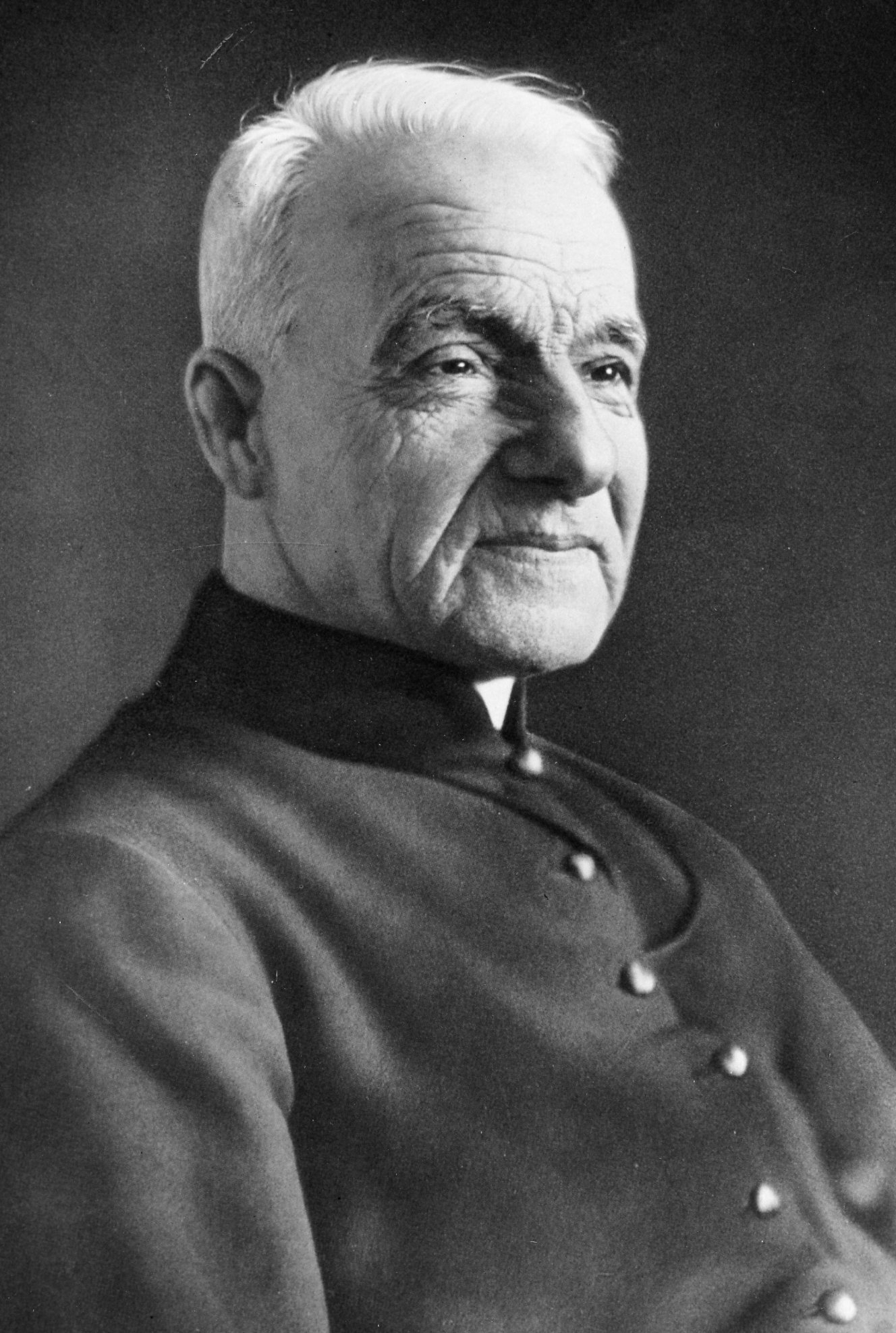
I led a time of reflection and prayer after Mass yesterday. We prayed about our new name and identity as a parish community. We welcomed our patron, Saint Andre Bessette in prayer. We discussed Saint Andre’s life and ministry and our role in continuing his mission of hospitality, healing and hope. Saint Andre welcomed people on a daily basis, he opened the door to people and their needs. He became a healer, a person dedicated to Saint Joseph. Andre also prayed during the night for people’s needs.
If you cannot join us for daily or Sunday Mass, please know our support in our common prayer.
We welcome your requests for prayer. Our community invites you to entrust your need to our prayer tree.
To request our prayer for your needs, please email us at:prayer@saintandrechurch.org
or call 503.228.0746 extension 130.
On behalf of our community at prayer, I welcome your request.
Blessings,
Ron

NPM keynote address in Pittsburgh, PA

Click here to read about the convention.

The National Association of Pastoral Musicians will convene in Pittsburgh, PA in July, 2012.

I will be offering a keynote address on July 23, the first day of the convention. This is the 50th Anniversary of the opening of Vatican II. “The universal call to holiness” is a theme that runs throughout the documents, that we are all invited into the riches of God’s love and life in prayer and service. I will be speaking of my experiences here at Saint Andre Bessette Church and the challenges for the church to pray and work among the marginalized.

“Welcoming Andre” a retreat and reflection

“Welcoming Andre”
A retreat and reflection on our new parish patron.

Sunday, February 19, 2012
after 10:00am Mass

Please join me for an hour discussion on the life and ministry of Saint Andre Bessette. We will connect his life to our parish mission serving people in need. We will honor our service among God’s people that leads us all to holiness.

For more information on Saint Andre Bessette.

Click here to read more about our parish name change.

Suppers and Sacrafices

Originally published by Ministry & Liturgy Magazine, February 2012
– PDF version –

With this column I begin a 10-part series reflecting on the Opening Collects of the new translation of the Roman Missal.

Holy Thursday:
O God, who have called us to participate in the most sacred Supper, in which your Only Begotten Son, when about to hand himself over to death, entrusted to the Church a sacrifice new for all eternity, the banquet of his love, grant, we pray, that we may draw from so great a mystery, the fullness of charity and of life. Through our Lord Jesus Christ, your Son, who lives and reigns with you in the unity of the Holy Spirit, one God, for ever and ever.
 
Good Friday:
O God, who by the Passion of Christ your Son, our Lord, abolished the death inherited from ancient sin by every succeeding generation, grant that just as, being conformed to him, we have borne by the law of nature the image of the man of earth, so by the sanctification of grace we may bear the image of the Man of heaven. Through Christ our Lord.


I often pray the liturgies of the Triduum with the same awkwardness with which these prayers are translated. My experience of our urban community teaches me that death and grace are a daily mix, intertwined in every person’s life. I fumble to find the conviction of faith in the middle of so many physical and emotional moments of turmoil that have not been resolved since the last time we celebrated the Triduum. I stumble over connecting simple bread and dirty feet and to uncover salvation amidst both of them. I long for a new image of humanity because now people are put down for being physically poor and emotionally ill. Our celebrations rouse within me a real desire for God in the heartache that keeps me at the altar all year long.

I hear God calling me to celebrate the sacred supper on Holy Thursday. I also hear the people who have given up on God because the banquet seems not to satisfy the need for shelter today or a substantial meal for their hunger this evening. I hear the intermingled issues of profound anger of people who have been handed over to the death of mental disease and long-term struggles with money. So many people have given up coming to the banquet because they do not see believers learning to stretch out their hands to wash dirty feet or to stretch out their imaginations that something more needs to be done beyond the sanctuary steps.

On Holy Thursday, I hold the banquet menu in my hands. I also caress in my consecrated hands the gnarly, odorous feet unveiled in our three aisles of the chapel. I hold within my heart the profound hunger of people to make ends meet as well as their isolation and loneliness of their circumstances. The banquet of bread and wine and the foot washing both break down many barriers that continue all year long. Many people do not feel loved by God because of their eternal despair and many people do not feel loved by the community because suffering is so difficult to pay attention to at length. I hold feet and food and rest in the true sacrifice of Christ Jesus.

On Good Friday, I lay before the people on the concrete floor seduced by God. I am often so unwilling to allow this posture to form the rest of my ministry, yet I surrender again to God. Over the course of the year I tire of such profound suffering. I wait for new life in all the death that surrounds me. I grow short-tempered and want to get up and walk away many times during the year when Christ’s path of passion overwhelms my heart and perspective. On Good Friday, I wait to pray this collect because I know my ancient sin has been forgiven in Christ’s death. I live every day the sacrifice but I do not always feel it when I am lying on the concrete floor beginning the Good Friday liturgy. I wait in the center of poverty, neglect and addictions to experience the new image of heaven here, now on earth.

These collects are heard and lived beyond my lips. These sacred prayers are not only the staged lines of the priest but sum up the internal prayer of the people. The silent hearts of the faithful are brought to this verbal prayer. The priest is responsible for articulating this new translation but is also responsible for knowing the depth of this silent prayer among the people. The priest needs to understand deeply the sufferings and hardships that are going on in the pews and in the daily lives of people who worship. In order for the collect prayers to be claimed by the people, the priest needs to enter into the very reason why people come to the Eucharist in the first place. The priest is invited to pray and serve with dignity and love.

The Triduum is the high point of the liturgical year celebrating Christ’s passion, death and resurrection. We are entrusted with this mystery, not only during the Holy Week schedule, but also in our lives every day. This banquet of love draws us into charity and the work of genuine justice. These prayers cannot be left out from our Holy Week planning nor can they be tossed aside because the translation seems awkward and clumsy. The collects outline the sacred rituals that will follow within the liturgy especially during the Triduum. These texts are for all of us who seek new life amid the pain and frustrations of people’s lives. These opening prayers remind us of what we celebrate and invite us to live what we receive, love itself.


Saint Andre Bessette: Feast Day, January 6, 2012 Part 6

(This is a six part series leading up to January 6, the Feast Day of Saint Andre Bessette, the patron of our parish community.)

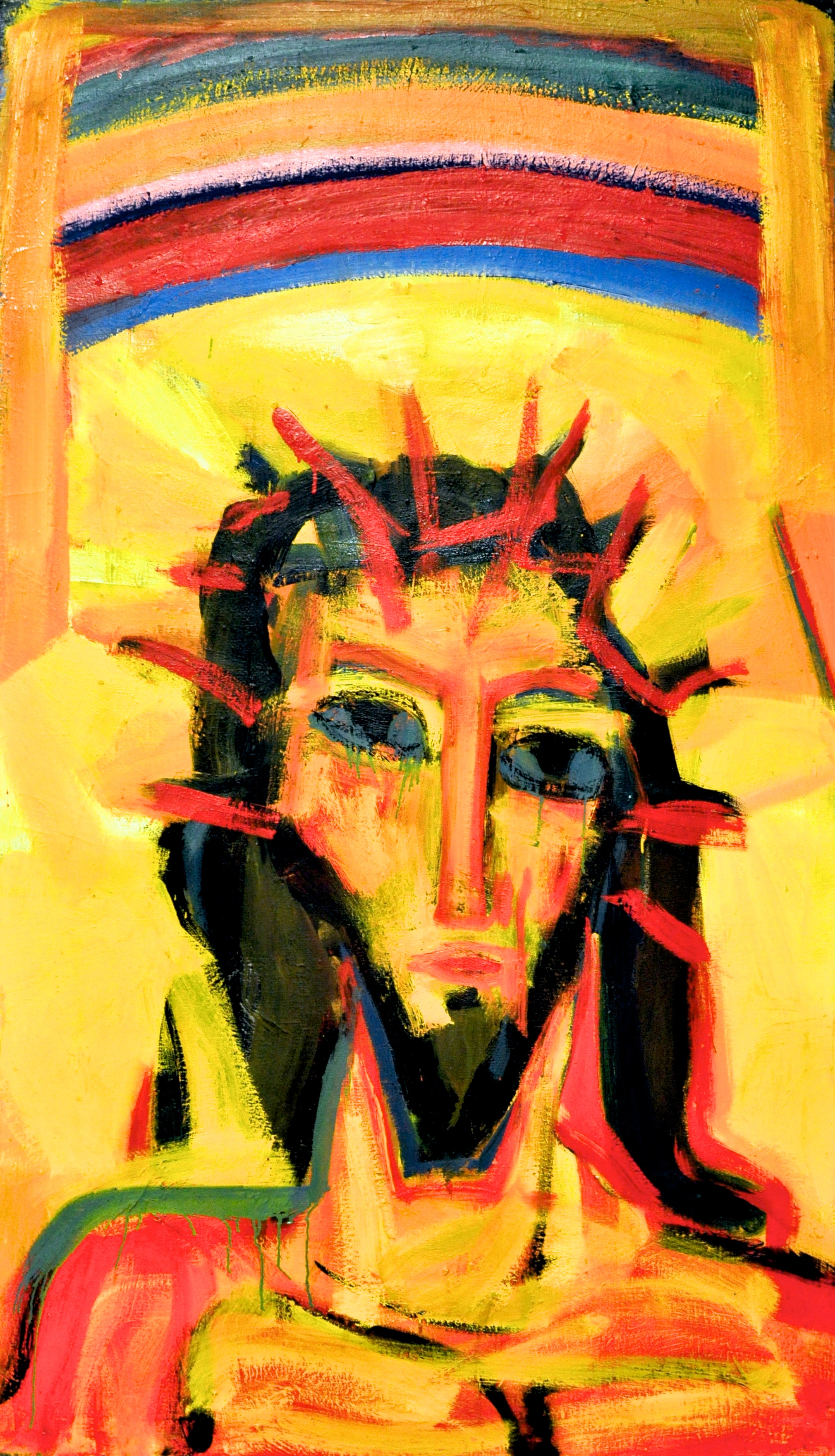
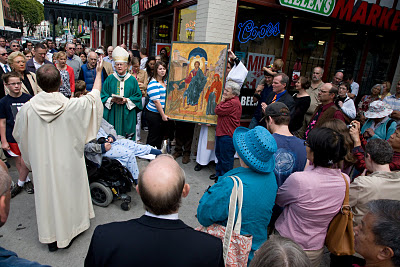
On Sunday, August 16, 2009, our parish community dedicated and blessed the icon of Christ the Healer for our renovated worship space. Archbishop John Vlazny presided over the Eucharist and dedication. The entire parish community processed around the block to present the image of the healing Christ to the four corners of the world. With profound solemnity and prayer, every person present in the procession realized our need to be witnesses to Christ’s healing love in every aspect of our culture and beyond.

Our community bears witness to Christ’s love not only in art but in action. We connect with nearly thirty high schools, colleges, nursing schools and seminaries to invite students to realize the needs of people surviving poverty. We invite them to know that our faith compels us into service in the world without judgment or condemnation of any individual. The stories of suffering create for us a deep humility of prayer for every volunteer, student and parishioner.

Our faith in Christ as members of the Catholic Church is not private. Our posture of faith is bold and open, inviting and inclusive. Our volunteers serve from all walks of life and we invite them to walk with us in our faith and service. We all learn a profound humility from our reliance on God when we are unable to fix or solve the issues of poverty, mental illness and severe loss. We are grounded on the four corners of our block in faith and action but both are felt deeply beyond the parish community.

Brother Andre said, “It is with the smallest brushes that the artist paints the most beautiful pictures.” His simple prayer revealed great healing to many people in his day. He also founded Saint Joseph’s Oratory in Montreal, Canada. This is the largest shrine in the world dedicated to Saint Joseph. His humble prayer created great change for many people and his personal devotions became a source of public prayer.

Today, January 6, we celebrate the patron of our parish community, Saint Andre Bessette. Today is the memorial of his death in 1937. Over one million people processed to his funeral in the cold Montreal winter. We stand on our block still longing for healing, still praying in our hearts for the needs of the entire world. We witness to volunteers, students and other community partners that we are centered in God’s love and compelled from that love to serve people most in need of hospitality, healing and hope.

Saint Andre Bessette, pray for us.