Originally published by Celebrate! Magazine, September 2010
– PDF version –
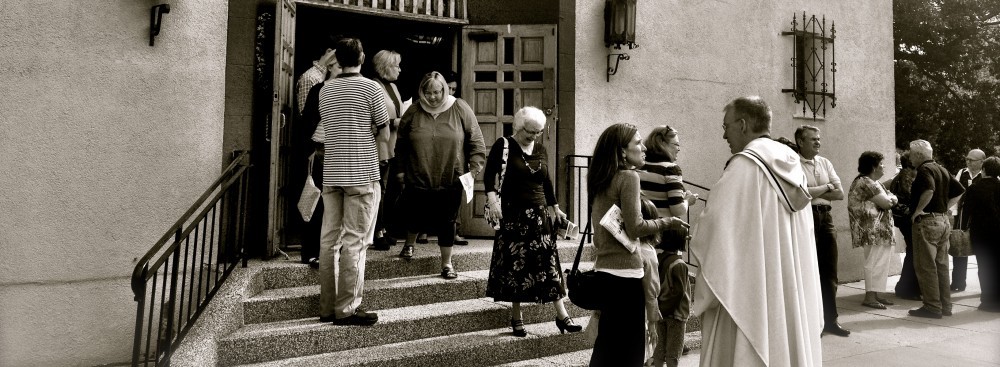
 Every morning various groups of people anticipate the unlocking of the front doors to our parish building. People seeking a change of clothing or fresh hygiene products line up beginning at 6:00 a.m. Members of the staff arrive one by one beginning at 7:30, but struggle to approach the only door their key will open because a man is sleeping under a tarp in front of the door. Volunteers line up before 9:00 a.m. greeting one another and meeting the new group of nursing students who will volunteer in our morning hospitality center.
The unlocking of our red steel doors at our urban parish, the Downtown Chapel in Portland, Oregon ritualizes the opening of our two-hour weekday hospitality center. After one of the large doors is propped open, over a hundred people stream single file to our front office. They inquire about emergency travel, money for prescription drugs, or wait to receive a pair of clean white socks. People living in the single-room occupancy hotels gather to socialize or to receive a weekly voucher to a local Laundromat. A staff member then opens the hospitality center leading everyone in prayer so people may voice their pain and needs.
On Friday evenings, our parish community hosts a soup line in our very small lobby. Strangers and friends gather to socialize and to feed on a banquet of homemade soup and peanut butter sandwiches. We serve the anticipated food at our front door because some people suffering mental illness may feel trapped by coming into a public building. At our red doors even runaway teens who fear the church trust the hands that offer them hearty soup and hot chocolate.
Opening our parish doors ritualizes our ministry among God’s people living in poverty because the Congregation of Holy Cross staffs our parish. On October 17, 2010, my religious community will celebrate a man of weakness becoming a saint for everyone in the Church.Blessed Brother Andre Bessette, C.S.C. from Montreal, Quebec, in Canada whose only formal ministry was being a porter, will be the first canonized saint in the Congregation of Holy Cross.
Brother Andre officially welcomed all people at the door of Notre Dame College in Montreal beginning in 1872, the year of his profession of vows as a Holy Cross religious. Andre’s humble presence to strangers and firm devotion to Saint Joseph compelled him to believe in God’s healing power. Saint Joseph is the patron of Holy Cross Brothers as he humbly lived in the presence of Jesus. Brother Andre believed that our lives on earth should reflect this humble posture of living, working and serving always in the presence of Christ Jesus.
Brother Andre (Alfred) was born eighth of twelve children. His parents baptized him immediately after birth since he was so tiny and frail, and wasn’t certain to survive. He grew up with fragile health and became an orphan at twelve years old. The Congregation of Holy Cross even postponed his religious profession because of his ill health. He lived with the sensitivity of illness that turned him to greater reliance on God. He was singled hearted in his life of penance, simplicity and devotion believing that healing was possible for all kinds of pain and illness. By May 9, 1878, the first written testimony of five cures attributed to Brother Andre was published.
The ministry of our many volunteers, staff and parishioners teaches me that faith must be grounded in real suffering. Our work among people living in poverty and brokenness is not pious, fake or self-indulgent. The issues we face in our parish starkly remind us that we carry no real answers to people’s addiction to drugs. We do not have sure-thing answers to people living with severe mental illness as a result of being sexually abused as children. We cannot protect the short-skirted street princess, the stoned dealer roaming ruts in our front sidewalk or the strung-out Iraq veteran shouting obscenities on our corner. I cannot even protect myself from the loneliness I feel living in the midst of my homeless neighbors. However, people’s suffering must lead us all to greater faith and service no matter on which corner of the world we find ourselves.
I cling to the image of Andre welcoming strangers at the door. He stood for hours each day speaking with people for just a moment because he believed in God’s compassion to those who are suffering. This image forms our ministry here at the Downtown Chapel and should form the core of every parish no matter how much we want to hide our individual anguish from one another. The model of ministry of this humble man opens the doors to every worshiping community and crosses the boundaries of race, culture, education and national borders, and any other way we might seek to divide ourselves from one another.
Celebrating sainthood is never easy for the rest of us on earth. We tend to create new images of these people because we are afraid of how they challenge us today. I see this in how we reinterpret Brother Andre in art. He was a sickly, illiterate man, short in stature. In stained glass in our Cathedral of the Immaculate Conception in Portland, Oregon, Andre sits among other North American saints looking healthy and robust. In the Cathedral of Our Lady of Angels in Los Angles, California, an image of Brother Andre processes in the communion of saints woven in tapestry. There the image of Andre is six feet tall, broad-shouldered and looking as if he worked out at Muscle Beach. The image of Brother Andre in our midst must be grounded in the humility and love he personified on earth.
Even in my own religious community in the United States, as members of our American culture, we struggle to be changed by Brother Andre’s work among the poor. We prefer most often the well-educated rather than the illiterate, the prosperous rather than people suffering poverty, and the wholesome student rather than the addict or person suffering mental illness. When we honestly celebrate the saint’s mission in the Church, then we have to change our lives of privilege into greater dependence on God. We have to translate our community’s politics into real mission among the poor. We have to cultivate our vocations of love over our desire for self-promotion.
Brother Andre worked tirelessly to build Saint Joseph’s Oratory in Montreal, Quebec. Yet, he really opened the door there for the sick, lonely and poor to find a home in the healing power of Christ Jesus. When he died in 1937 over a million people made a pilgrimage to Montreal for his funeral. Miracles of healing still occur today. I witness these miracles welcoming people suffering poverty, isolation and illness every day as we open once again our red, steel doors of our parish and rely on God alone. Our holy doorkeeper still lives among God’s poor. Saint Andre of Montreal, pray for us.
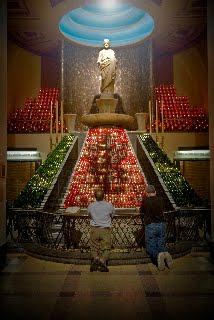 I arrived at the Downtown Chapel in March of 2002. My two and a half day journey from South Bend, Indiana was filled with anxiety and restlessness. I wasn’t sure I wanted to be here in the first place. I left my previous assignment emotionally fragile and quite uncertain about my life within the Church. I questioned my own abilities, gifts and even my desire to continue in ministry.
 I cleaned out the cabinets in our parish sacristy last month. I sorted through all the lost-and-found items that had accumulated in a drawer over the past few weeks. I returned several extra glass vases to the florist across the street. I discovered one item at the back of a large cabinet that stopped me in my tracks. At the bottom of an old box, I uncovered a small glass bottle of oil. The unopened bottled had an image of Saint Joseph molded into the glass. A small folded brochure from Saint Joseph’s Oratory protected the antique glass container. I unfolded the yellowing paper and I saw a handwritten date at the top of the page. The date read, “1939,” just two years after Brother Andre’s death.
 Every morning I witness people surviving the ravages of chronic unemployment. Job opportunities may never come along for many of our guests who face severe mental illness and depression. A middle-aged man holds back tears as he explains to our volunteers that his wife left him because he recently lost another job. A young runaway teen stresses about his survival as he explains to me that his foster brother sexually abused him. An elderly man just arrived in town from another city hoping to break his three-year streak of unemployment.
 Every weekday morning at the Downtown Chapel our parish staff and dozens of volunteers open our red steel doors to people longing for companionship and a few essentials for survival. People stream from local shelters and wait in line at the parish for clean socks or money for prescription drugs for their mental illness. A young twenty-something man just released from jail wears flip-flops and needs clothing for protection in the Portland rain. One person waits in line for a yearly haircut. A young woman cuddles her infant hoping to secure a package of diapers in our Hospitality Center.
 Last month a film crew from Salt + Light Television Productions from Toronto, Canada filmed aspects of our ministry at the Downtown Chapel. Their cameras rolled for two days here because they are producing a documentary about Brother Andre Bessette, CSC. He will be officially named a saint in the Roman Catholic Church this October 17, 2010.
 Broken But Not Divided