Thirty-Second Sunday in Ordinary Time: Bulletin Column

Version 2

November 10, 2019

Thirty-Second Sunday in Ordinary Time

Dear Believers in the Christ,

Luke 20:27-38 invites us into a reflection about our relationships after death. Some Sadducees were denying that there is a resurrection and questioned Jesus. Jesus assures them that in the end, all will rise with him. In the end, people will belong to God; there is no marrying or being given in marriage. We are all children of God and all are alive in God.

This gospel finds its place in November as we come to the close of another liturgical year in a few weeks. The liturgy focuses on the end times. Of course we are all worried about who we will belong to in the end. In the meantime, we find our life of prayer so that we will better understand now on earth that we belong to God. We pray now so that we will recognize his face when we get to heaven.

We have reflected already in the past weeks on the end times. On November 1, All Saints Day showed us the vivid faces that the Church lifts up for us. They are examples of people who prayed on earth revealing an example for us to keep our hearts fixed on Jesus. They struggled in life to put their faith in practice. These role models are always available to us so we may find the zeal to keep going, to believe that in the end we will finally rest in God.

We also reflected on All Souls on November 2. We remember with love, with great fondness those who have gone before us. We struggle to let go of our loved ones. We never want to let go of love. Life facing death is never easy. Yet, as Christians, we understand that we belong to God and go back to God. We shall be reunited one day with those who have loved us on earth. Death is never easy.

The liturgical texts, prayers and scriptures all point to the end times during the month of November, culminating in the Solemnity of Our Lord Jesus Christ, King of the Universe on the last Sunday of our liturgical year. In the meantime, how do we prepare our life for death? How do we pray now so to recognize the face of Christ Jesus when we arrive in heaven? How do we let go of people we have loved on earth as they face death?

Death is formative to us as Christians. Letting go of anything is never easy. We let go of earthly possessions and even our fears. We let go of all the things we thought were important in life as we face death. We let go of all the ways life should have been or might have been. We let go of certainties and opinions. We let go of obstinate behaviors and negative thoughts. We let go of people, places and objects. We let go of health and future. We let go of love and hate. We let go of what has been, what is and we look forward to what will be. How does the Eucharist invite you during the month of November to reflect on the end times?

In peace,

Fr. Ron
 

Holy Cross Cemetery: A November Reflection, Part 3

images

November Rains Grief and Walks Through Wet Oak Leaves, Part 3

 Cardinal O’Hara’s body lies inside Sacred Heart Basilica. His remains are protected from lake-effect snows and spring rains. His anonymous friend donated a bouquet of roses to be placed on his grave every Friday afternoon. For decades a dozen fresh, red roses adorned his resting place, which is made of marble.

A freshman classmate came from a poor family and wanted to take a girl from Saint Mary’s to a dance. He could not afford a flower for his date. So I stole three fresh roses from the gravesite on a Friday afternoon and made a corsage for her.

I admit my theft.

I really did not think the Cardinal would mind, since the following Friday a dozen of fresh roses would adorn his place of death.

I believed he kept track, by the dozens, of the campus stories of love.

In the graveyard, there are no fresh roses in winter.

Another bishop lies under the snow. Bishop Paul had been a very heavyset man in his adulthood.

Every time I walk by his grave, I am reminded of the time I strolled by the outside of his Portland apartment one summer while visiting as a student.

A classmate and I tried to look the other way when we noticed three large pizza boxes on top of his trashcan.

There are no pizza boxes near gravesites.

He is enjoying the great banquet of heaven where there are no empty boxes anywhere, where no guilt will be found. I pray he is feasting with delight.

I know of at least another bishop whose remains are tucked under South Bend snow in winter.

Bishop Lawrence Graner had served in Bangladesh. His voice radiated love. When he presided in Sacred Heart Church in retirement, he hardly needed a microphone.

He communicated more than words written in a book. His soul sounded when he stood at God’s altar.

He used his voice deliberately to sooth families, especially mothers; on the day a son was being ordained a priest.

His manner invited calm. The tenor of his voice was balm for fear.

As seminarians, we nicknamed him, “Hands”. In those years, he was invited to ordain most of our men. We all wanted to be under the calming hands of his faithful inheritance, a sure sign of springtime.

He died before I could find myself under his wing.

There are many names written in stone of our men who died overseas. They would have feared the mountains of snow in South Bend for all eternity.

They were used to the brutal heat of serving in threatening governments or serving while the Church was just being born in third world nations.

Their names are protected by the vigilance of Our Lady of Sorrows. She over sees in bronze, the names of many missionaries from her perch on the side of the cemetery.

I am hoping she will not forget my name even though I have never been in our mission countries.

She protects me even now. I have to believe that.

Only the priests and brothers who served in the military have a different mark on their gravesites. I admire their service, but in that cemetery, another marker is not necessary.

We are all Holy Cross religious. When it snows, we are even more the same.

No other marker is seen under the drifts of memory, loss and belief and most of all because we are all soldiers for Christ.

These are the peace terms I have inherited.

As seminarians we always kidded and joked about dying during the Christmas break. There would be no one to welcome our bodies since our classmates would all be home resting and filling up on blood-family time.

Brother Clarence would not be able to dig a new grave. The heavy drifting snow wrapped around the previous grave marker would not allow for such a task.

There would be no other religious in the seminary to mourn us.

Our bodies would have to wait for the spring thaw to be lowered by the community into a dark grave.

Only once do I remember, in my day, a seminarian dying during Christmas break.

John Cross died on Highway 24 in Cascade, Colorado, walking back from Holy Rosary Chapel to the novitiate.

He was in the novitiate in the class after me, even though he was older than me.

This year, in 2019, it will be exactly 40 years since his death on December 30.

He was 26 years old at his death.

I will remember him here in Cascade on that day, no matter how much snow is on the mountain.

I know there will be no seminarians near the cemetery because of Christmas break from school.

In my heart, I will traipse through the drifts of memory and pray for all of our dead when the snows are deep. The hope for spring melts fear away.

Under the Holy Cross marker, lie many men, even one whose last name is Cross.

I wait for the healing spring rains.

download


Holy Cross Cemetery: A November Reflection, Part 2


IMG_1130

Holy Cross Cemetery at Notre Dame 2019

November Rains Grief and Walks Through Wet Oak Leaves, Part 2

Brother Clarence dug the graves of our priests and brothers for decades. He never admitted to such a task during lunch at the seminary.

We were kids whom only carried books and avoided shovels. He served with love.

I never found out who dug his grave. I do know it was filled up with a holy man.

Brother Marcellus quietly clipped grass from around the concrete crosses. He must have prayed in rows.

His one shoe squeaked when he walked the long hallways in the seminary.

The rhythmic and often annoying sound was actually a reminder to us seminarians that he had been walking among the dead. I was always grateful.

Brother John served as administrative assistant to the provincial for 50 years.

I can imagine some people want to dig up his casket because the secrets he carried to his grave must be somewhere.

I remember hearing stories about how the elite of Holy Cross, the provincials and leaders, were buried in separate rows in the early days of the cemetery.

I am not sure of the exact date when all of that changed.

I am grateful that death treats us all the same.

I also remember hearing how some of the caskets of those leaders at the head of the line slid into the lake in the early days because of the weak soil.

We tried to hide our seminarian smirks.

We never laughed when we walked in the areas of the cemetery that put our brothers on one section and our priests on the other.

We got rid of at least one boundary in the Church.

Charlie was a character. He was the priest who invited Fr. Henry Nouwen to Notre Dame in the 1960’s to teach.

He admitted to me that because Henry wrote lots of books, everyone new Henry.

Charlie said to me one day, “Ronnie, but nobody knows me!”

I can’t help but laugh at Charlie’s grave.

He would want everyone to do that.

Jerry retired as the CFO at Notre Dame. He lived in the seminary at the same time as Charlie.

Fr. Jerry was the kindest man I have ever known.

He not only dealt with financial bottom lines, he also consoled hurting priests across the country.

If a priest were in trouble, Jerry would disappear for a couple of days. He would hurry to the airport and fly to his side and comfort him in his vocation.

Jerry never spoke of such a thing as he ate only milky grits for breakfast in the seminary.

However, we all knew.

Father Peter was another live wire. He spoke English with both German and Spanish accents.

He bantered endlessly with us novices. His skin was tough from wars and conflicts, in Germany and Chile.

In the end he would laugh at our shenanigans.

His brilliant laugh echoed off the marble at Marigreen Pines.

Father James served as rector of the seminary when I was in college. He taught sociology at Notre Dame.

He had a way of reading our needs.

When I served people in poverty in Portland, Jim heard confessions on Mondays. He also served coffee in our hospitality center.

He soon developed memory loss. That was a death by inches that I still grieve.

A couple of years ago, there were four men named “Ron” in the community. Three of them are now deceased.

One Ron died after doing his laundry.

Another Ron died from years of drinking and living sober.

The third Ron died of giving his life to the sick.

His funeral gathered one of the largest crowds of South Bend parishioners ever at the Basilica of the Sacred Heart.

Holy Cross needs to accept more guys named, “Ron.”


Rev. Robert Pelton, CSC: Priest and Prophet

pelton

READ THIS ARTICLE FROM NOTRE DAME MAGAZINE

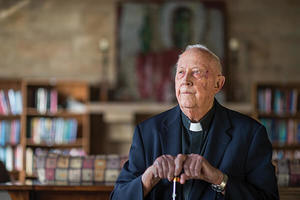
A great priest died yesterday. He was a servant of the poor. Not just in his local neighborhood but around the world. He was an academic and servant of the Church. He was 98.

I saw him in April praying at Mass at Saint Mary’s College. I greeted with him with admiration. As ever, he held out his hand and looked into my eyes and into my soul. Students at Notre Dame could encounter him riding his bike on campus.

I always felt like a naive freshman around Bob. I could never get the words out of my mouth for how much I appreciated his work in Chile. He taught generations about the importance of living our faith in the world. He was not shy about Jesus and how love needed to be implemented when dealing with violent governments, people in need of peace, shelter, clothing and hope. He was a man of the Church.

He helped nations implement Vatican II. He served the rights and needs of farmworkers and students. He knew Oscar Romero and wrote books on his life. In his old age, he prayed quietly at Masses where dozens of people still came to him for advice. He also was constantly thinking of how he was called to improve the situations of people living in poverty in various nations.

Bob also walked to our cemetery to bury his many friends. I will miss processing from the Basilica down the road in the next few days to bury a man I deeply admired. Someday I will find the words of appreciation and the prayers of love. In the meantime, I lift up another Holy Cross priest in death and in life who inspired lives across the globe.


Holy Cross Cemetery: A November Reflection

IMG_1133 (1)

Holy Cross Cemetery at the University of Notre Dame. Photo from summer of 2019.

November Rains Grief and Our Walks Through Wet Oak Leaves

I walked into this sacred ground of dead priests and brothers for the first time in 1974. Forty-five years of stepping among my dead brothers.

As a freshman, I prayed here often. I loved the quiet.

I carried caskets along with my classmates when family members were only faint memories of our dead brothers.

My classmates and I giggled at many priest funerals when a priest eulogized another dead brother by saying no other religious really knew him. Yet, his Marian devotion was real.

Worn beads are always wrapped in the hands of dead Holy Cross confreres.

Perhaps Mary is an only friend.

Most of them loved to go fishing. They won’t say that at my funeral even if they stretch the truth.

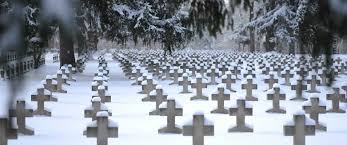
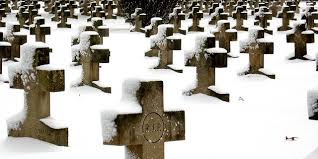
The stone crosses line up as a choir across the green lawn in summer.

I hear the many voices still after death. Ironically, some men who were professional enemies are buried next to each other. I can almost hear the chatter.

In the Midwest winters, the names of the men carved on stones are lost in snow drifts. That is when I fear I will be buried. I hope someone kneels to view my name in spring.

Our Holy Cross Cemetery will house all of the present living members. If we need more land, the field next to the retirement home can be filled in so the caskets will not sink into the lake.

I pray my window in the retirement house will not face the cemetery. I do not want to see in November caskets floating across Saint Mary’s Lake.

Always in November our priests, brothers and seminarians process with candles aside the cross into the cemetery during the damp and cold early evening in order to remember. I am not sure how they pray. I suspect they say something like, “I am sure glad I will not be buried next to him! Thank you, God.”

I have missed processing to the cemetery from The Basilica of the Sacred Heart for many of my friends. I do so in my imagination and prayer.

I miss their voices and faces the most, their bodies wrapped in vesture. I captured their integrity when they presided at Mass.

The priests are always buried in Mass vestments. I am consoled by that identity.

I hold a deck of funeral cards in my aging hands today. November comes so quickly with another ten in hand.

Especially in November, the deck seems stacked when the younger die first.

I still see their faces on one side and a list of the institutions in which they served on the other side of the thin prayer card.

Nowhere on the card does it say they knew Jesus.

In this blustery month of November, I remember again the reasons why each man lived here on earth. I carry them to the place of their body memory, the altar table here on earth.

I am happy to stand where they stood. I remember again this November without having to travel back to campus and peel wet leaves off my shoes and shield my face from the cold rain.

The secret they have taken to the grave is that Jesus loved them, until the bitter end. For this hidden gift, I am so grateful for cemeteries and crosses and names all in a row.

Someday, I will take my own place, buried next to the one Holy Cross religious who dies before me.

Amen.


Thirty-First Sunday in Ordinary Time: Prayers of the Faithful

Version 3

November 3, 2019

Let us pray to seek the person of Christ Jesus. May we model our search after Zacchaeus, who sought a new perspective, welcoming Jesus into his home.

We pray to the Lord…

Let us pray to seek love and not pride, to search for divine mercy and not earthly wealth, to be open to divine wisdom, and not possessions that becomes moth eaten. May our search discover God’s tenderness.

We pray to the Lord…

Let us pray to seek a new vision of hospitality. May we welcome the lonely, the stranger, and the unexpected guest into our hearts and churches. May fear melt away as we realize the dignity of all people.

We pray to the Lord…

Let us pray to seek hope in our lives. May we let go of negativity, our anger about how life has turned out, and seek new joy and wonder in Christ Jesus.

We pray to the Lord…

Let us pray to seek a new perspective on family life. May we realize the treasures we have among the people we love. May we reach beyond our circles of care to people who most need tenderness, forgiveness and peace.

We pray to the Lord…

Let us pray to seek our new home in heaven as we grief the loss of our loved ones. In this Mass…

We pray to the Lord…

Thirty-First Sunday in Ordinary Time: Bulletin Column

Version 2

November 3, 2019

Dear Followers of Jesus,

Zacchaeus had to stretch to see Jesus in today’s gospel, Luke 19:1-10. He was short in stature and a tax collector and wealthy man. From his position in life, seeing Jesus was not easy because wealth and power are not the perspectives in the gospel in which we naturally find a person who is searching for what Jesus brings. Something brought Zacchaeus to this point. Perhaps he was just fed up with how he was living his life. Something inside him knew to seek out Jesus.

I love how Jesus sees him in a tree. I wonder what brought Jesus to look for him. Jesus sees all of us who are searching for him as well. Jesus invites Zacchaeus to come down from the tree. This simple line delights me. Zacchaeus comes down from the tree and Jesus received him with joy. I love the fact that joy was the beginning of this encounter with these two men. There was no judgment or regret or apprehension or shame. There was only joy. I love that.

So Jesus invites himself to the home Zacchaeus. That seems sort of daring. Then we read that in fact it was daring for Jesus to come to the home of a sinner. Gossip is like fire. Jesus doesn’t seem to care. Jesus feels right at home at the table of real people. Zacchaeus makes all these promises immediately.

Zacchaeus decides he will give money away to lift up the poor. He knows that he has exhorted many people and makes promises to fix those situations. I want to go back and interview him and find out what exactly happened to him. I want to know what brick wall he found himself against in order to change. Or was it what he heard about Jesus? Yes, that must have been it! He heard that Jesus was a religious figure that did not travel with judgment in his soul. His eyes were filled with hope as he listened to the stories of people marginalized by sin and destructive behavior. Jesus offered tenderness and did not point his finger in shame. Jesus reputation was one of healer and kindness drifted along his path.

In the home, Jesus offers Zacchaeus salvation. I would love to have seen the look on Zacchaeus’ face. Can you imagine that after all his years of creating shady tax deals; he gets the real deal with Jesus presence and his mercy? Zacchaeus must have stood tall! He must have left his tea to get cold at the table. Zacchaeus found his real self that day in his home in the encounter with Jesus. He was lost and is now found. His empty soul becomes filled with hope. I wonder if there were other sentences and even paragraphs from this story while Jesus was sitting with them. How could it be so easy?

Change is easy when we are ready to find Jesus. His love waits for us no matter what we are preoccupied with, no matter how our souls have wandered away, no matter the distractions of our hearts. I want to hear more from Zacchaeus. I want him to tell us more about that moment in which he finally felt his heart’s desire in the person of Jesus. Imagine for your self such a scene. I wonder if it could happen to you?

Peace,

Fr. Ron


Solemnity of All Saints 2019: “On Our Journey To The Kingdom”

Version 2

Solemnity of All Saints 2019 “On Our Journey To The Kingdom” Painting by Ronald Raab, CSC 2019

Responsorial Psalm  Ps 24:1bc-2, 3-4ab, 5-6

R. Lord, this is the people that longs to see your face.
The LORD’s are the earth and its fullness;
the world and those who dwell in it.
For he founded it upon the seas
and established it upon the rivers.
R. Lord, this is the people that longs to see your face.
Who can ascend the mountain of the LORD?
or who may stand in his holy place?
One whose hands are sinless, whose heart is clean,
who desires not what is vain.
R. Lord, this is the people that longs to see your face.
He shall receive a blessing from the LORD,
a reward from God his savior.
Such is the race that seeks him,
that seeks the face of the God of Jacob.
R. Lord, this is the people that longs to see your face.

Thirtieth Sunday in Ordinary Time: Prayers of the Faithful

img_1462

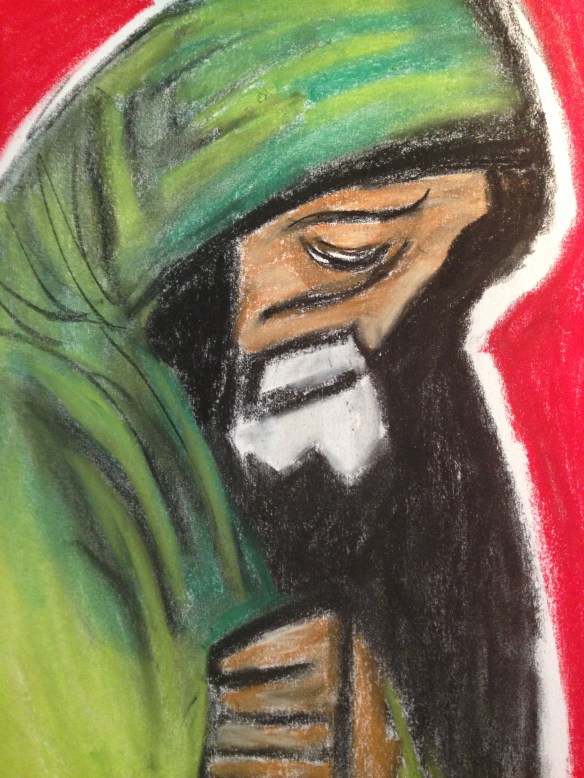
Tax Collector at Prayer: Pastel by Ronald Raab, CSC 2016

October 27, 2019

Thirtieth Sunday in Ordinary Time

Let us pray for honesty and integrity among our leaders in the Church. May we herald only hope for people and compassion for the suffering.

We pray to the Lord.

Let us pray for the haughty and proud. May humility make a home in our self-centered ways and may we learn to surrender to God’s tenderness and compassion.

We pray to the Lord.

Let us pray to serve people without political or social gain. May we welcome strangers and sinners to our altar tables and be released from any negative thought about people who are different from ourselves.

We pray to the Lord.

Let us pray to let go of our grudges and negative opinions about our neighbors or family members. May their stories lead us to conversion and deepen our faith.

We pray to the Lord.

Let us pray for all who claim the name Christian. May we learn to blend our needs together in faith and work together for the common good.

We pray to the Lord.

Let us pray for our loved ones who now have a place in heaven. In this Mass…

We pray to the Lord.


Thirtieth Sunday in Ordinary Time: Bulletin column

Version 2

October 27, 2019

 Dear Followers of Jesus,

Luke 18:9-14 reflects on our approach to God with the tax collector and the Pharisee. We learn much about our prayer, our lives and our relationships with God by pondering this story of two very different men who go to the temple to pray. These two approaches to prayer speak to us about how to approach God with the stirrings of our own hearts.

The Pharisee brings his pride to prayer. He first compares himself to others. He claims he is not like the tax collector. In fact he is grateful he is not like the rest of humanity. He claims he is not greedy, dishonest and adulterous. His comparison to other people is the first sin of the spiritual life. The mystics teach us to compare ourselves to others is the death of the spiritual journey. We hold the gifts God gives us. We do not possess the gifts of other people. To compare our gifts to is neglect God and the life-giving love of the Trinity. The Pharisee is living well beyond the gifts he has been giving, by comparing himself to other people. His pride is over the top.

The tax collector understood his place in his community. He was not well liked. It seems he did not really care for his decisions and life either. He knew the corruption of such a profession in his day. His face was cast down in prayer. He asked for mercy. He knew his sinfulness. The tax collector reserved space in his soul for God. He models that space, that simple opening for us as well. Humility is that space we allow in our hearts, our souls for God to work within us. Humility is the place in which we admit we don’t know all of the answers and that we know only God can fill us up. Humility becomes the journey in which we know that God is God and we are not.

In our society, humility is hard to come by. We live in fast lanes with much expertise about life. We are trained to control things. We are even trained to control other people. We might be trained to control God as well. Our education is vast and we are quick to spout out all the answers and more. Humility only finds a home within us when we have reached a brick wall of some sort.

We may crash into such a wall when our child is sick. Perhaps we will not know what to say when our spouse approaches us for a divorce. Perhaps when our daughter is diagnosed with autism or cancer our lives may become silent enough to hear God. All of these walls become moments of suffering that may silent our arrogance and create the space within our hearts for God to truly change us and mend the lives and situations here on earth. God invites us to surrender, through nature, love, good times or bad.

The first place we can look to enhance our relationship with God is in the silent spaces of our humility. We may not want to look there, but those are the places in which something new happens. These silent spaces of humility actually frighten many people. To shift from attitudes of power and control into letting go of quick answers requires us to become patient and more loving. Humility means that we live close to the earth. Humility requires us honesty and openness. Prayer has a way to open up even the most stubborn.

Blessings,

Fr. Ron