
“As for me, in justice I shall behold your face; I shall be filled with the vision of your glory” Psalm 17
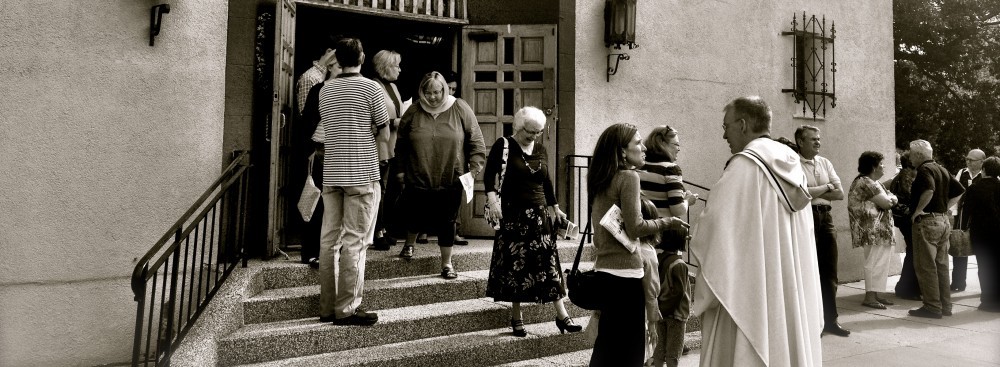
“As for me, in justice I shall behold your face; I shall be filled with the vision of your glory” Psalm 17
 Listen to “On the Margins”. This broadcast comes from Mater Dei Radio 88.3. We listen to another gospel to reflect on the Eucharist. God is feeding us in our need. We reflect on what Jesus is still doing within our lives. We need community in our lives, where Jesus is, where God wants to find us. Twentieth Sunday in Ordinary Time, August 16, 2015.
Stream live On The Margins on KBVM 88.3FM on Saturdays at 3:45pm and Sundays at 8am.
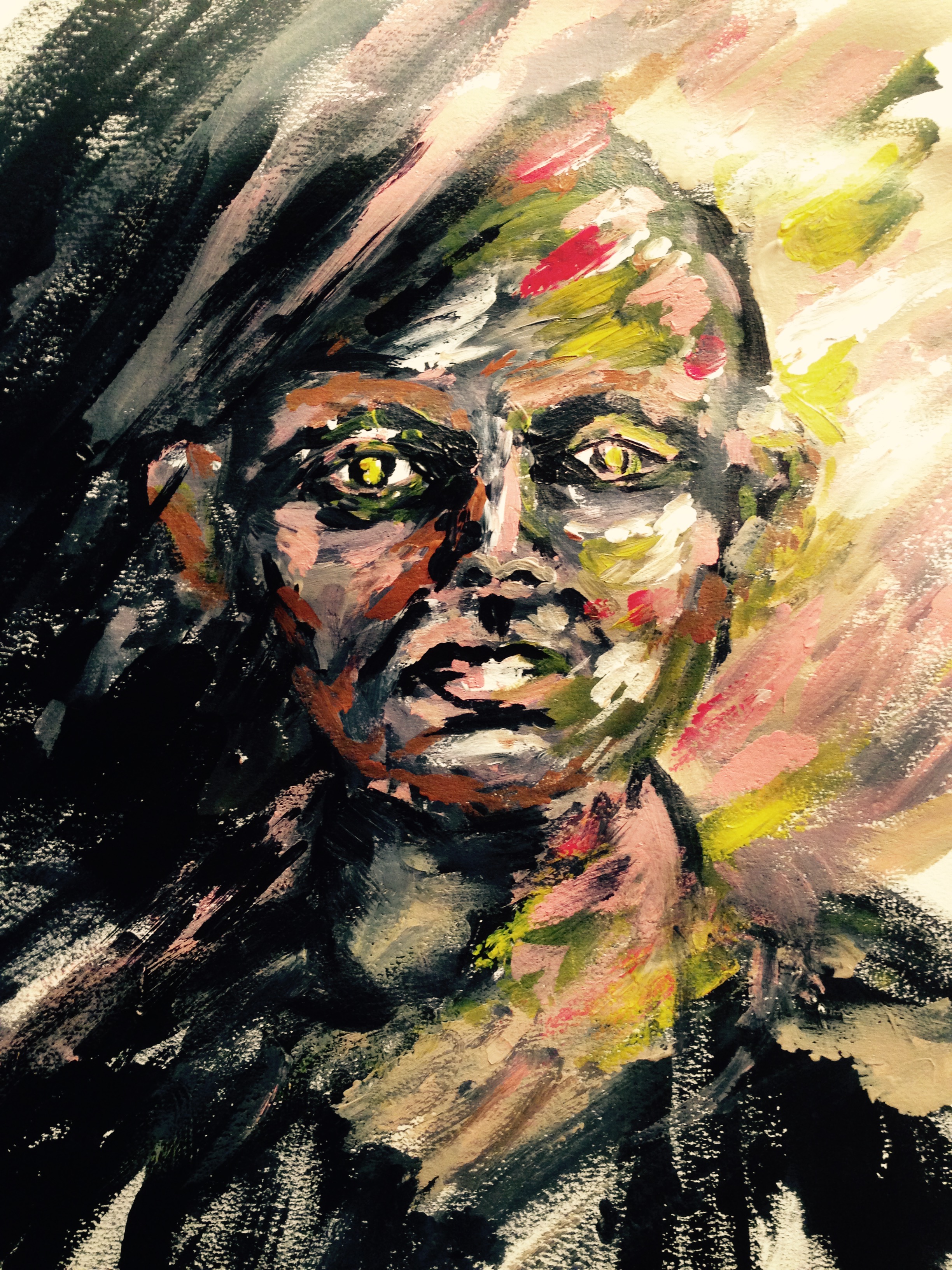
Psalm 102: Do not hide your face from me
O Lord, hear my prayer, and let my cry come to you. Do not hide your face from me in the day of my distress. (Psalm 102)

Kolbe, Martyr
Saint Maximilian Kolbe, Priest and Martyr, 1894-1941
This is a crude finger painting. It is meant to be incomplete and simple because there is no easy way to interpret this man’s faith, life and death. This Polish Franciscan priest died in Auschwitz on this day in 1941.
Crown: The red crown was given to him in a vision when he was 12 years old. He had a vision of Mary who presented him with two crowns, one white that would become his reward in heaven, then a red crown, representing his martyrdom. He accepted both crowns from Mary, the Mother of God.
Mary, the Mother of God: Mary’s appearance to Maximilian gave him purpose in life. Notice how the blue beads of the rosary co-exist and even blend into the barbed wire. I must believe that the painful pieces of wire in the concentration camp became a rhythm of prayer for him. The wire knots of the fence became a sequence of prayer so that he could keep his faith alive. As the artist, I hold on to that notion.
The brown shirt: Fr. Kolbe was a Franciscan priest. He dedicated his life to the proclamation of the gospel; the passion, death and resurrection of Christ Jesus. The red mark represents the martyr of martyrs, Jesus.
The prisoner uniform: At the same time, he was a prisoner and his number was, 16670.
The drops of blood on his face: There were ten people put to death by lethal injection. The blood stains represent those who died with him. The blood comes from the martyrs crown. He took the place of a man who had a wife and children. That man was then present at this canonization in 1982.
The green background: The green background represents hope for the people who died and hope for the people who lived through such anguish and suffering. The green backdrop invites us all into our own suffering and the realization that “everything will be alright.” I believe this message is the key to his priesthood. I know it is the eternal message of my own priesthood.
The gold halo: Maximilian’s halo is hope to us all, that our faith in Jesus, in the suffering of this world, leads us safely home.
(Bread and Concrete: Where Liturgy and Ministry Meet, Part 7 in Liturgy and Ministry Magazine, September 2015)
Pull up a seat
“The world you made firm, not to be moved; your throne has stood firm of old.” Ps 93
Several years ago I was sitting at my brother’s dining room table sharing a meal with his family. My brother’s youngest granddaughter focused our attention as she learned how to sit in a highchair. The heirloom chair was also the focus of our conversation and reminiscence.
The old wooden highchair belonged to my mother as a child. The chair dates from at least 1921. We do not know if it had been passed down before my mother’s birth. The chair now bears the marks of family history. The metal tray carries deep and various dent marks from years of use and pounding by restless and hungry children. The chair remains strong and sturdy for the next generation. The chair has stood the test of time outlasting the newer lightweight highchairs from other families.
As we pulled the chair holding the newest family member up to the table, I immediately connected the event to the chair in our sanctuary. The squirming child was in fact presiding for the first time at the table. She was evoking conversation by her attempts to eat new food in a chair that was way too big for her. She captured the attention of several generations as she sat at the head of the table in the chair that had been passed down among us for generations. She was learning to eat as other generations had learned in the very same chair. The ritual had been passed down to my mother’s great-granddaughter.
Perhaps the chair in our sanctuary functions in a similar manner as the highchair. The presider’s chair is not about authority as much as it is about being childlike at the Table of the Lord. The chair does not belong to the priest. No one person can own the chair. The priest’s chair has been passed down from our ancestors in faith so that we can all learn how to eat at the Eucharistic table. The large chair is about a humble recognition of how we need God to feed us. We never fully control or own or possess what happens in the sanctuary as simple bread and wine becomes the Real Presence of Christ Jesus.
My brother’s granddaughter reminded me that change is real. Her presence in the chair tells a story that life continues. The rhythm of hunger and being fed tells us that life begins and ends. The child tells our family that life will continue beyond our generation.
I am still learning how to be a priest sitting in the cushioned chair in our sanctuary. I hold on to a childlike wonder there because people in poverty continue to reveal to me my own hunger for God. I cannot fix or control or fully feed the needs of our community. My presence in the sanctuary tells the community that we all approach the Eucharistic Table with childlike awe, with an openness to be feed in our deepest hungers of neglect, abuse and uncertainty. The sanctuary chair has meaning only when I reflect on other chairs, seats and postures of people in poverty or pain.
People in our community need a safe place to sit. So often their feet are a main source of transportation. People come to our chapel or hospitality center exhausted from standing in lines, roaming the streets to occupy time, or searching for the basics of life. Finding a place to rest comfortably is no easy task for anyone on any given day.
I remember a large wooden bench that we had in the lobby when I first arrived at the parish. It looked much like an oversized presider’s chair. I was never sure why it was there. It seemed in the way of so many people trying to enter our building. During my first few months there, a woman came to our lobby every day looking for help. She always sat on the wooden bench. She had a fissure on her bladder. Urine constantly oozed from her body. After she sat daily on the old bench, the wood would be soaked with urine. The varnish was destroyed from the constant stream of urine. The entire bench was soon destroyed.
I remember at the time connecting that bench to my prayer at Mass. I sat in the dry chair in the sanctuary very mindful of her condition. I prayed that I might never take for granted my authority as demonstrated by the chair that faced the people of God. I need people around me who long for healing, who beg for relief from their suffering. Her poverty was real, her body in need of medical attention that she could not afford. Her presiding in the lobby formed my ache in the sanctuary for a sign that life could be different for so many people. All I had to offer was my seat that witnesses to everyone that I offer to God every person’s pain, need and fear.
I also remember a young man who had recently been sober and clean from alcohol and drugs that used to sit in the last pew of the chapel. He was not Catholic at the time. He wore a half -dozen plastic rosaries around his neck. He told me that he wanted to be a priest. He wanted to sit in the sanctuary chair and pray for people. The more I spoke with him, the more I realized that he thought being a priest would keep him sober. The sober young man thought the miracle of the chair would change his life. He wanted desperately to get out of the seat that he was in, not just in the chapel but also in life. He asked me on many days if he could exchange seats with me.
I need to sit in the last pew on occasion if I am going to sit in the seat that is singled out in the chapel. I need to feel the exhaustion people feel from living a life that is filled with stress, heartache and fear. I know on so many days that my chair is too comfortable, too removed from the real fears that so many people face every day. I cannot get too comfortable in the chair at the Eucharistic table because my prayer needs to be on behalf of these people in poverty who struggle to sit in a life that offers sobriety, healthy relationships and occasional comfort from their real concerns.
I never realized until working among people who struggle to find a seat to rest that our pews and chairs become a place of invitation for faith and love. So many people in our cities and rural communities need more than a physical place to rest; they need us to invite them into God’s loving arms. They are searching for our fidelity in prayer so that we may model the fact that God gives us the rest we need, that we all belong to God, that being open minded and open hearted can only happen if our bodies find a chair to rest or a comfortable place in life to finally hear God. Our efforts to evangelize the tired must first begin to give people a true place to rest their bodies.
I connect the presider’s chair to the streetcar as an elderly woman with two canes painfully climbs aboard and a young twenty-something hipster picks up his skateboard and offers her a place to rest. I see my prayer in the sanctuary seat as I watch a new father place his child in a car seat in the parking lot of the grocery store. The small chair has made a father out of a single man. I remember my place in the sanctuary as I ponder the seats of the crew shell as a group of young men row on the river in downtown. Each seat is designed for the rhythm of rowing, each seat has real and exact meaning and every person belongs.
I watch the row of rocking chairs at the nursing home and connect my presider’s chair to the people who are struggling to remember their pasts. Perhaps their minds and bodies remember the days when they were in highchairs themselves for the first time at their family dinner table. In this circle of life from my presider’s chair, I pray that the Chair of Saint Peter may give me the strength as well in my weakness and vulnerability to pray from this holy and simple seat.
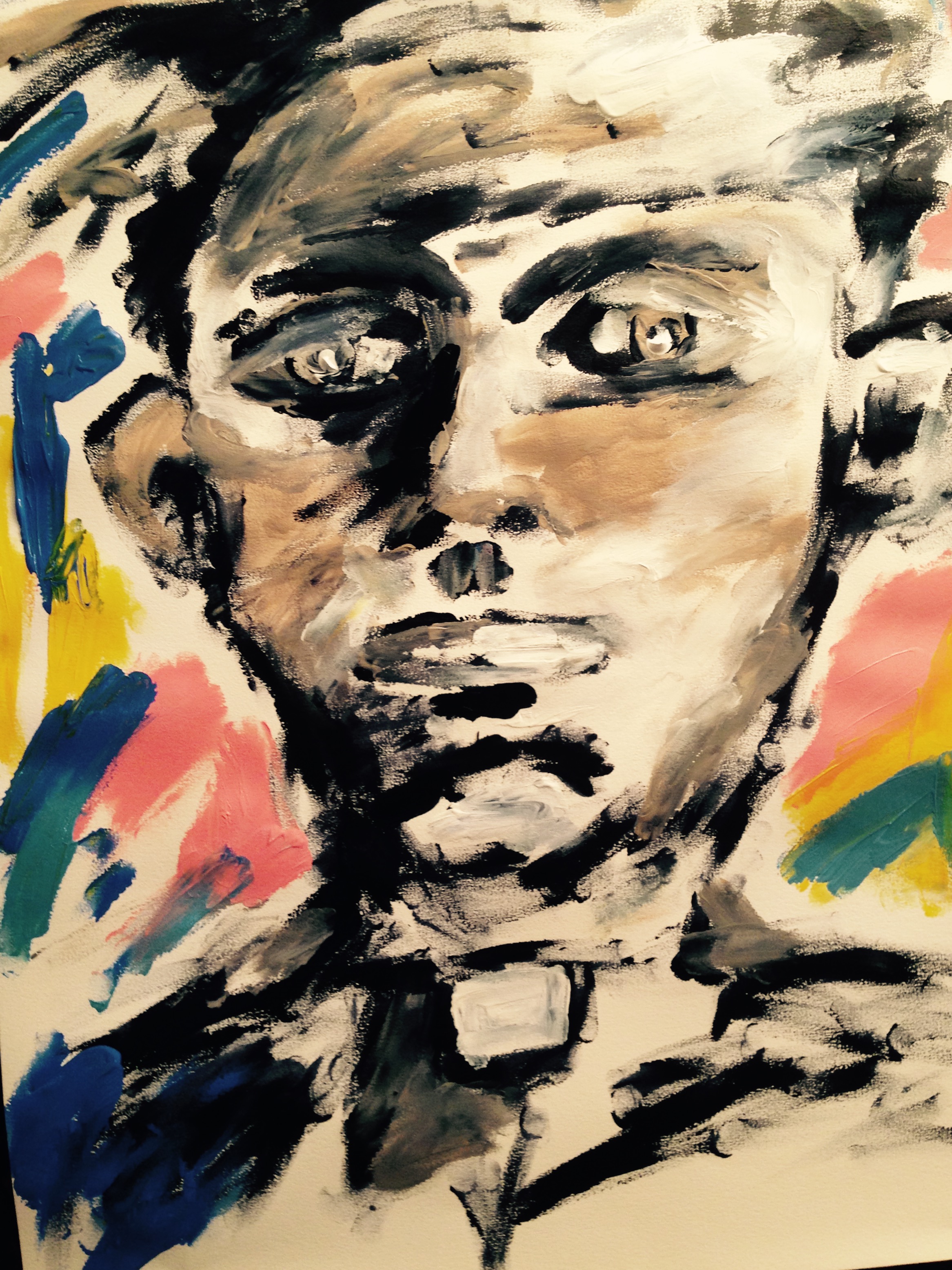
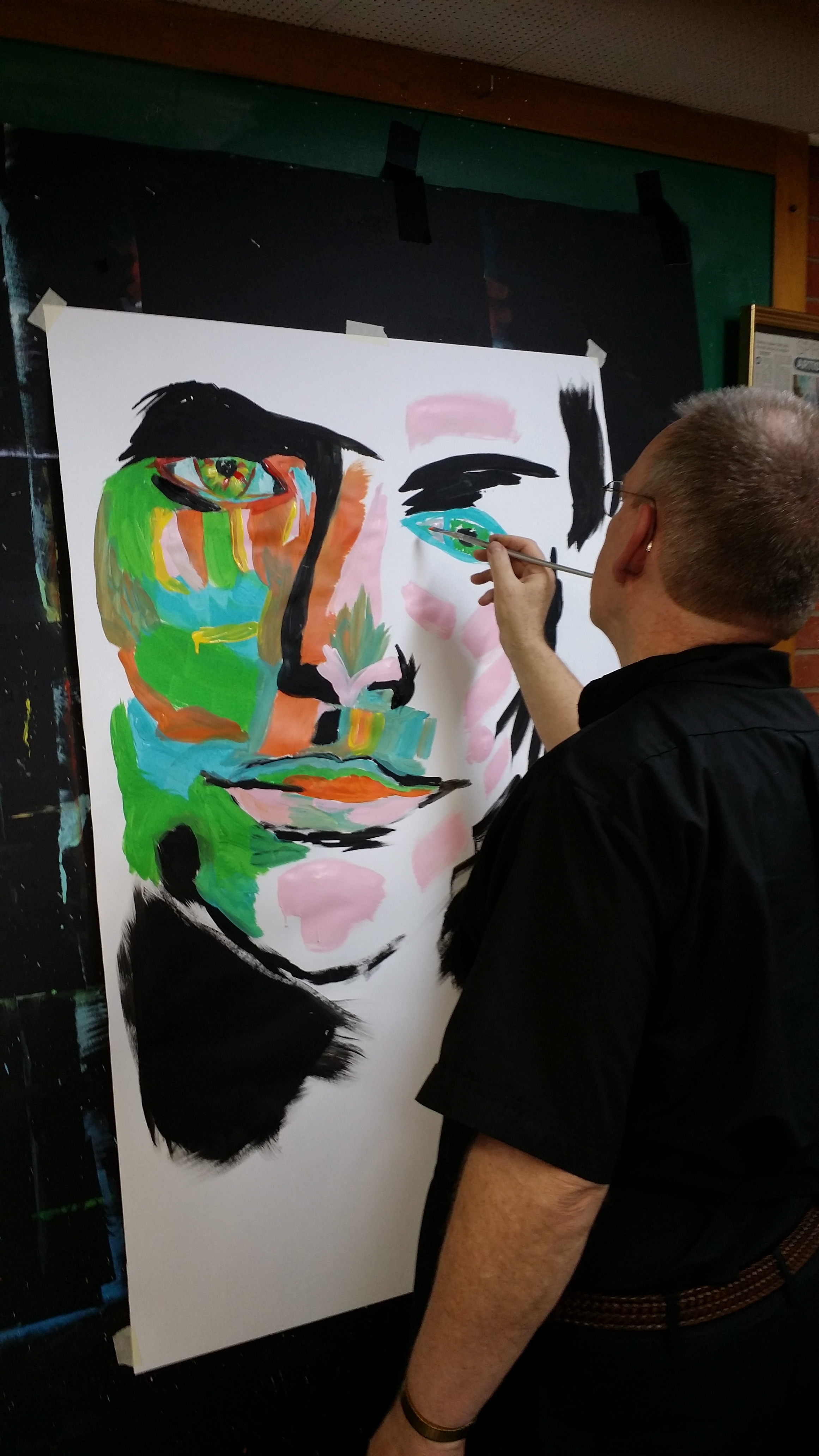
( Lisa, my art teacher, gave me an exercise for a quick finger painting to express personal fragmentation and frustration. This was the result from a ten-minute finger painting. I think it works wonderfully with Psalm 59.)
Rescue me from my foes, O God; protect me from those who attack me. O rescue me from those who do evil and save me from bloodthirsty men. See, they lie in wait for my life; the strong band together against me. For no offense, no sin of mine, O Lord, for no guilt of mine they rush to take their stand. Awake! Come to meet me and see! Lord God of hosts, you are Israel’s God. (Psalm 59)
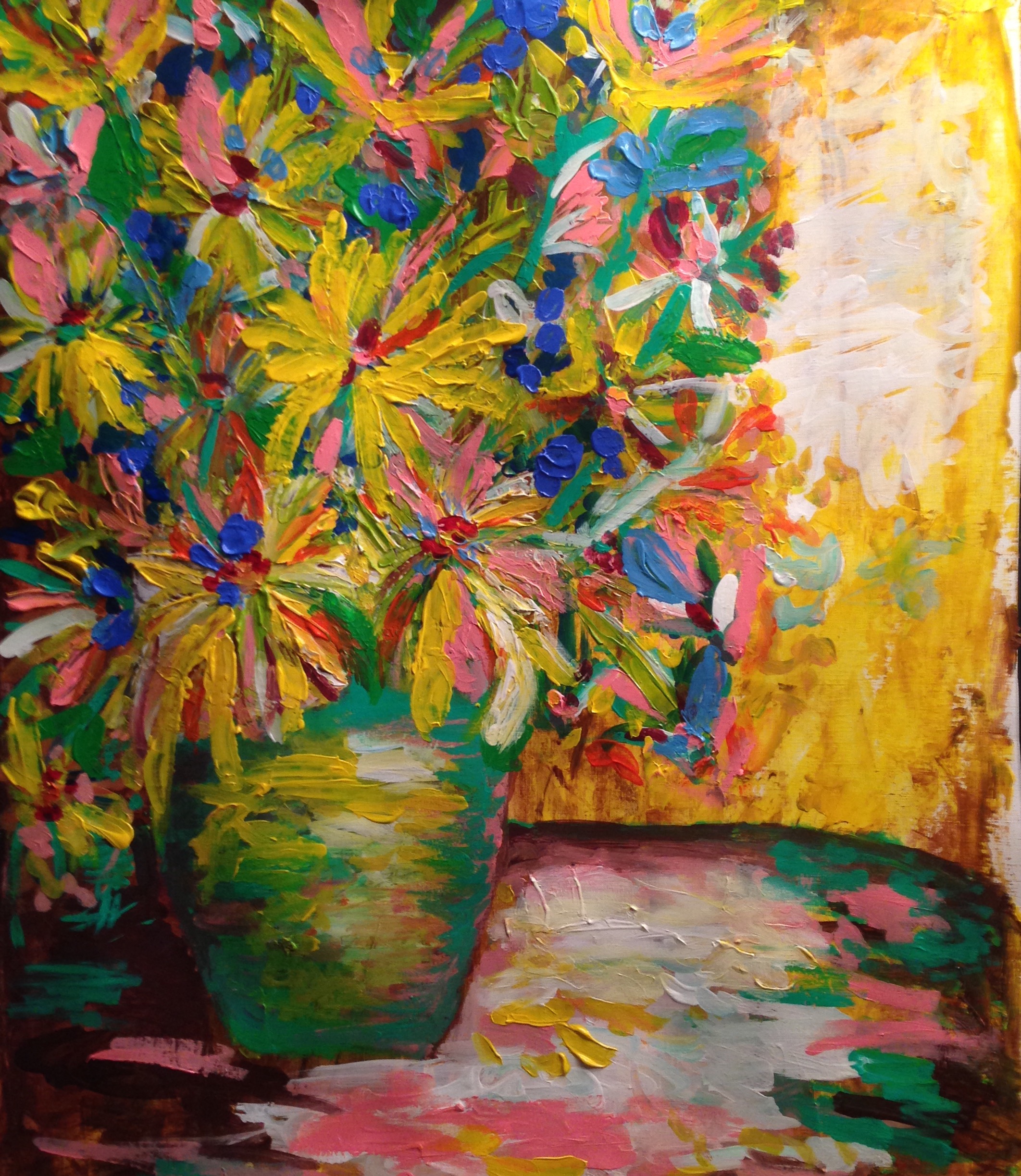
Yahweh is my strength, my shield, my heart puts its trust in him; I have been helped, my flesh has bloomed again, I thank him with all my heart. (Psalm 28)
Listen to “On the Margins”. This broadcast comes from Mater Dei Radio 88.3. We listen to this gospel that teaches us about the Eucharist itself. Jesus invites us to stop murmuring, to stop complaining. Life is difficult, we grow weak. We may feel we have not received our share. God invites us into the mystery of Jesus’ real presence.. Nineteenth Sunday in Ordinary Time, August 9, 2015.
Stream live On The Margins on KBVM 88.3FM on Saturdays at 3:45pm and Sundays at 8am.
The University of Notre Dame is featuring people on the topic of “Holy Leisure”. Check out the picture and brief reflection from the FaithND website:

Ministry and Liturgy Magazine: August 2015
(This is my regular column, “Bridgework” for August, 2015 in Ministry and Liturgy Magazine)
In the name of death
In my first year as pastor in my present assignment, our parish community celebrated fifty funerals. I remember one funeral where only four people were present and yet the power of our ritual spoke so beautifully even among the empty pews. At another funeral, the sister of the deceased came to the parish carrying the cremated remains of her brother in a cardboard box. I slid my key along the masking tape of the box thinking that there was a container inside holding the ashes. I pried open the cardboard box and discovered the ashes were contained in a clear plastic bag.
At one rather large funeral, a son told the story of his father’s hands tucking him in bed as a child. As an adult, the son held his father’s hand while he was on his deathbed. The years in between the son’s childhood and the father’s death were cold and distant. The unnamed emotions between the child and the father seemed to hover over the congregation that day.
I also celebrated a funeral of a man who shot himself in his home. For many decades he faced the emotional patterns of highs and lows. He tried desperately to hide this pattern from the public. However, the emotional tide of depression overcame him and finally took his life.
People jammed into the church to honor him. Nearly another two hundred people waited outside. I tried my best to name the issues, the darkness he faced and our hope in Christ Jesus for all of us who remain. I kept coming back to the phrase in my own mind that there is no depression in the face of Jesus. The depression was not his fault. The suicide was not his fault. We cannot blame anyone who has a disease that sweeps us off the earth. Staring now into the face of Jesus, there is no depression for this man who left behind his mother, wife and children.
These human stories help form our faith. Each of these funeral liturgies teaches me that this grand mystery of death cannot be denied. Death is real and we must celebrate each person’s death with honesty and integrity. We must have the courage to tell the truth at funerals and share the honest stories at wake services. Death is not hidden among the flower arrangements nor can we pretend it does not exist by ignoring the details of the story so not to embarrass the living.
As so many families drift away from the rituals of the Church, the name “death” is also getting a facelift. People prefer to ignore the name of death altogether. “A celebration of life” has replaced the funeral. Funeral homes have removed the name, “chapel” from their signage. These interior spaces are just called “gathering” rooms. So many families just do not want anything that names the reality of death or the traditional rituals that surround the end of life.
The Solemnity of All Saints and The Commemoration of All the Faithful Departed or All Souls becomes an opportunity to help form our parish communities to face death. As Christians, we believe that death leads us to the face of God. We are called to acknowledge the truth of death because it leads to our eternal home. Those who believed in God on earth now teach us how to live in our passing world in faith and even joy. Our saints of the past are key to helping people in our communities tell the truth about death. These liturgies help us all believe that our loved ones are still in communion with us even in eternal life.
As parish leaders and liturgists, we are challenged to bring the reality of death back into the experience of our worshipping communities. We can welcome our parishioners to parish funerals, using our Facebook page, websites or other forms of social media and invite families to pray for the deceased during family dinners and other times of prayer. We are called to welcome families of the deceased even if they do not belong to the parish. We need to break down the notion that funerals are private events in our churches.
Isolating the community from our celebrations of death is never healthy for our children and families. Celebrating a funeral is an opportunity to involve our children in creating notes or cards of sympathy for bereaved families. Prayer becomes the opportunity for each member of the parish to connect with the reality of death. If we do not bring our communities into the reality of death, our denial becomes more devastating to families and communities than death itself.
The beauty of all fifty funerals we celebrated in my first year at the parish is that each human story of death teaches me how to live. I surrender each day to the reality of life instead of focusing on how I think life should be. Death helps me believe that grace guides each human life here on earth and I am filled with gratitude. The real name of death lives in our lives as believers in the passion, death and resurrection of Christ Jesus.

