CLICK HERE TO listen to the 60-Second Sermon published by Liturgical Press, Collegeville, MN

CLICK HERE TO listen to the 60-Second Sermon published by Liturgical Press, Collegeville, MN

Dear Believers in the Christ,
In John 6:60-69, we hear Jesus say to his disciples, “Do you also want to leave?” Jesus understands that his words and commands will not be accepted by everyone. Not all people will be able to listen with a soft heart or act with his loving power. It seems every day we all must make decisions in our lives about what we believe. Will we entrust our lives to God’s goodness and love, or will we work in this world with only our bloated egos? Will our thoughts and actions be at the center of life, or will we believe that God has a plan for us, even when life is pretty darn complicated?
We live in complicated times. Mass shootings are weekly occurrences. Mental health issues among teens and older citizens seem out of control. Divisions among racial lines, among people with money and power and those with little of each. Control in politics and the cursing of people in the opposite party seem to be considered normal today. It seems that we have already answered Jesus in so many ways; perhaps we have already left him.
In this text Peter answers Jesus with another question, “Master, to whom shall we go? You have the words of eternal life.” Peter asks Jesus this question because he has seen with his own eyes the beauty of his relationship with Jesus. He understands his deep human concern for people and Peter has also captured insight about his divine life. Peter has taken the words of Jesus seriously because he knows in his heart that Jesus is the Word-made-flesh.
There are many things that have shattered our rhythms of life in these past two years. We are all still trying to recover from job loss, discovering how to educate our children, and grieving the loss of loved ones who have died in the pandemic. We are all tempted to abandon God who promises to be with us. However, if we settle into our pain, we know that God’s love and purpose in our lives is the only thing that will set us on the path of community, friendship, support, and encouragement.
Some of Jesus’ followers left him. Not everyone today takes faith seriously. Yet, we must take the Eucharist and the scriptures to heart if we are to live with genuine hope. We must live the mystery we celebrate on Sunday. It is not enough for us to just show up at Mass or at our family dinner tables once a week. Our lives are calling out for sincere connection. We must believe that Jesus is in our fear, in our questions about our future, in our inability to calm our restless teens. Here are some things to consider:
1. Admit our restlessness: In our spiritual lives, we take this text seriously. We must admit to Jesus that life is difficult. Assess your life in faith. Tell the truth.
2. Admit we cannot fix our fear: We need something greater than ourselves to survive and for life to flourish. Are we willing to do the work of reflecting on our fear? Or do we just let fear continue to stifle us because it is what we have always known?
3. Admit we need love: Only love will change things. Violence will not change things. Divisions and rage will not change things. Can we decide to turn to love beyond our fear? Can we allow God to love us into the new life we seek?
4. Admit our surrender in God: If we are to grow and mature as human beings, we must surrender to life beyond our anger, our rage, and our addictions. If we are to raise our families to be vibrant contributors to life and the world, then love and hope become central and vital. “Where else shall we go?”
5. Admit we are instruments of hope: If we make our lives available for God, then we learn God uses us for the common good and that is healing, assurance, community, and peace. We become what we seek only in Christ Jesus.
Life is easily bruised. We may blame others for our pain. In Jesus Christ we become instruments of justice, of peace, and gain the courage and conviction to stay with him. We do so because, like Peter, we have seen and witnessed incredible things.
God give you peace,
Fr. Ron Raab, CSC

Click here to read my latest article in The Priest Magazine from the September 2021 issue for the Feast of the Exaltation of the Cross.
Maximilian Kolbe, pray for us.
Saint Maximillian Kolbe: Painting by: Ronald Raab, CSC(This painting and reflection is from 2015)
Saint Maximilian Kolbe, Priest and Martyr, 1894-1941
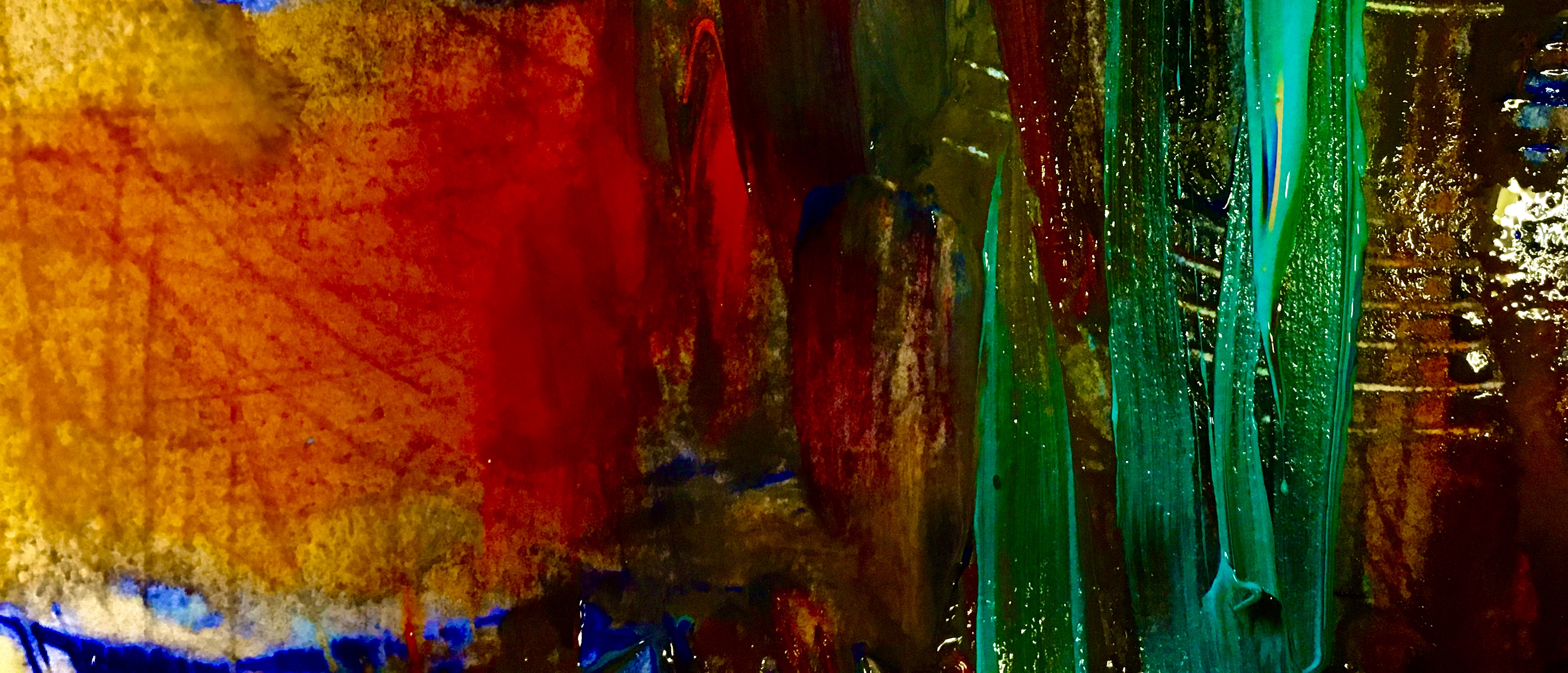
This is a crude finger painting. It is meant to be incomplete and simple because there is no easy way to interpret this man’s faith, life and death. This Polish Franciscan priest died in Auschwitz on this day in 1941.
Crown: The red crown was given to him in a vision when he was 12 years old. He had a vision of Mary who presented him with two crowns, one white that would become his reward in heaven, then a red crown, representing his martyrdom. He accepted both crowns from Mary, the Mother of God.
Mary, the Mother of God: Mary’s appearance to Maximilian gave him purpose in life. Notice how the blue beads of the rosary co-exist and even blend into the barbed wire. I must believe that…
View original post 238 more words

Dear Followers of the Beloved,
Every year, the Assumption of Mary is a holy day. This year, this solemnity falls on Sunday, so it overrides the normal Sunday scriptures. Mary is once again, the center of our focus, but only in relationship to her Son, Jesus Christ. Mary’s role in the Church is to pivot our awareness to Jesus, as her life bore the mystery of salvation, giving birth to the world’s hope. In Mary, we find a life and a lifestyle of utter dependence on and a cooperation with God alone. Her life still speaks of love, deepening our reliance of the gift of God.
Of course, there is no gospel text of Mary’s assumption into heaven. The stories we hear in the scriptures reflect her prophetic place on earth during her pregnancy. If we want to know more about Mary and her place within our devotional lives, all we need is to look, not toward heaven, but at her prophetic place in the life of her son, Jesus.
Over the centuries, Mary has been so often turned into an alabaster creature distant from our humanity. As we ponder the scriptures, Mary could not be more different. She is rugged, faithful, and unyielding in her ability to be in relationship with God. She, too, is surprised by what God is asking of her. She paid many consequences for this relationship with God the Father. Joseph almost divorced her, almost leaving her because she was pregnant out of marriage. Her life was turned upside down as a teenager. She wondered about her role in such an incredible request that she would give birth to a son. She even listened to an angel, not something that any of us would trust on any given day. Imagine, sitting in your room, an angel appears and tells you that your life will change the world, all at the age of around fourteen.
Mary is the greatest prophet of the New Testament. The prophet John heralded the coming of Jesus. Mary proclaimed God’s love and gave birth to our Savior. Mary’s life and her role still in heaven is something we all need to ponder and reflect upon in our hearts. Today’s gospel, Luke 1:39-56, gives us an incredible place to begin, the encounter Mary has with her older cousin, Elizabeth. They are both pregnant and the miracles are just beginning.
In Elizabeth’s womb is, of course, John. This scene outlines John’s role as forerunner of Jesus. John will spend his earthly life seeking his cousin, shouting in deserts for reform and repentance. Jesus is the one John points to on earth and I am sure he still does in heaven. From the womb, John’s excitement begins; he is leaping for joy.
In this text, Elizabeth is proclaiming that this encounter is greater than two cousins meeting and discussing their pregnancies. Elizabeth realizes that Mary is carrying a mystery far greater than a human child. Because of Mary’s willingness to say “yes” to God, her life will forever be holy, will forever be remembered in the story of all humanity.
Today I draw your attention to Mary’s response. Her words are inserted into this text to establish Mary as an amazing prophet. Now remember, these words are coming out of the mouth of a young girl. A woman would normally not carry such words of real cultural revolution. Her words are still being examined by us who stand on this earth figuring out her role to change to course of history. Listen attentively to Mary’s response. Do not ignore the earthiness of her place in God’s plan. These words are meant to change society. These words are flowing from a pregnant girl who in her cultural norm has no power or authority.
On this Solemnity of the Assumption of Mary, I leave you with her golden words that flowed from her mouth as she visited her cousin, Elizabeth. This is one of the most important prophetic poems in our history. These words are prayed in the Church every day, in the Church’s evening prayer. Remember, these words came from Mary, the teenager.
“My soul proclaims the greatness of the Lord; my spirit rejoices in God my Savior for he has looked with favor on his lowly servant. From this day all generations will call me blessed: the Almighty has done great things for me, and holy is his Name. He has mercy on those who fear him in every generation. He has shown the strength of his arm and has scattered the proud in their conceit. He has cast down the mighty from their thrones and has lifted up the lowly. He has filled the hungry with good things, and the rich he has sent away empty. He has come to the help of his servant Israel for he has remembered his promise of mercy, the promise he made to our fathers, to Abraham and his children forever.”
God, give you peace,
Fr. Ron Raab, CSC, Pastor

Dear Followers of Jesus,
In John 6:41-51, we continue to listen to Jesus’s words about food that lasts. Jesus becomes the way the Father feeds us. His presence is real food in the Eucharist. He also fed us with his actions, his healing, and his commands while he was on earth. Jesus feeds in so many ways. We so often want to avoid many of the ways he nourishes us, especially when he invites us to let go of possessions, to welcome the abandoned poor, and to turn the other cheek. We so often ignore such food, such advice, such relationship.
There have been numerous studies, questionnaires, and opinion polls recently about what Catholics believe about the Eucharist. In most of these surveys, only about one third of Catholics believe that Jesus is present in the Eucharist. There are many reasons for people slipping away from faith and the Church. However, I believe that one reason is that the Eucharist is not lived out in our lives in the Church. It is not noticed. Most people would never think that Christians believe in such a miracle because they do not see it revealed in our lives.
This notion reminds me of a quote from C. S. Lewis. In 1910, he noted, “The Christian ideal has not been tried and found wanting. It has been difficult; and left untried.” I hold on to this because it seems so true to me. Christianity, especially viewed from the Eucharist, is so often stifled by so many of us thinking it is only for personal piety or private salvation.
Instead, the Eucharist is meant to give us a vision of what heaven is and how to live it in the world. As believers, we become the Body of Christ from baptism. The liturgy is corporate prayer of the People of God. In this prayer, we lift our deepest humanity to the Father. We stand among one another learning how to be animators of love in the world. Justice, peace, unity among racial divides, forgiveness among enemies, release of captives, lifting the poor out of desolation, feeding the hungry, forever working for peace, are all gifts of the Holy Spirit from the Eucharist. Perhaps, Lewis is on to something. Christianity is meant to be a revolution, not just a devotion. Christianity does not really ask much of anyone in our world today. Therefore, people have walked away, and the Eucharist has faded into devotional prayer. Challenge, conversion, transformation are the opportunities for rebirth and deeper commitment in the Church today.
Also, a personal relationship with Jesus Christ is essential. As Catholics, most people were never given the tools to develop a relationship with Christ. We leaned on the Mass as our only prayer in the Church, as an obligation. We were told we seldom deserved God. We were not good enough or devout enough. Our lifestyle was not holy enough or we were not saintly enough. The outcome of developing a genuine relationship with Jesus Christ is ultimately to examine each day in view of his love for us not his condemnation. Being in relationship with Jesus helps us to learn how to forgive each day, how to examine our lives each night and how to learn ultimately that we are loved by God beyond measure. We are created in him, through him, for him, with him, all for the glory of the Father.
In today’s gospel, we hear Jesus say, “I am the bread of life.” If we hear this at Mass, we need hearts in which these words can resonate. We need a relationship with Jesus that knows what it means to be hungry for his love, his mercy, and his kindness. We also need a life that supports an understanding that only God can ultimately feed us with lasting things, with soul nourishing things such as peace, wisdom, and tenderness.
People were surprised that Jesus, the son of Joseph and Mary, was saying amazing and unbelievable things. They were murmuring among themselves. In so many ways, we have not moved beyond people’s questioning him. We are still murmuring among ourselves, scratching our heads, wondering if Jesus is still among us in this most beautiful and marvelous way in the Breaking of the Bread and in our sharing in the Cup of Salvation.
Amen, amen, I say to you, whoever believes has eternal life. I am the bread of life.
God give you peace,
Fr. Ron Raab, CSC, Pastor
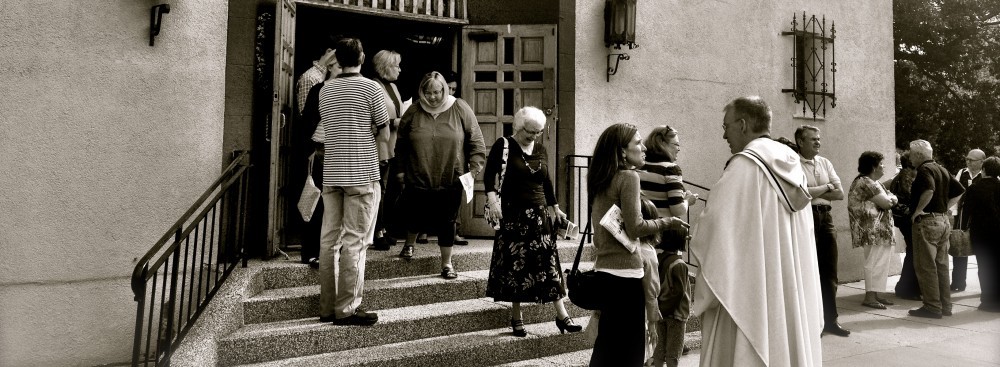
Yesterday at Sacred Heart Church in Colorado Springs, five men professed vows in the Congregation of Holy Cross. They spent this past year in our Holy Cross Novitiate in Cascade, Colorado. The newly professed will now return to Notre Dame for graduate school.