Unknown's avatar

About Ronald Patrick Raab, C.S.C.

Ronald Raab, C.S.C.,serves as religious superior at Holy Cross House, a medical and retirement home for the Congregation of Holy Cross, Notre Dame, Indiana

Pondering Hope: Stories Entrusted to Our Lady of Sorrows, Part Three

(On September 15, the Church celebrates the Feast of Mary, Our Lady of Sorrows. Our Lady of Sorrows is the patroness of the Congregation of Holy Cross. I will be posting one of the seven sorrows each day leading up to the feast day. This is only part of a larger reflection that has not yet been published. The stories are meant to encourage your own reflection about each of the sorrows found in the gospels.)

The Third Sorrow: The loss of the child Jesus in the Temple

Luke 3:41-50

 Each year his parents went to Jerusalem for the feast of Passover, and when he was twelve years old, they went up according to festival custom.

After they had completed its days, as they were returning, the boy Jesus remained behind in Jerusalem, but his parents did not know it.

Thinking that he was in the caravan, they journeyed for a day and looked for him among their relatives and acquaintances, but not finding him, they returned to Jerusalem to look for him. After three days they found him in the temple, sitting in the midst of the teachers, listening to them and asking them questions, and all who heard him were astounded at his understanding and his answers.

When his parents saw him, they were astonished, and his mother said to him, “Son, why have you done this to us? Your father and I have been looking for you with great anxiety.” And he said to them, “Why were you looking for me? Did you not know that I must be in my Father’s house?” But they did not understand what he said to them. He went down with them and came to Nazareth, and was obedient to them; and his mother kept all these things in her heart.


Searching backward to belong

 Jake sat across from me in a neighborhood coffee shop and slowly sipped his way through some horrifying moments of his story. While his coffee was still hot, he began to tell me that his mother sold him as a child to men for sex so she could get money for drugs. I noticed Jake’s hand beginning to tremble as he recalled the details he held only in his mind. I felt deeply humbled to receive even a piece of his story in the busy, music-filled room.

During the next several years over many cups of coffee, I learned more about his search to heal. Jake has searched his entire life to find his father and to put the broken pieces of his past together. He is so aware that those pieces are so shattered and devastating. Nevertheless, he wants to make sense out of his past, to finally feel and ponder the truth in his heart, no matter how painful the truth might be for him.

Jake was tortured and raped by many of those men that purchased him for sex. He was also bounced around to several foster families where the sexual abuse continued. His body carries the scars where men would beat him or tie him up. He was deemed “unadoptable” by the state as a child after he was gang raped in a barn by a group of teenagers. Jake still longs to find peace in his life after years of violence and neglect.

People made fun of him as a child because he was physically small and effeminate and so emotionally lost. Other kids called him, “Mary”. He was bounced around even over state lines and there was still no peace for him, no healing so that he could have a decent childhood. As Jake grew older, he became a heroin addict like his mother to escape his pain. His addiction was inevitable because that is all he knew growing up from the adults around him. He began to sell his body so that he could support his own heroin addiction. His adult life became a continuation of his childhood.

Jake found his way somehow to the Church as a young adult. His search for real parents led him to seek God. He found God through Mary. Jake came to believe that Mary would not abandon him. Jake knew that Mary had searched for her lost son. He wanted that for his own life. Jake discovered that Mary would search for him even when he was so wasted from drugs and alcohol. He believed that Mary could find him even on those nights that he had sold his body one more time. God drew him into the Church slowly and miraculously.

Jake overdosed on heroin just before his scheduled baptism at an Easter Vigil in a parish somewhere in the South. He was later washed in the Holy Spirit several weeks later during the Easter season after he had a few weeks of sobriety. To mark his entry into the Church, he had a large tattoo inked in elaborate calligraphy on his chest, “MARY.” This tattoo marked his body for the woman who walked with him to baptism, Mary the Mother of God. Jake’s tattoo was also a statement that he was claiming his own power from having been made fun of during his childhood. He wanted to own the fact that he had been made fun of and repeatedly called, “Mary.”

Jake turned to Mary because she could not explain to Jesus about his real, heavenly father. Jake believed that Mary would help him forget about his own mother and console him about not knowing and not understanding his biological father. He wanted a relationship with Mary, Our Lady of Sorrows because he wanted Mary to chase him down, to finally find him in his misery and call him back to his boyhood.

Jake’s adult life is consumed in hatred for his parents and his childhood. Jake’s suffering continues because he also lives with AIDS from the many years of sex and sharing needles. Jake is still addicted after many years of entering various recovery centers. His pain is too intense to forget. He holds on to Mary in his heart, however, even on the many days where his addictions scream at him to take his own life.

Jake’s story breaks my heart. I realize in the many years that I have listened to him that this scene of Mary and Joseph searching for the child has profound meaning across generations and places. The unexpected loss of a child for Mary becomes a rich and powerful story for so many people in our day and age that feel lost and separated from parents and family. This story is ongoing in so many people’s lives, especially for people who have been abused and neglected by their own parents.

I have no idea what happened to Jake. I do not know where his mother lives or if his father is still alive. I take to heart his story when I read again this Third Sorrow of Mary because the search for intimacy and union is life long; the search is profound in ways in which I cannot comprehend. Mary is the mother of a lost child, a broken relationship that lasts for even just a moment in time. The fact of this severed relationship offers hope to many people who search backwards in time to make sense out of their childhoods in order to find a place on earth in the present in which they can belong.

Reflection Prompts:

Have you ever been “lost” from a person you loved?

How do you turn to God when you feel lost from other people?


Pondering Hope: Stories Entrusted to Our Lady of Sorrows, Part Two

The Second Sorrow: The Flight into Egypt

Matthew 2:13-15

When they had departed, behold, the angel of the Lord appeared to Joseph in a dream and said, “Rise, take the child and his mother, flee to Egypt and stay there until I tell you. Herod is going to search for the child to destroy him.”

Joseph rose and took the child and his mother by night and departed for Egypt. He stayed there until the death of Herod, that what the Lord had said through the prophet might be fulfilled, “Out of Egypt I called my son.”

The unimaginable dreams

 I occasionally preach parish missions and retreats around the country. Several years ago I found myself in a very large parish in California to preach the Masses on a weekend and then offer a three-day retreat. After one of the morning sessions, a gentleman cornered me in the sunlit lobby of the church. He whispered to me that his son graduated from the University of Notre Dame in the 1990’s. He then confessed to me that his son suffers severely from mental illness.

The father then went on to tell me that he had not seen his son for many years. The shy father, holding on tightly to a copy of the parish bulletin told me that his son had refused to admit his illness and would not seek medical advice or take the prescribed medications. The tired father sheepishly whispered to me that his only son lives, or rather survives, outside in a large wooded area somewhere in Indiana. He was not even sure where exactly his son was living or how he was surviving.

This father stood in front of me in this crowded lobby feeling so ashamed of himself that he could not help his son. He had tried for years to intervene in his son’s illness. I could tell by his whispers to me and by his manner that he was heartbroken by his son’s illness. He felt helpless to fix or solve the situation. This father was also heartbroken that the dreams he had for his son were shattered. The efforts, the money and the years of work in college were not being used for the good of his son’s future.

I asked him in the center of the crowd if he was able to share his concerns and his story with people in the parish. I asked if he received any emotional support from the parish community. He told me that he had not confided to anyone in the parish. His dream for his son would only be handed over in prayer. He also asks Mary continuously to protect him in his dreams that his son be safe.

The fragile father asked me to keep the dream alive for his son in my own prayer. After many years, I find myself responding to this request. I pray for him when I return to the University of Notre Dame when I ponder how so many dreams of parents for their children seem to rise up from the ground there. I remember those dreams from my own parents whenever I return to the area of my own birth.

The lonely father in that parish lobby certainly does not stand alone in his lost dreams for his child. Military parents send their children off to war and so many of their offspring do not come home and those who do come home are scared for life from the horrors of battle. Children flee from their parents to live their own lives and so many children lose their way into severe addictions or ill health. Some flee from family so they will come to terms with their own sexual orientation or the gifts and talents that were not fostered at home. Still others flee the country to try to heal from the abuse or loneliness that they found while at home with their families. Some children simply do not want to share the dream their parents forced upon them as children.

Joseph was able to respond to God in a dream to keep his infant son out of harm’s way. Jesus and Mary trusted that the dream was truly of God and for the purpose of safety. The future for the family was given to Joseph and he had the courage to act on his dream even if that led him to another country.

I cannot image how Mary must have received the news of her husband’s dream. The sorrow of fleeing the land must have pushed her trust in God to the limit. Even though the thought of leaving home shattered the family’s expectations about what the family would become, the dream had to be acted upon. This trust in the midst of threat and chaos would only make sense looking back upon their willingness to act on the dream in the moment.

Mary and Joseph still carry the lost or fragile dreams for parents. I hold on to the belief that when the original dreams of parents do not work out as planned, that the Holy Family cares for the children lost, alone and afraid in no matter what situations people find them selves. I hold on to the fact that Mary’s sorrow of flight invites mothers and fathers to continue their lives having to let go of control over their children.

Mary’s love for Jesus is still in our world today, amid the uncertainty of a child’s health or the unstable life of homelessness and mental illness. Mary and Joseph are still the caretakers for all the ways families are separated from home. They carry the love that needs to be shared when families need forgiveness and healing, love and mercy and in all the ways families need to come together in safety and security.

I cannot imagine the sorrow of this particular father entrusting his son’s life to God in such powerlessness. This unimagined dream must continue to lead us all into a new awareness of the issues that deaden the dreams of parents for their children. These unimagined dreams are the prayers that we must share in our parish communities and learn to live among us as believers.

Reflection Prompt:

How does Joseph’s dream inspire you to act on your life?

What do you suppose is God’s dream for your life?


Pondering Hope: Stories Entrusted to Our Lady of Sorrows, Part One

(On September 15, the Church celebrates the Feast of Mary, Our Lady of Sorrows. Our Lady of Sorrows is the patroness of the Congregation of Holy Cross. I will be posting one of the seven sorrows each day leading up to the feast day. This is only part of a larger reflection that has not yet been published. The stories are meant to encourage your own reflection about each of the sorrows found in the gospels.)

The First Sorrow: The Prophecy of Simeon

Luke 2: 27-35

When the days were completed for their purification according to the law of Moses, they took him up to Jerusalem to present him to the Lord just as it is written in the law of the Lord, “Every male that opens the womb shall be consecrated to the Lord and to offer the sacrifice of “a pair of turtledoves or two young pigeons,” in accordance with the dictate in the law of the Lord. Now there was a man in Jerusalem whose name was Simeon. This man was righteous and devout, awaiting the consolation of Israel, and the Holy Spirit was upon him. It had been revealed to him by the Holy Spirit that he should not see death before he had seen the Messiah of the Lord. He came in the Spirit into the temple; and when the parents brought in the child Jesus to perform the custom of the law in regard to him, he took him into his arms and blessed God, saying: “Now, Master, you may let your servant go in peace, according to your word, for my eyes have seen your salvation, which you prepared in sight of all the peoples, a light for revelation to the Gentiles, and glory for your people Israel.” The child’s father and mother were amazed at what was said about him and Simeon blessed them and said to Mary his mother, “Behold, this child is destined for the fall and rise of many in Israel, and to be a sign that will be contradicted. (and you yourself a sword will pierce)* so that the thoughts of many hearts may be revealed. ”There was also a prophetess, Anna, the daughter of Phanuel, of the tribe of Asher. She was advanced in years, having lived seven years with her husband after her marriage, and then as a widow until she was eighty-four. She never left the temple, but worshiped night and day with fast and prayer. And coming forward at that very time, she gave thanks to God and spoke about the child to all who were awaiting the redemption of Jerusalem.

The dreaded first wound

            I first met Jane years ago shortly after an initial phone conversation. She called me because she had heard my voice during my radio program, “On the Margins”. She heard within my voice that my life was also broken, my life history physically revealing itself within my voice. She also immediately heard within my voice a place of trust, a time-out where she could rest her own words, the storytelling of her past. I knew from this initial phone conversation that her journey to faith was raw and authentic, that she was being led through her struggles by the gift of God’s undivided love for her.

Within our first few meetings, she began to unravel the circumstances that led her to first pick up the phone and call me. She started her face-to-face conversation telling me that she was in recovery from alcohol and drugs. Her recovery had been rather recent and her emotions that had been hidden by many years of drinking were now so raw and fragile. She was discovering her life over again, each lost memory and emotion coming to the surface after thirty years of drinking. She strung together one new memory after another with tears and fright, with prayer and longing to be set free as an adult.

She told me that she first started drinking before her fourteenth birthday. She started to sneak bottles of booze with her friends in order to hide the first wounds of her life, the profound wounds that she had carried well into adult life. Jane thought as a teenager she could well hide the childhood wounds of abuse at the bottom of many bottles. Jane never realized in her youth that the remedy she had used to hide her initial wound would some day become another wound, a disease that would overcome her entire life.

Jane came to talk with me even though she was not Catholic. She felt compelled to offer me some of the memories that had emerged in her new sober life after visiting a retreat center dedicated to Our Lady of Sorrows. One of her piercing memories, one of her deepest wounds, was losing her only son from a drug overdose. He died while she was still drunk. Now that she was sober, the grief for her boy was overwhelming. She felt for the first time the grief and the guilt that she had repressed for over five years since his death.

Jane told me that while she visited the retreat center she followed the path of the Seven Sorrows of Mary. Her heart began to connect to the pain of Mary who lost her only Son in death. She wept at each of the stations of the Seven Sorrows of Mary. She had never heard of these scriptural moments of suffering from Mary’s perspective before. She had never encountered Mary in prayer; in fact from her religious background Mary was always suspect and a bit superstitious.

Jane’s pain of losing her son was so intense that she decided to have an image of the Seven Sorrows of Mary tattooed on her chest. The pain in her heart was a deep itch that she could not scratch, a wound that seemed eternal. She believed that wound would never heal. She told me that when the tattoo artist started to carve the image deeply into her skin over her heart, that it was the first sorrow that hurt the most. She wept and wept lying on the table as the first sword, representing the First Sorrow, was engraved on her body. The first of the seven swords that surround Mary’s heart seemed to open her wound of grief and years of guilt. Jane also realized that once the first sword was tattooed on her body, there was no turning back. She new there was a deeper reason why the portrait of Mary was being tattooed on her delicate skin.

Jane’s tattoo of Our Lady of Sorrows became more than just an image of a mother losing her son. The tattoo was the beginning for Jane of opening up her own heart to the love that God had for her and the grace of Mary walking with her in absolute loss and confusion about her past and her future. Jane also confessed to me another reason why that tattoo hurt so much on her chest. The tattoo artist mixed some of the ashes from Jane’s dead son into the ink for the image of Mary’s heart. The tattoo over Jane’s heart also carried the death reminder of her only beloved son.

As I learned more from Jane about her story and her decision for the tattoo, there was one insight that she carried from the tattoo parlor into my office. She told me over and over again that the first piercing of Mary’s heart must have hurt the most. The first wound of hearing the voice of Simeon must have penetrated deeply into Mary’s heart that carved a place where the other wounds would live and form themselves into a deep trust in God. Perhaps this first ink image of the sword began to heal the first wounds of abuse and neglect in her life as well. The first wound in any life is deep and profound.

Simeon proclaimed to Mary after years of waiting and prayer that her Son would be the fall and the rise of many people in Israel. Mary’s first wound from the sound of Simeon’s prophetic voice must have created such a deep scar within her heart. His words like a sword, pierced deeply into her thoughts, her heart and her future. Mary’s first encounter with Simeon’s prophetic words became her dreaded first wound, “and you yourself a sword will pierce so that the thoughts of many hearts may be revealed.”


Reflection Prompt:

How do you interpret your own “first wounds” or the suffering you carry with you in life?

How are you inspired by Mary to carry the message of suffering within your own heart?

On The Margins – Mark 7:31-37

fr_ron_and_kbvm_readingBWListen to  “On the Margins”. This broadcast comes from Mater Dei Radio 88.3. This story is not only a healing miracle for an individual, but also an image of opening up our sight, our vision, our speech, our hearing to be in relationship with Jesus and other people. This story is about our second-birth, our baptism.  Twenty-Third Sunday in Ordinary Time, September 6, 2015.

LISTEN NOW: CLICK HERE

Stream live On The Margins on KBVM 88.3FM on Saturdays at 3:45pm and Sundays at 8am.

Luke 4: 31-37 ” I know who you are…”

"I know who you are, the Holy One of God."

“I know who you are, the Holy One of God.”

Jesus teaches with authority in today’s gospel. A man with an unclean spirit encounters the holiness of Jesus. It is the unclean spirit who recognizes Jesus.

In our lives, the suffering or the loneliness or the sin or the anguish is what recognizes Jesus. Our poverty proclaims what Jesus can do for us if we allow our true selves to encounter the beauty and mystery of Christ Jesus.

Today, the unclean spirit might be named mental illness. We still fear mental illness and we still blame people who suffer emotional disorders. We blame people so often for possessing what we fear. We must realize that even our diseases may recognize the healing power of Jesus.

I pray that we may hear the voice of Jesus that bears only hope for us. I pray for such healing for people who suffer any emotional disorder or mental illness.

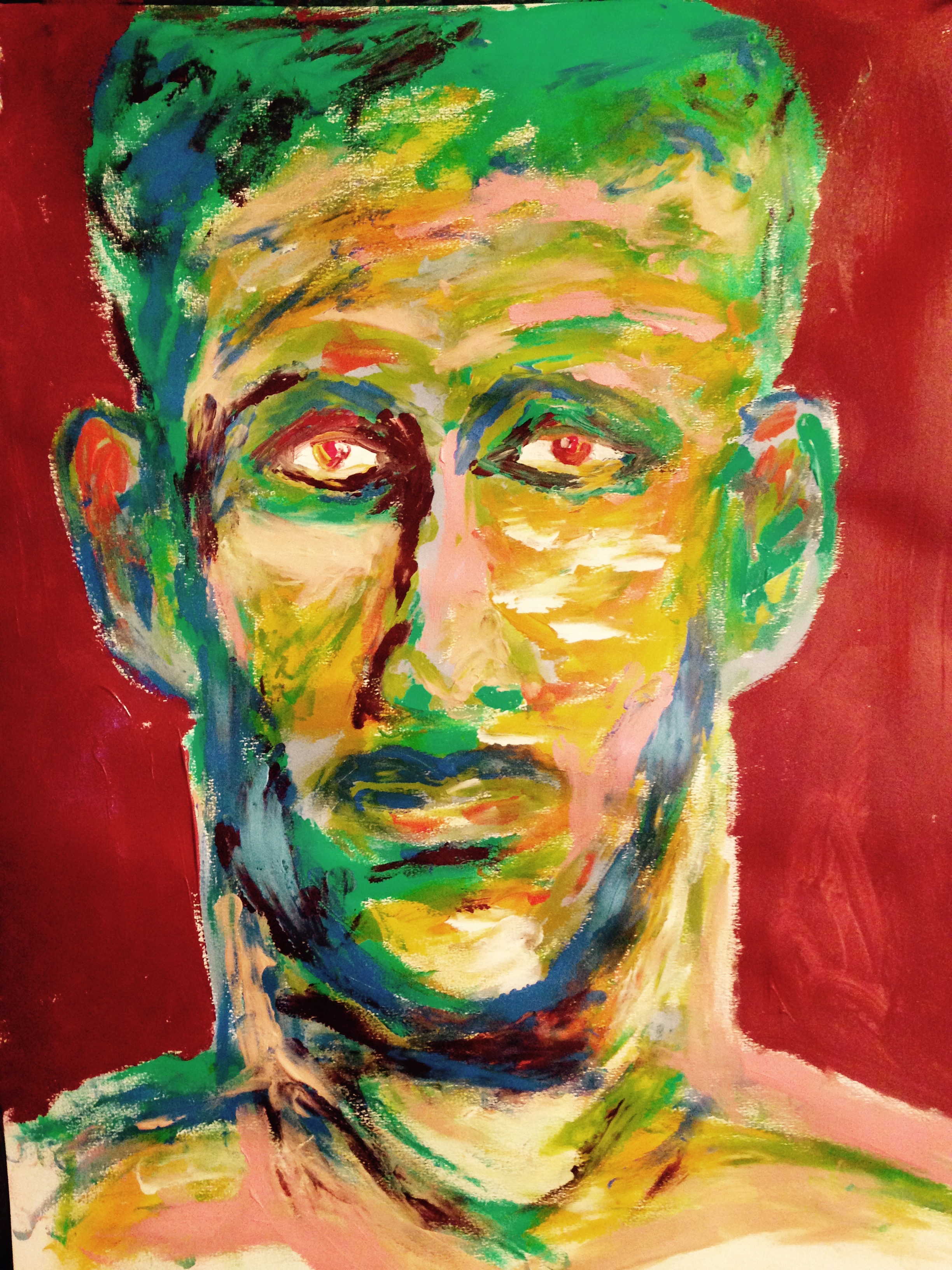
This painting is to help us reflect on the chaotic lives of people who suffer emotional disorders. The frenzy of life, the inability to concentrate, the problems of living up to other’s expectations, are all ares of life to reflect upon for people marginalized by mental illness, brain injuries and various learning disabilities. I pray this painting may lead us to prayer and the assurance that we are united in Jesus.

Ministry and Liturgy Magazine: “Advent: unplanned presence”

ml427 2

(From the September, 2015 issue of Ministry and Liturgy Magazine, my monthly column, “Bridge Work”)

Advent: unplanned presence

I have moved ten times in over thirty-two years as a priest, crisscrossing the country from place to place. Each transition brings me great grief about leaving behind significant relationships and opportunities for ministry. After letting go of one ministry in a certain geographical area, I usually wake up one day in the next place and realize the people and situations that eluded my focus in the past few years. I regret not paying more attention in the moment, in the place of ministry and among the people with whom I pray and work.

With every new assignment, I learn to carry fewer possessions. Even though my relationships continuously change and I want to cling to my “stuff”, I let go of what weighs me down. I focus more clearly on what I possess within my own heart, my own relationship with God. I learn to trust more in times of transition even though my first reaction is usually fear.

I usually do not put all the pieces of opportunities and friendships together until I have actually left a ministry setting. Hindsight teaches me real love for people when I finally pull up stakes. Transitions are never easy.

However, starting again always brings unplanned grace. Unpacking my bags and opening my heart in a new parish takes time, patience and my full attention. I usually spend the first few months living in fear and wondering whether or not my gifts and talents will be wanted or accepted among the next group of people. My planned fears have always melted away into moments of unplanned grace in each encounter and relationship in ministry.

I reflect again on these transitions as we begin our new liturgical year in Advent. As I ponder the first birth of Christ, I realize that Mary’s pregnancy was unplanned. Mary’s unexpected pregnancy brought great fear and even threatened the future of Mary and Joseph’ plans for marriage. The presence of Christ even in the womb threatened people, caused them to adjust to a new way of thinking, and ultimately called everyone involved to trust more deeply into the call God had for each one of them. This unplanned presence of Christ was made flesh when Jesus was born on the margins of a village in a animals’ shelter in the nighttime.

From these Advent gospels, we are now called to prepare ourselves for the unexpected second coming of Christ. In this ultimate transition, people will die of fright in the anticipation of what is coming into the world. The powers of heaven will be shaken. We are to wake up and not let our hearts become drowsy from the anxieties of earthly life and in our daily routines. This unexpected presence of Christ will catch us in our complacency and uproot us from our most intimate relationships, our most valued of all possessions.

John the Baptist cries out in full trust in behalf of the Kingdom of God. He shreds our notions that we are to cling to anything on earth. He yanks us out of our daily illusions and shakes us from our notions that we are to rely only on ourselves. John challenges us to live our lives ready for the ultimate transition of Christ’s second coming.

In these Advent days, we are challenged as ministers to cultivate a new desire for God within our assemblies. This challenge becomes more countercultural during these months when we naturally turn to our human families in love. We often believe that these relationships are all that we need. We also cling tightly to our possessions for ultimate satisfaction.

However, this is the time of year that we must articulate even more the presence of Christ in people who fear their families of origin, or people who have not been accepted by them, or even abused by those they love. We are to wake people up to those who wait at our country’s border for housing, employment, and safety. We are to open people’s eyes to our own children who walk the streets at night searching for drugs, waiting for acceptance as they sell their bodies. We are to wait with people who sit at the bedsides of their family members who are ill and afraid of the nighttime.

We are to crouch down and care for our neighbors who sleep on our sidewalks or in the doorways of our churches. We are to befriend and listen to our teenagers with blue hair and with their new piercings. We desperately need to wake people up, to remind them that we are always in transition. We need let go of our beliefs that life should always be secure and lived according to our own plans. We need to call people back to an ultimate trust in God and to loosen their grasp on their own riches and their stockpiled reliance on human ways.

Advent challenges us to always live in transition. However, these transitions help us open our eyes to the ways Christ is revealing hope, love and salvation among us. These transitions also help us to really see people who are different from ourselves. We celebrate Advent by reflecting on our ultimate transition from our earthly cares into our reliance on Christ’s real presence leading us into the Kingdom of God.

A prophet’s longing

aug3015 2

Jesus, said, “Amen, I say to you, no prophet is accepted in his own native place.” Luke 4

It takes courage to see the world differently. Imagination, creativity and awareness are often in short supply, especially within the Church. We desperately need new witnesses, new prophets to speak up and look out in our time and place. We need peace, harmony and the basics of food, housing and jobs.

A prophet’s place is simply to connect love with despair, compassion with hopelessness, courage with fear, all in new and unexpected ways. A prophet longs simply to make hope work for people.

So many people live in fear of the plight and desperation of others. We all fear letting go of the things that are most valuable to us, our health, our homes and especially our loved ones.

Last night our parish community hosted the Lord’s dinner, a weekly meal that is open to all people. The meal takes place every week at Sacred Heart Church and nine different churches provide food on a rotating basis. We seated 150 people in our parish center, many of whom were families looking to get by until their paycheck this week.

In many ways, serving people is a profound and prophetic act. However, the gratitude that emerges during an evening like last night truly lifts everyone’s spirits and makes life meaningful. A courageous act is simply to step out of our comfort to make the connection that we are all one. We are all in need of the basics of life, all longing to belong, to be loved and seen in the world. We all hunger for the same things.

A prophet of today longs to see the world differently, to recognize that we have an opportunity to reinvent how we relate to one another, to house people, to feed them, to offer them a cup of milk and to remain grateful. The prophet’s longing reflects the ache of every human heart.

A reading from the letter of Saint James

nun15 2

A reading from the Letter of Saint James. (1:17-18,21b-22,27)

Dearest brothers and sisters: All good giving and every perfect gift is from above, coming down from the Father of lights, with whom there is no alteration or shadow caused by change. He willed to give us birth by the word of truth that we may be a kind of firstfruits of his creatures. 

Humbly welcome the word that has been planted in you and is able to save your souls.

Be doers of the word and not hearers only, deluding yourselves.

Religion that is pure and undefiled before God and the Father is this: to care for orphans and widows in their affliction and to keep oneself unstained by the world.


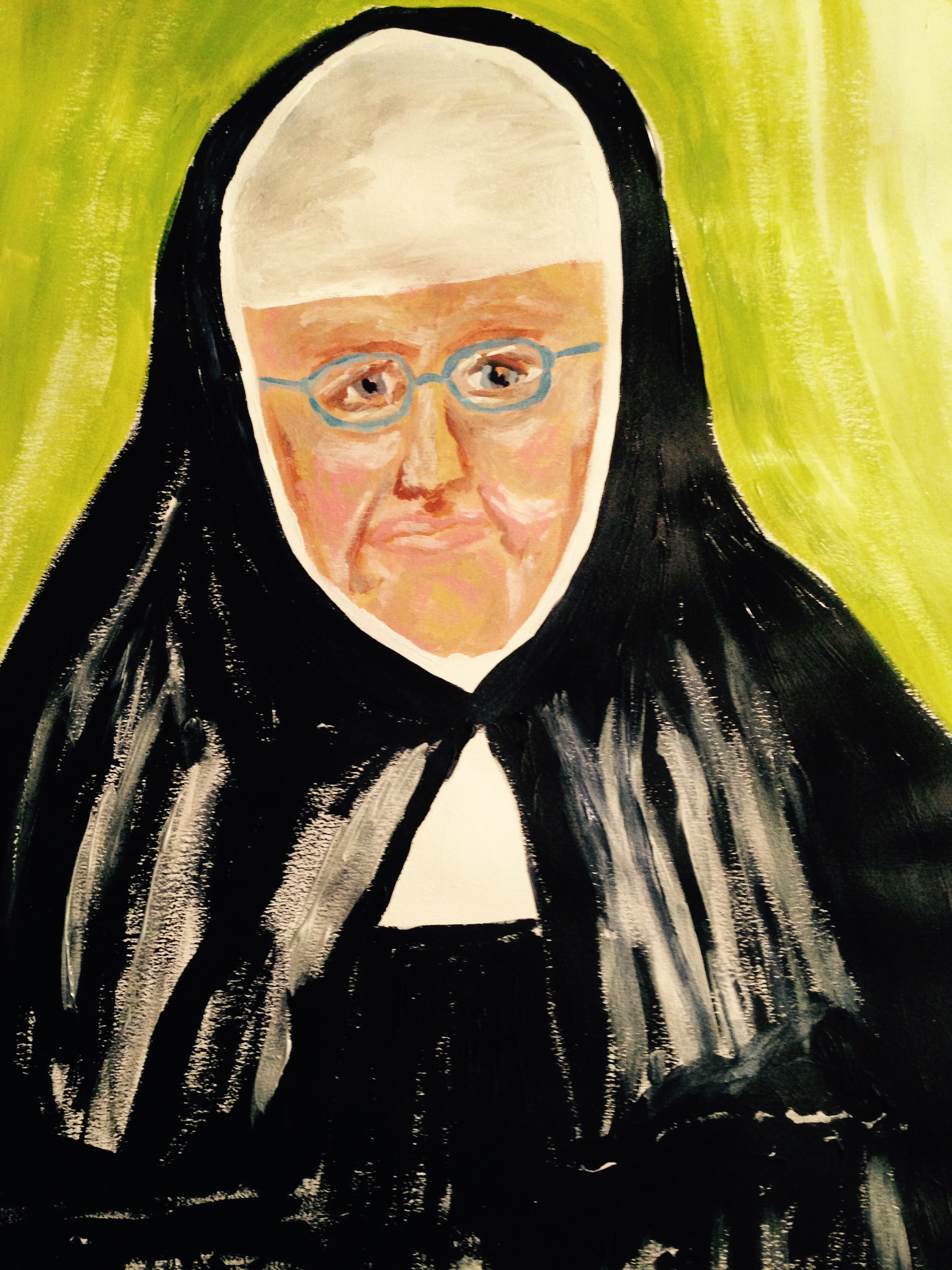
(I am grateful for all my teachers who taught me to cherish the word within me, who taught me by example how to be doers of the word. For all who gave witness of service to orphans, widows and people in need. For all who remained unstained by the world.)